
🛒 Best Price Today on Amazon
Prime members get fast, free shipping on everything above, plus member-only deals. New members get a 30-day free trial — cancel anytime.
Storing gasoline for a generator is less about keeping extra fuel on hand and more about controlling fire, vapor, and fuel degradation. A poorly stored can may leak, swell, rust, or release flammable vapor into a garage or basement. Old gasoline can also clog a carburetor, damage fuel lines, and leave a portable generator unable to start when the power goes out.
The safest approach is to store only the amount you can use and rotate within the fuel’s useful life. Use approved containers, keep them cool and secured outside living spaces, and follow your local fire code and the generator manufacturer’s instructions. These steps apply whether you are preparing a small inverter generator or a larger home-backup unit in 2026.
As an Amazon Associate we earn from qualifying purchases at no extra cost to you.


What You Need
| Item | Why | Optional? |
|---|---|---|
| Approved gasoline container | Designed to control vapor and prevent leaks. Choose a current, clearly labeled portable fuel container with a secure cap and flame-arresting or compliant spout where required. | No |
| Fresh regular unleaded gasoline | Most portable generators use regular unleaded gasoline, but check the owner’s manual for octane, ethanol, and fuel requirements. | No |
| Fuel stabilizer | Slows oxidation during storage. Use the product’s stated dosage; adding extra does not make fuel last indefinitely. | Recommended |
| Fuel funnel or flexible spout | Reduces spills when filling the generator. Use a clean, gasoline-compatible funnel. | Recommended |
| Fuel-resistant gloves and safety glasses | Protect skin and eyes from splashes. | Recommended |
| Metal spill tray or secondary containment | Catches minor drips while a container is being handled. It is not a substitute for an approved container. | Optional |
| Permanent marker and fuel log | Records the fuel date, stabilizer date, and rotation deadline. | Optional |
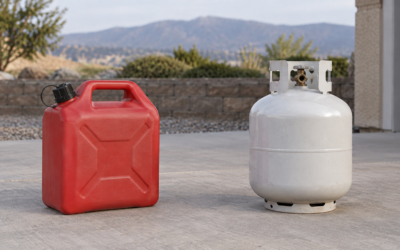
Container size matters. A 5-gallon can of gasoline weighs roughly 30 to 35 pounds when full, depending on the container and fuel. Smaller 2.5-gallon cans are easier to lift and reduce the consequences of a spill. Never use glass jars, thin household storage bins, water jugs, or an unapproved open bucket.
Step-by-Step
-
Check local rules and the generator manual (10–15 minutes)
Before buying fuel, check your city, county, landlord, homeowners association, and fire-department rules. Limits vary by location, occupancy, container type, and whether the fuel is stored at a residence or workplace. Many households keep no more than a small reserve, commonly two to five 5-gallon containers, but the legal limit in your area may be lower.
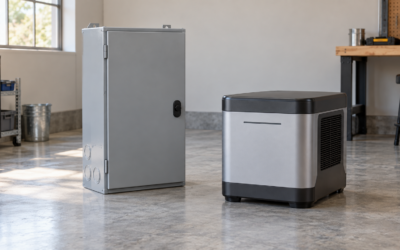
Read the generator manual for fuel type, maximum tank capacity, ethanol guidance, and storage instructions. A large dual- or tri-fuel generator can use substantially more gasoline per hour than a compact inverter generator. For example, a 10,500-watt tri-fuel model priced around $2,300 may support major loads but can require a larger fuel plan than a 2,350-watt inverter model priced around $440.
-
Choose a safe storage location (10 minutes)
Store gasoline outdoors in a detached, well-ventilated structure or another location specifically allowed by local code. Keep it away from the house, basement, crawl space, occupied rooms, ignition sources, electrical equipment, pilot lights, furnaces, water heaters, grills, and direct sunlight.
Do not store gasoline beside a generator that is running or still hot. Do not keep it under stairs, in an exit path, or where children, pets, vehicles, or lawn equipment can knock it over. A cool, shaded location is preferable, but never seal a gasoline container inside an airtight box or plastic tote where vapor could accumulate.
-
Inspect and label each container (5 minutes)
Use only containers made and marked for gasoline. Check the body, cap, gasket, spout, and vent for cracks, corrosion, swelling, or fuel odor. Retire a container if it leaks, no longer seals, or has a damaged cap. Do not repair a fuel can with tape or household sealant.
Write the purchase date and fuel type on a label. If you add stabilizer, record that date too. Keep the label visible without removing the manufacturer’s warnings and instructions.
-
Buy fresh fuel and add stabilizer correctly (10 minutes)
Buy gasoline from a busy station when possible, and avoid storing more than you can rotate. Add stabilizer at the dosage printed on its bottle, preferably immediately after filling the container. Do not guess the ratio, since formulations differ. Leave the headspace recommended by the container manufacturer; never fill a can until fuel reaches the cap.
Secure the cap and gently move the container as directed by the stabilizer label to distribute the additive. Never mix gasoline with diesel, kerosene, oil, or another additive unless the generator manufacturer specifically calls for it.
-
Store the containers upright and secured (5 minutes)
Place cans upright on a stable, noncombustible surface where they cannot tip. Keep them separated from heat and protected from impact. Do not stack heavy objects on top of them. The cap and vent should remain closed except when dispensing.
Store only the quantity permitted by local rules. More fuel is not automatically better: gasoline can deteriorate, and every additional container increases the potential spill and fire load.
-
Fuel the generator safely (10–15 minutes)
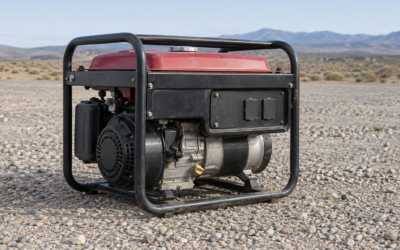
Move the generator outdoors before starting it, at least 20 feet from the home, doors, windows, and ventilation openings, with exhaust directed away from the building. Carbon monoxide can kill even when no gasoline is spilled. Let the engine cool completely before refueling; a hot muffler or engine surface can ignite vapors.
Turn the generator off, disconnect loads, and place the fuel can on the ground before pouring. Grounding the can helps reduce static buildup. Pour slowly, use a funnel or approved spout, and stop at the tank’s fill line. Wipe up any spill immediately, allow vapors to disperse, and never start the generator until spilled fuel has fully evaporated.
-
Rotate the fuel (10 minutes every few months)
Write a rotation date on your calendar. Use older stabilized gasoline in a vehicle or other approved equipment that can legally accept it, then replace the reserve with fresh fuel. Do not pour gasoline onto soil, down a drain, or into household trash. Contact your local household hazardous-waste program for disposal instructions.
Mistakes to Avoid
- Storing gasoline inside a home, basement, attached garage, attic, or occupied shed.
- Using a container that is unlabeled, damaged, rusty, or not approved for gasoline.
- Filling a generator while it is running, hot, or near an ignition source.
- Operating a generator indoors, in a garage, or near an open window, even with the door open.
- Relying on fuel stabilizer to make gasoline permanent. Stabilized fuel still needs inspection and rotation.
- Overfilling a tank or container. Fuel expands as it warms.
- Mixing old gasoline with fresh fuel to hide a sour smell, cloudy appearance, sediment, or water contamination.
- Leaving a can unsecured in a vehicle. Transport fuel only as allowed by local rules, keep it upright, and remove it promptly.
How Often
Inspect stored fuel every month for leaks, swelling, corrosion, loose caps, unusual odor, cloudiness, or sediment. If the container or fuel looks questionable, do not use it in the generator. A practical household rotation schedule is every one to three months for unstabilized gasoline and within the period stated on the stabilizer label for treated fuel. Heat, humidity, repeated temperature swings, and ethanol-blended fuel can shorten storage life.
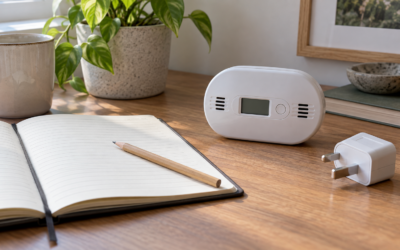
Run the generator according to its manual, often monthly or at least every few months, under an appropriate load. During a test, check for fuel leaks, confirm that the low-oil shutdown works, and verify that the carbon-monoxide safety features and outdoor placement are being used correctly.
When to Call a Pro or Replace
Call a qualified generator technician if fuel has entered the crankcase, the engine repeatedly floods, the carburetor is varnished, fuel lines are cracked, or the generator leaks after a restart. Stop using the unit immediately if you smell gasoline, see a wet spot, hear hissing from the fuel system, or find a swollen tank.
Replace a fuel container with any crack, persistent odor, failed cap, damaged spout, rust-through, or deformation. Have a professional evaluate a generator that will not start after fresh fuel and basic manual-approved troubleshooting. Never weld, drill, cut, or heat an empty gasoline container; residual vapor can explode.
FAQ
How long can gasoline be stored for a generator?
There is no universal expiration date. Unstabilized gasoline may degrade quickly, especially in warm conditions. Stabilizer can extend useful life when used at the correct dosage, but follow the additive label and inspect the fuel before use. Rotate your reserve regularly rather than treating a printed date as a guarantee.
Can I store gasoline in my garage?
Do not assume a garage is safe. An attached garage connects directly to the home and may contain furnaces, water heaters, vehicles, and electrical equipment. Local fire codes control what is permitted. If rules allow any garage storage, use only approved containers, keep them away from ignition sources, and follow the strictest applicable guidance; outdoor storage in an approved location is generally safer.
Should I use premium gasoline in a portable generator?
Use the octane and fuel type specified in the owner’s manual. Premium fuel is not automatically better, and raising octane above the required level may add cost without improving operation. Never use diesel in a gasoline engine or add engine oil to gasoline unless the equipment specifically requires a premix.
What should I do with bad gasoline?
Do not burn questionable fuel in a generator or pour it onto the ground. Keep the container closed and isolated from people and ignition sources, then contact your local household hazardous-waste facility or fire department for approved disposal guidance. Do not transport a leaking container.

Write Your Review
No reviews yet. Be the first to share your experience!