
🛒 Best Price Today on Amazon
Prime members get fast, free shipping on everything above, plus member-only deals. New members get a 30-day free trial — cancel anytime.
- Top Pick: SerBion GU10 120V 50W Halogen Light Bulbs for Track and Range Hood, GU10+C Candle Warmer Lamp with Dimmable, 2700K Warm White, 6000+Hours Long-Lasting Pack of 6
- Best Value: GU10 Halogen Bulb 120v 50w Warmer Bulbs, 2800k Warm White gu10 Dimmable for Candle Warmer, Scent Wax Burner, Fragrance Melt, Warming Bulb Pack of 6
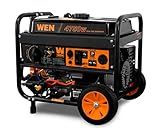
- Premium Choice: WEN 4,750-Watt 120V/240V Dual Fuel Portable Generator with Wheel Kit and Electric Start (DF475T)
Choosing between a 120 volt and 240 volt generator is less about picking the “more powerful” machine and more about matching backup power to your home’s wiring, appliances, and living situation. A compact 120V generator can keep lights, chargers, a refrigerator, and a few small appliances running at a relatively low cost. A 240V generator can supply larger loads, including well pumps, electric water heaters, central air-conditioning systems, and some hardwired appliances.
The real decision is whether you need portable, plug-in convenience or enough capacity to connect selected home circuits through a transfer switch. Before buying, check the running and starting wattage of the equipment you want to use, confirm whether it requires 120V or 240V, and determine whether your electrical panel can accept a properly installed generator connection.
As an Amazon Associate we earn from qualifying purchases at no extra cost to you.



Quick Verdict
Choose a 120 volt generator if you live in an apartment, rent your home, need emergency power for a refrigerator and electronics, or want a simple machine that connects with heavy-duty extension cords. These generators are often lighter, less expensive, and easier to store.
Choose a 240 volt generator if you own a house and want to power a well pump, sump pump, central HVAC equipment, electric range, workshop tools, or other 240V circuits. Many of today’s portable models are dual-voltage, meaning they can provide both 120V and 240V output. A 240V-capable generator does not automatically make more power, however. Its total wattage and the generator’s output configuration still determine what it can run.
Side by Side
| Factor | 120V Generator | 240V Generator |
|---|---|---|
| Comfort | Simple plug-in use for basic appliances; fewer panel connections | More whole-home flexibility, but usually requires installation and load planning |
| Durability | Comparable when using a quality engine and maintaining it properly | Comparable, though larger units may have heavier frames and more components |
| Price range | About $300 to $1,000 for many portable models | About $450 to $2,500 or more, depending on output and fuel type |
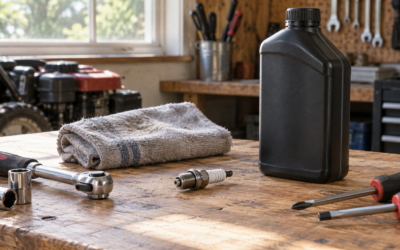
| Maintenance | Oil changes, fuel care, air-filter service, and battery care if electric-start | The same basic maintenance, plus transfer-switch and connection inspections |
| Space needed | Often roughly 20 to 30 inches long and 15 to 25 inches wide | Commonly 25 to 35 inches long and 20 to 30 inches wide |
| Look | Compact open-frame or enclosed designs; easier to conceal in storage | Usually larger, with a heavier frame, wheels, and a more industrial appearance |
| Resale | Good demand for clean, compact inverter generators | Strong appeal to homeowners seeking dual-voltage emergency power |
| Best for | Apartment residents, renters, electronics, refrigerators, and small tools | Owned homes, pumps, HVAC equipment, workshops, and selected home circuits |
| Typical capacity | About 1,000 to 4,000 running watts for common portable models | About 3,000 to 12,000 running watts for portable models |
Where 120 Volt Wins
A 120V generator is the practical choice when your priority is essential, portable power rather than whole-home coverage. Most household electronics and small appliances use 120V power: lamps, televisions, internet equipment, phone chargers, refrigerators, freezers, microwaves, coffee makers, and many window air conditioners.
It is also the better fit for homes with limited storage. Smaller models may weigh about 40 to 80 pounds, while larger 120V units can weigh 100 pounds or more. A compact generator can be moved by one person or stored on a garage shelf, depending on its design. Always keep it outdoors, far from doors, windows, and vents; never operate a fuel-burning generator in a garage, basement, or enclosed porch.
120V output is especially convenient for renters because it normally works with heavy-duty outdoor extension cords rather than a permanent electrical connection. That does not mean any extension cord is suitable. Use cords rated for the generator’s amperage, keep them as short as practical, and avoid household indoor cords.
For a small lighting setup, ordinary 120V accessories are easy to replace. For example, 120V GU10 bulbs such as the SerBion GU10 50W halogen six-pack, priced at $9.83, or a six-pack of 120V 50W GU10 warmer bulbs priced at $11.98, can be used in compatible fixtures. These bulbs are not generator-specific, but they illustrate how many everyday household loads are designed around 120V service.
The tradeoff is limited capacity and compatibility. A standard 120V generator cannot directly power a 240V well pump, central air-conditioning compressor, electric dryer, or electric range. Adapters do not safely convert a 120V generator into a true 240V source.
Where 240 Volt Generator Wins
A 240V generator earns its keep when your home depends on equipment that uses two hot conductors at 240V. Common examples include well pumps, some sump pumps, central air-conditioning systems, electric water heaters, clothes dryers, ranges, heat pumps, air compressors, and larger workshop tools.
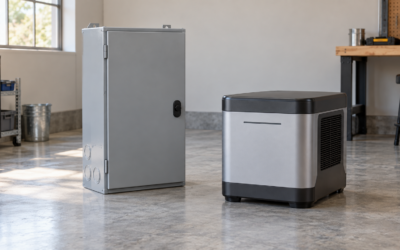
In an owned home, a 240V-capable generator can connect to a transfer switch or an approved interlock system installed by a qualified electrician. This setup lets you select specific circuits instead of running extension cords throughout the house. It is more convenient and reduces trip hazards, but the installation has an added cost that can range from several hundred dollars to well over $1,000, depending on wiring, accessibility, and local requirements.
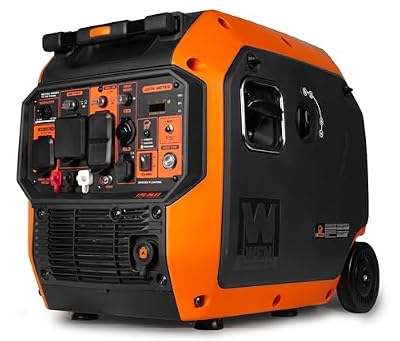
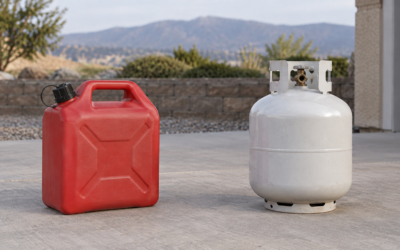
Many portable generators in this category are dual-fuel models, operating on gasoline and propane. The WEN DF475T, for example, is a 4,750-watt dual-fuel portable generator with 120V/240V capability, electric start, and a wheel kit. Its listed price is $464.99. A larger option, the WEN DF680iX, is a 6,800-watt dual-fuel, RV-ready inverter generator with electric start, fuel shutoff, and CO Watchdog, listed at $798. These products show why comparing only voltage can be misleading: output wattage, fuel type, inverter design, noise, and safety features matter just as much.
240V is not automatically the right answer for every homeowner. A generator may advertise 6,000 watts but have limits on how that power is divided between 120V and 240V outlets. Read the manual for running watts, starting watts, receptacle ratings, and whether full output is available in both voltage modes. Large generators also need more storage space, more fuel, and a level outdoor operating area.
Cost Over 5 Years
Purchase price is only the beginning. For a basic 120V generator, a reasonable five-year ownership estimate is about $550 to $1,500. That includes an initial generator price of roughly $300 to $900, several oil changes, replacement air and fuel filters, fuel stabilizer, and occasional spark-plug service. If the generator is used only during outages, fuel costs may remain modest, but stale gasoline can create expensive carburetor problems.
A portable 240V generator commonly costs about $700 to $2,500 over five years when purchase price, maintenance, fuel, battery replacement, and storage supplies are included. Add roughly $500 to $1,500 or more for a transfer switch, inlet box, wiring, permits, and professional installation where applicable. Dual-fuel operation may provide flexibility during long outages, but propane can produce a different wattage than gasoline, so check the specifications.
Running cost depends on load. A generator powering a refrigerator, router, and a few lights uses substantially less fuel than one starting an air conditioner or electric water heater. In either voltage class, avoid oversizing solely for occasional peak loads unless you truly need them; a larger engine generally costs more to buy, move, maintain, and operate.
Which One for Your Home
Small apartment
Choose a 120V inverter generator, if local rules and your outdoor space allow generator use at all. In many apartment settings, balconies, indoor rooms, and enclosed parking areas are unsafe and prohibited for fuel-burning equipment. A battery power station may be more suitable for indoor emergency use, while a compact 120V generator can serve as an outdoor option for essential appliances.
Family with kids or pets
A 120V model is usually enough for a refrigerator, freezer, lights, communications equipment, and a few chargers. If your home has a well, sump pump, gas furnace with electrical controls, or central HVAC, step up to a 240V-capable model and have essential circuits professionally connected. Prioritize carbon-monoxide shutoff, child-resistant storage for fuel, stable wheels, and a manageable noise level.
Rental
Start with a 120V generator because it avoids permanent wiring changes. Get written permission before using one, and verify local fire and noise rules. A renter should not backfeed power through a wall outlet or dryer receptacle. If extension cords are impractical, ask the landlord about an approved generator inlet or consider a battery backup system.
Long-term home
A 240V dual-voltage generator is the more future-proof choice for many homeowners. It can support selected 240V circuits while still powering ordinary 120V devices. Map your must-have loads, add their running and starting watts, and work with an electrician before purchasing. If outages are frequent or extended, compare a portable unit with a permanently installed standby generator.
FAQ
Can a 120V generator power a 240V appliance?
No. A 120V generator cannot provide the two-leg 240V supply required by a 240V appliance. Use a generator specifically rated for 240V output and a correctly installed connection.
Is a 240V generator twice as powerful?
No. Voltage and wattage are different specifications. A 240V generator may deliver more total power, but its actual capacity is determined by running watts, surge watts, engine size, and outlet configuration.
Can I plug a generator into a wall outlet?
Never. This can backfeed the utility lines, endanger workers, and start a fire. Use outdoor-rated extension cords for individual appliances or have a transfer switch or approved interlock installed by a qualified professional.
What size generator does a typical home need?
For basic essentials, about 2,000 to 4,000 running watts may be enough. Homes with pumps, HVAC systems, or several high-starting-wattage appliances often need 5,000 to 10,000 watts or more. Calculate the loads instead of choosing by house size alone.

Write Your Review
No reviews yet. Be the first to share your experience!