
🛒 Best Price Today on Amazon
Prime members get fast, free shipping on everything above, plus member-only deals. New members get a 30-day free trial — cancel anytime.
- Top Pick: Natural Gas Trading in North America
- Best Value: The Extraction State: A History of Natural Gas in America
- Premium Choice: Honeywell 18kW Whole Home Standby Generator
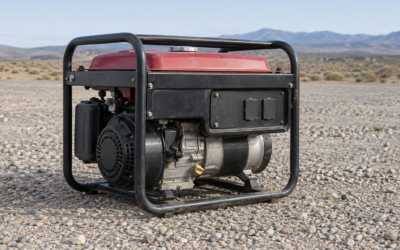
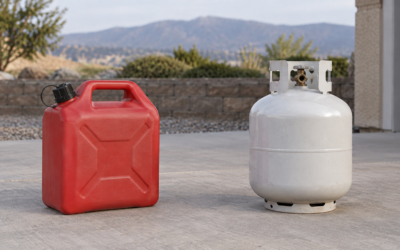
Choosing between a natural gas and propane standby generator is less about finding a universally “better” fuel and more about matching the generator to your home, property, and likely outage conditions. A natural gas unit can be convenient when your home already has a reliable municipal gas connection. Propane can be more practical where gas service is unavailable, or where severe weather may interrupt utility lines.
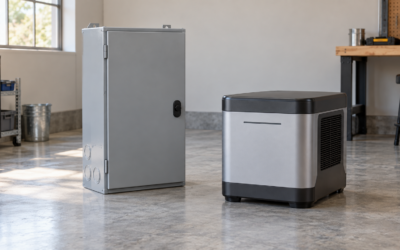
The decision also affects installation, storage, maintenance, operating cost, noise, and resale appeal. A typical whole-home standby generator delivers 10 to 26 kilowatts (kW), while larger systems can exceed 30 kW. For context, an 18kW model such as the Honeywell 18kW Whole Home Standby Generator is intended for substantially more demand than a 14kW unit such as the Honeywell 14kW Home Standby Generator. Neither fuel automatically makes a generator suitable; the home’s electrical load and transfer-switch setup matter just as much.
As an Amazon Associate we earn from qualifying purchases at no extra cost to you.


Quick Verdict
Choose natural gas if your property has dependable underground gas service, you want an effectively unlimited fuel supply during a typical outage, and you prefer not to store a tank. Natural gas is often the simplest choice for suburban homes already connected to a utility line.
Choose propane if you do not have natural gas service, live in a rural area, or want fuel stored on your property. A properly sized propane tank can keep a generator running through an extended outage, although the tank itself requires space, permits in some locations, and periodic refilling.
For many buyers, the most important question is not fuel price. It is this: Which fuel is more likely to remain available when the electrical grid fails?
Side by Side
| Factor | Natural Gas | Propane |
|---|---|---|
| Comfort and convenience | Automatic supply through the utility line; no tank monitoring | Reliable when stored on-site, but tank level must be checked |
| Durability | Generator cabinet can last 10–20 years with proper maintenance; supply depends on gas infrastructure | Similar generator lifespan; tank commonly lasts decades with inspections and care |
| Typical installed price | About $5,000–$12,000 for a 10–26kW system | About $5,500–$13,000, including a typical tank and installation |
| Maintenance | Oil, filters, battery, spark plugs, and engine inspections; no fuel delivery scheduling | Same engine maintenance, plus tank, regulator, and fuel-line inspections |
| Space needed | Often a 3-by-4-foot equipment area, subject to required clearances | Generator area plus tank space; a 500-gallon tank may occupy roughly 10 by 5 feet above ground |
| Look | One outdoor cabinet, usually about 30–36 inches wide and 24–30 inches deep | Cabinet plus a visible horizontal or vertical tank unless buried |
| Resale appeal | Strong in areas with established natural gas service | Strong in rural or outage-prone areas where gas service is unavailable |
| Typical fuel consumption | Roughly 100–250 cubic feet per hour at high load for many residential models | Roughly 1.5–3.5 gallons per hour at high load, depending on output |
| Best for | Connected suburban homes and buyers who value low day-to-day involvement | Rural properties, long outages, and homes needing independent fuel storage |
Exact performance varies by engine, generator size, outdoor temperature, elevation, and electrical load. A licensed electrician or generator installer should calculate the load rather than sizing from square footage alone.
Where Natural Gas Wins
The biggest advantage of natural gas is convenience. Once a standby generator is connected to a utility line and an automatic transfer switch, it can start during an outage without anyone wheeling out cans, connecting a tank, or arranging a delivery. For homeowners who travel frequently, care for older adults, or simply want a low-touch backup system, that convenience is significant.
Natural gas also saves yard space. The generator may need a concrete pad or approved mounting surface, but there is no separate propane cylinder or large tank to place beside it. That makes natural gas especially attractive for smaller lots, townhomes with approved utility access, and homes where a large tank would interfere with landscaping.
Fuel storage is another benefit. Propane can remain usable for years when stored correctly, but the homeowner still needs enough tank capacity. Natural gas is delivered continuously, so there is no tank gauge to monitor. A residential generator can often run for days or longer as long as the gas network and household service remain operational.
Natural gas may also be the better-looking installation. The equipment cabinet can be positioned near other utility equipment, while a propane system may add a tank measuring approximately 9 to 16 feet long, depending on capacity and shape. Buried propane tanks reduce visual impact but add excavation and installation expense.
There is one important limitation: natural gas relies on infrastructure outside your property. Earthquakes, flooding, pipeline damage, extreme demand, or a utility shutoff can interrupt service. Some utilities also reduce pressure or prioritize essential facilities during emergencies. Ask the installer and local utility how the service is designed to perform during severe weather.
Where Propane Standby Generator Wins
Propane gives you an independent fuel reserve. If the utility power fails but the propane tank, regulator, and generator remain intact, the system can continue operating without relying on a municipal gas pipeline. This can be valuable in rural locations, coastal areas, and regions where gas infrastructure is limited.
Propane is also more flexible for homes without a gas connection. Installing a new natural gas service line may be impossible or cost-prohibitive, whereas a propane tank can usually be installed on a suitable part of the property, subject to local codes and setbacks. A 250-gallon tank may support a shorter outage, while a 500-gallon tank offers more reserve. Actual runtime depends heavily on generator size and load.
For long outages, tank sizing provides a clear planning advantage. At a heavy load of 2 gallons per hour, a 500-gallon tank does not provide 250 hours of usable runtime because tanks are not normally drained completely and consumption changes with demand. Still, it can offer a substantial reserve. Reducing the load by turning off nonessential circuits can extend that time.
Propane can also be the practical choice where natural gas pressure is marginal. Standby generators need the fuel pressure specified by the manufacturer, and a technician may need to verify pipe sizing, regulator capacity, and the distance from the tank to the appliance. Propane systems are not maintenance-free, but their fuel supply is more directly under the homeowner’s control.
Cost Over 5 Years
For a typical 14 to 18kW residential installation, expect the generator itself to cost roughly $3,500–$7,500, with a complete installed project often landing between $5,000 and $12,000. Larger systems, difficult electrical work, long fuel runs, permits, sound barriers, and premium transfer equipment can increase the total.
Natural gas commonly has the lower upfront cost when a suitable gas line already exists near the generator location. A reasonable five-year budget might include $5,000–$10,000 for installation, $1,000–$2,500 for scheduled service and replacement batteries, and approximately $500–$2,500 in fuel for occasional outages. That produces a broad estimated total of $6,500–$15,000 before unusual repairs.
Propane may add $1,000–$4,000 for a tank, regulators, trenching, and setup. A five-year budget might therefore total $7,500–$18,000, including maintenance and roughly $1,000–$4,000 in fuel. These figures are planning ranges, not quotes. Fuel prices vary by region, contract, season, and delivery volume.
Homeowners researching fuel markets may encounter resources such as Natural Gas Trading in North America, listed at $48.35, or The Extraction State: A History of Natural Gas in America, listed at $33.68. They can provide background on the fuel industry, but neither should be treated as a substitute for a local utility rate or propane delivery quote.
Which One for Your Home
Small apartment
A permanently installed standby generator is often impractical or prohibited for an apartment resident. Building rules, shared electrical systems, exhaust clearances, noise limits, and landlord approval all apply. If the building already has a natural gas standby system for essential loads, that may be the most convenient arrangement. Individual propane generators should never be operated indoors, in a hallway, garage, or enclosed balcony.
Family with kids and pets
Natural gas is usually the easier choice for a detached family home with existing service. There is no tank for children to approach, and the system can start automatically while the household is asleep or away. Propane can work very well when the property has no gas line, but the tank and generator should be protected from vehicle traffic and kept clear of play areas. Install carbon monoxide detectors and follow the manufacturer’s clearance requirements.
Rental property
Ask the owner before installing either system. For a landlord, natural gas may be more attractive because it takes less space and requires less tenant involvement. A propane system can still make sense for a rural rental, but the lease should clearly assign responsibility for inspections, fuel deliveries, snow clearance, and service calls. A permanent generator may add resale value, but only if it is professionally installed and documented.
Long-term home
Choose the fuel with the strongest local infrastructure and the lowest long-term hassle. If you expect to remain in the home for many years and already have natural gas, it is typically the streamlined option. If outages are prolonged and gas service is vulnerable, propane offers greater control over your reserve. In either case, prioritize a correctly sized generator, a quality transfer switch, proper placement, and an annual service schedule.
FAQ
Is natural gas cheaper than propane for a standby generator?
Natural gas is often less expensive per hour in areas with favorable utility rates, but the difference varies widely. Propane may cost more per unit of energy, yet it can be worth the premium when natural gas service is unavailable or unreliable. Compare local delivered prices and expected outage hours rather than national averages.
How long will a propane tank run a whole-home generator?
Runtime depends on tank size, generator output, temperature, and electrical load. Many residential systems use about 1.5–3.5 gallons per hour at high load. A 500-gallon tank provides a substantial reserve, but only part of its capacity is normally treated as usable, and a lightly loaded generator consumes much less.
Can a standby generator run on both natural gas and propane?
Many residential standby generators are dual-fuel capable, but not every model is. A conversion kit, fuel-pressure adjustment, or manufacturer-approved setup may be required. Never switch fuels without following the installation manual and having a qualified technician verify the system.
Which fuel is safer?
Both can be safe when installed according to code. Natural gas is lighter than air and tends to rise if released; propane is heavier than air and can collect in low areas. Neither fuel should be handled casually. Use certified installers, maintain shutoff valves and regulators, keep vents clear, and test carbon monoxide alarms regularly.



Write Your Review
No reviews yet. Be the first to share your experience!