
🛒 Best Price Today on Amazon
Prime members get fast, free shipping on everything above, plus member-only deals. New members get a 30-day free trial — cancel anytime.
When choosing a generator, the real question is not simply whether one starts with a cord or a button. You are deciding how much effort you want during an outage, how much complexity you are willing to maintain, and whether the generator will live in a garage, shed, vehicle, or cramped storage closet. A recoil-start model can be inexpensive, compact, and dependable after months of storage. An electric-start generator is easier to operate, especially in bad weather, but it adds a battery, charging system, and a few more components to maintain.
For most homeowners, the best choice depends on generator size and expected use. A small emergency unit used occasionally may not justify electric start. A larger dual-fuel generator intended to run a refrigerator, sump pump, furnace controls, or several household circuits is often more comfortable with push-button or remote starting. Here is how recoil start vs electric start generator options compare for a home in 2026.
As an Amazon Associate we earn from qualifying purchases at no extra cost to you. Product prices and availability are accurate as of the date shown and are subject to change.



Quick Verdict
Choose a recoil-start generator if you want the lowest purchase price, minimal electrical complexity, and a machine that can be stored for long periods without worrying about a starter battery. It is a practical fit for small generators, camping, workshops, and buyers who are comfortable pulling a starter cord.
Choose an electric-start generator if quick, low-effort starting matters more than the lowest cost. It is especially useful for heavier portable generators, users with limited pulling strength, cold-weather operation, and homes where multiple people may need to start the unit. Some models also include remote start or automatic choke features.
Side by Side
| Factor | Recoil Start | Electric Start |
|---|---|---|
| Comfort | Requires one or more firm pulls; can be tiring in cold weather | Starts with a key, button, or remote; easier for most users |
| Durability | Few starting components and no starter battery | Generally durable, but battery, starter motor, and wiring add wear points |
| Price range | About $300–$900 for many portable models | About $450–$1,500, depending on wattage and features |
| Maintenance | Engine, fuel system, oil, and pull cord need attention | All recoil-style engine maintenance plus battery charging and terminal care |
| Space needed | Often 18–25 inches long and 15–22 inches wide for smaller units | Often 22–32 inches long and 18–25 inches wide on comparable models |
| Look | Usually simpler and more compact | Often has a larger control panel, battery compartment, and heavier frame |
| Resale | Appeals to buyers seeking simplicity and low cost | May command more interest when the battery and electric system work properly |
| Starting reliability | Depends on technique, fuel condition, and a functioning recoil assembly | Very convenient with a charged battery; can still have recoil backup on many models |
| Best for | Small homes, occasional use, camping, and tight storage | Large homes, frequent outages, cold climates, and reduced-effort operation |
Where Recoil Start Wins
The main advantage of recoil start is simplicity. Pull-start engines do not need a starter motor, ignition battery, charging circuit, or battery-maintenance routine. Fewer components can mean fewer things to troubleshoot after the generator has sat unused for several months. You still need fresh fuel, clean oil, and a properly maintained carburetor, but the starting system itself is straightforward.
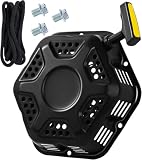
Recoil models also tend to cost less. A basic portable generator may sell for roughly $300 to $600, while comparable electric-start models often begin around $450. The difference can be meaningful when you are buying a generator for occasional refrigerator backup rather than daily use. Replacement pull assemblies are also relatively inexpensive. For example, a 1PZ recoil starter for several Honda GX340, GX390, GX610, and GX620 engines is listed at $15.15, while a recoil pull starter for Predator 212cc and Honda GX160 or GX200 engines is listed at $10.99. Compatibility still depends on the exact engine and mounting pattern, so check the model before ordering.
A recoil-start generator may also save storage space. Without a battery box and electric-start hardware, the frame can be narrower and lighter. A small 2,000- to 3,500-watt unit may weigh approximately 45 to 90 pounds, although fuel and accessories add to the lifting burden. That makes it easier to move before an outage or load into a vehicle.
There is a practical reliability benefit, too. A dead starter battery cannot prevent a recoil engine from starting if the engine and fuel system are in good condition. Many electric-start generators include a recoil backup for this reason. If you choose recoil-only, practice the starting procedure before an emergency and learn how to use the choke and fuel shutoff correctly.
Where Electric Start Generator Wins
Electric start is primarily about convenience. Turn a key or press a button, and the starter motor cranks the engine without repeated pulling. This is helpful when the generator is outside in rain or snow, when the engine is difficult to reach, or when the user has limited hand, shoulder, or back strength.
The benefit becomes more noticeable as generators get larger. A 4,000- to 8,000-watt portable generator can weigh 100 to 200 pounds before fuel. You should not be lifting that class of machine frequently, and starting it manually can feel like an unnecessary chore. Electric start does not reduce the generator’s weight, but it makes operation more manageable once the unit is on a level surface.
Electric start can also be useful for a household with several users. A partner, older teenager, neighbor, or caregiver may be more comfortable pressing a button than learning a specific pull-start sequence. Some models add a remote, allowing you to start the generator from a short distance, although the generator must still be positioned outdoors with proper clearance.
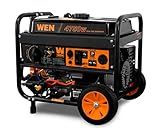
Expect to pay more for these features. The WEN DF475T, a 4,750-watt dual-fuel portable generator with electric start and a wheel kit, is listed at $464.99. A Westinghouse 4,650-peak-watt dual-fuel model with remote electric start, auto choke, an RV-ready 30-amp outlet, and a carbon-monoxide sensor is listed at $499. These prices illustrate how electric start is often bundled with other conveniences, rather than sold as a completely separate upgrade.
The tradeoff is maintenance. The starter battery may need periodic charging, especially if the generator is stored for a season. Battery terminals can corrode, and a battery eventually needs replacement. If the battery is dead, you may need the recoil backup, a charger, or a jump-start procedure approved by the manufacturer.
Cost Over 5 Years
Purchase price is only one part of the five-year cost. For a basic recoil-start generator purchased for $350 to $600, budget approximately $25 to $60 per year for oil, spark-plug checks, fuel-system care, and occasional replacement items. Over five years, that puts routine ownership costs around $125 to $300, excluding gasoline, repairs, and storage accessories.
An electric-start generator may cost $100 to $300 more at purchase. Routine engine maintenance is similar, but add roughly $10 to $25 per year for battery charging or a maintenance charger if needed. A replacement starter battery may cost about $30 to $100, depending on its size and type. A reasonable five-year ownership estimate is therefore the original $450 to $1,500 purchase price plus approximately $150 to $400 in routine care and battery-related costs.
Fuel is the largest variable for either design. A 4,000-watt generator running under a moderate load might use roughly 0.4 to 0.8 gallons of gasoline per hour, while actual consumption varies substantially with load, engine design, fuel type, and operating mode. Propane can be more convenient to store but may deliver different output and runtime. Never store gasoline indoors, and follow the manufacturer’s instructions for fuel stabilizer and seasonal storage.
Which One for Your Home
Small apartment
A recoil-start inverter or compact conventional generator is usually the more sensible choice, assuming local rules allow generator use. Apartments often have limited storage, and a 2,000- to 3,000-watt model can be easier to move and store than a larger electric-start unit. Focus on safe outdoor placement, noise, carbon-monoxide protection, and the ability to power essentials such as a refrigerator, internet equipment, or a few lights. Never operate a fuel-burning generator on a balcony, in a hallway, or inside a garage.
Family with kids or pets
Electric start is often worth considering because it reduces the physical effort and lets adults operate the generator quickly. Look for a model with a wheel kit, clear controls, overload protection, and a carbon-monoxide sensor. Keep children and pets away from the hot engine and exhaust, and plan where cords will run before an outage occurs. A recoil backup is valuable in case the starter battery is discharged.
Rental home
Renters generally benefit from a portable recoil-start unit if budget and storage are priorities. You can take it with you when you move, and a simpler model may be easier to resell. Electric start makes sense when the generator is heavy or the household includes someone who cannot comfortably pull a cord. Before buying, check lease terms, local noise rules, and whether the property owner permits generator operation.
Long-term home
For a long-term home with regular outages, an electric-start dual-fuel generator is often the more comfortable investment. A 4,000- to 7,500-watt model can support more essential loads, and propane gives you another fuel option during extended outages. Choose a unit with a manual backup start, wheels, a 30-amp outlet if your planned loads require it, and enough covered outdoor storage space. If you want automatic transfer and no outdoor setup during an outage, compare permanently installed standby systems instead.
FAQ
Is electric start better than recoil start?
Neither is universally better. Electric start is easier and more comfortable, while recoil start is simpler, less expensive, and unaffected by a dead starter battery. For larger generators or frequent outages, electric start usually offers the better experience.
Can an electric-start generator also be pull-started?
Many portable electric-start generators include a recoil handle as a backup, but not all do. Confirm the specifications before buying. A backup pull start is particularly important if the generator may sit unused for long periods.
How long does a generator starter battery last?
A starter battery may last several years, but life depends on storage temperature, charging habits, vibration, and maintenance. Keep the battery charged according to the manual, inspect the terminals, and replace it when cranking becomes slow or unreliable.
Does electric start use more fuel?
The brief electricity used to crank the engine has little effect on fuel consumption. Fuel use is mainly determined by engine size, generator design, fuel type, and the electrical load. Electric start can make operation easier, but it does not make the generator more fuel-efficient by itself.
Ready to decide? Our #1 pick for 2026 is the Comfort.
Live price & availability on Amazon.



Write Your Review
No reviews yet. Be the first to share your experience!