
🛒 Best Price Today on Amazon
Prime members get fast, free shipping on everything above, plus member-only deals. New members get a 30-day free trial — cancel anytime.
Quick answer: Our top pick in 2026 is the Portable gasoline generator — our #1 rated choice. See the full ranked comparison, alternatives and buying advice below.
The Short Answer
It depends: a standby generator is worth it if you have frequent or high-consequence outages and need power to come back automatically. For homeowners who can tolerate losing electricity for a day or two, a portable generator, battery backup, or basic outage plan is usually the better value. But if an outage means a flooded basement, spoiled medication, a failed sump pump, no well water, frozen pipes, a disrupted home business, or serious comfort and safety concerns, a permanently installed generator can justify its high cost.
A standby generator sits outside the home, connects to your electrical panel through an automatic transfer switch, and starts itself when utility power fails. It can run on natural gas or propane for days, provided the fuel supply remains available. That automatic operation—not simply the ability to make electricity—is what buyers are paying for.
As an Amazon Associate we earn from qualifying purchases at no extra cost to you. Product prices and availability are accurate as of the date shown and are subject to change.


In 2026, a 10kW standby system may start around $3,700 for equipment, while a 14kW system can cost about $5,255 for equipment. Once installation, electrical work, permits, fuel connections, and site preparation are included, many homeowners should budget roughly $8,000 to $18,000 total. Complex installations can exceed that range.
What You Actually Get
A standby generator is not a portable generator on a pad. It is an integrated backup-power system made up of several expensive parts:
- The generator: A weather-protected outdoor engine and alternator, commonly rated from 10kW to 26kW for residential use.
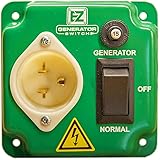
- An automatic transfer switch: This safely disconnects your house from the utility grid and moves selected circuits—or the whole home—to generator power. It also prevents dangerous backfeeding onto utility lines.
- Load management: Many systems can prioritize essentials and temporarily prevent large loads, such as central air conditioning, electric ranges, dryers, or pool equipment, from starting at the same time.
- Fuel connection: Natural-gas service offers the easiest long-duration setup where gas is reliable. Propane requires an adequately sized tank and scheduled fuel deliveries.
- Monitoring: Many current models offer app or cellular monitoring, sending alerts about exercise cycles, low battery status, faults, and outages.
Capacity determines what the system can support. A 10kW generator can often cover essentials: a refrigerator, freezer, lights, internet equipment, gas furnace blower, sump pump, garage door, and some small appliances. It may also handle a well pump, but that depends on the pump’s startup demand and what else is running. A 14kW unit offers more breathing room and may support a broader portion of a modest home, though it still may not run every major electric load simultaneously.
“Whole home” does not necessarily mean “everything, all at once.” An all-electric house with electric heat, electric water heating, an induction range, clothes dryer, hot tub, pool pump, and central air may need a substantially larger generator—or a plan to manage loads. An installer should perform a load calculation rather than sizing a unit solely by square footage.
Physically, these generators are substantial outdoor appliances. Residential units commonly occupy a footprint in the neighborhood of 3 to 5 feet long and 2 to 3 feet deep, and can weigh roughly 300 to 600 pounds before the concrete or composite pad, wiring, and fuel connection are considered. Local rules usually govern clearances from doors, windows, vents, property lines, and combustible materials.
Pros
- Automatic protection during outages. The generator typically detects an outage and restores power in seconds to a minute, without requiring you to be home, go outside in bad weather, or handle fuel cans.
- Longer runtime than portable options. With dependable natural gas or a properly sized propane supply, it can operate through multi-day outages. A portable generator usually requires repeated refueling.
- Protects critical home systems. It can keep sump pumps, well pumps, furnaces, refrigerators, freezers, medical equipment, security systems, and internet equipment operating.
- Better for second homes and frequent travelers. Remote monitoring and automatic operation are especially useful when no one is present to start a generator manually.
- More convenient and safer than extension-cord setups. There is no need to run cords through doors or refuel a hot portable generator in the rain. A professionally installed transfer switch also reduces backfeed risks.
- Potentially valuable in outage-prone areas. For households regularly affected by storms, wildfire shutoffs, ice events, or aging local infrastructure, the convenience can become a practical necessity rather than a luxury.
Cons
- High installed cost. Equipment is only part of the bill. A Generac 10kW system listed around $3,701.30 or a 14kW system around $5,255 can cost far more after installation.
- Ongoing maintenance. Expect periodic exercise cycles, oil and filter changes, battery replacement, inspections, and occasional service calls. Annual maintenance commonly costs several hundred dollars, depending on the service plan and location.
- Fuel is not free—and not guaranteed. Natural gas is convenient, but severe regional events can affect supply or pressure. Propane is dependable only if your tank has enough fuel before the outage begins.
- Noise and neighborhood concerns. Standby units are quieter than many open-frame portable generators but are still audible. Placement matters, especially on smaller lots.
- It does not solve every outage problem. It will not provide unlimited power, protect against every electrical surge, or make an all-electric home function normally without proper load planning.
- Permitting and placement can complicate the project. Electrical, plumbing or gas work, zoning setbacks, HOA rules, trenching, and panel upgrades can add time and cost.
Who Should Buy It
A standby generator makes the most sense for homeowners who view uninterrupted power as protection rather than convenience. You are a strong candidate if your home has a sump pump that prevents water damage, a private well that leaves you without water during an outage, a septic pump, medically necessary powered equipment, refrigerated medication, or a furnace that needs electricity to run.
It is also a good fit if outages in your area are common, long, or difficult to predict. A household that loses power for several days once every few years may still find the investment reasonable if the consequences are severe. The case is stronger for people who travel often, own a vacation property, work from home, operate a home-based business, or cannot easily move to a hotel during a prolonged outage.
Choose capacity based on priorities. A 10kW unit is often sensible for an essentials-focused plan. A 14kW model may be a worthwhile step up for homeowners wanting more circuits and fewer compromises, provided the fuel supply and electrical design support it.
Who Should Skip It
Skip a standby generator if your outages are rare and short, your budget is tight, and you can comfortably manage with a refrigerator, lights, phone charging, and a few essential circuits. It is also hard to justify for renters, homes without a suitable outdoor location, or buyers who do not want the maintenance commitment.
Households with modest needs may be overspending if they install a whole-home system simply to avoid temporary inconvenience. A $1,000 to $2,500 portable-generator setup can cover basic emergency loads for a fraction of the installed cost. Likewise, a battery power station can be a quieter option for electronics, lights, internet gear, and medical devices with relatively low power draw.
If you are considering standby power mainly for central air conditioning, remember that cooling equipment can require major starting power. You may need a larger generator, load-management controls, or a soft-start device. Get a detailed proposal before assuming a mid-size unit will run your entire house normally.
Cheaper Alternatives
| Option | Cost | Trade-off |
|---|---|---|
| Portable gasoline generator | $500–$1,500 | Requires manual setup, outdoor refueling, extension cords or an inlet connection, and careful fuel storage. |
| Inverter generator with transfer switch | $1,500–$4,000 installed | Quieter and cleaner power, but still manual and limited by fuel capacity and wattage. |
| Portable power station | $500–$3,500 | Quiet and indoor-safe, but usually cannot run central HVAC, electric heat, or high-demand appliances for long. |
| Home battery backup | $8,000–$25,000 installed | Silent and automatic, but runtime depends on battery capacity; adding solar raises cost. |
| Essentials-only outage plan | $150–$800 | Coolers, battery packs, flashlights, water storage, and a small backup power source offer no whole-home convenience. |
FAQ
How much does a standby generator cost installed?
Most residential projects land around $8,000 to $18,000, including the generator, transfer switch, labor, permits, electrical work, and fuel hookup. Longer gas lines, propane tank work, trenching, difficult access, concrete work, and panel upgrades can push the final number higher.
Is 10kW enough for a house?
It can be enough for essential loads in many homes, but not necessarily every appliance at once. A 10kW system is commonly suited to refrigerators, lighting, internet equipment, furnace blowers, sump pumps, and selected outlets. Homes with electric heat, multiple air conditioners, large well pumps, or several high-draw appliances may need more capacity.
How long can a standby generator run?
With natural gas, it can run as long as utility fuel service remains available and the unit is maintained. With propane, runtime depends on tank size, generator load, weather, and existing fuel level. The practical limitation is usually fuel supply and maintenance intervals, not the generator’s ability to run continuously.
Does a standby generator add home value?
It can improve a home’s appeal, especially in regions with frequent outages, but buyers should not expect to recover every installation dollar at resale. Its greatest value is often avoided loss: preventing water damage, preserving food and medication, maintaining heat or water, and keeping the household functional during an emergency.
Ready to decide? Our #1 pick for 2026 is the Portable gasoline generator.
Live price & availability on Amazon.



Write Your Review
No reviews yet. Be the first to share your experience!