
🛒 Best Price Today on Amazon
Prime members get fast, free shipping on everything above, plus member-only deals. New members get a 30-day free trial — cancel anytime.
Quick answer: Our top pick in 2026 is the Manual circuit selection with a transfer switch — our #1 rated choice. See the full ranked comparison, alternatives and buying advice below.
The Short Answer
Yes—generator load shedding is worth it if your generator cannot safely power every major appliance at the same time. The one condition is that the savings and convenience must outweigh the cost of the load-management equipment and professional installation.
Load shedding, also called load management, automatically turns selected electrical circuits off when demand gets too high. It can let a smaller standby generator handle essentials such as heating, refrigeration, lights, and a sump pump without being overwhelmed by an electric water heater, air conditioner, or electric range.
As an Amazon Associate we earn from qualifying purchases at no extra cost to you. Product prices and availability are accurate as of the date shown and are subject to change.

For many homeowners, this is a practical compromise. Instead of buying a larger generator for the rare moment when every high-draw appliance starts together, you use controls to prioritize the circuits that matter most. In 2026, that can still be substantially less expensive than upgrading the generator, electrical service, or fuel system.
What You Actually Get
A load-shedding system typically consists of a controller, one or more contactors or relays, and wiring connected to selected circuits. When the generator approaches its available capacity, the system disconnects nonessential loads. Once capacity is available again, it may restore those loads in stages, depending on the equipment and installation.
Consider a 22-kilowatt standby generator. It does not necessarily have 22 kilowatts available for every appliance’s startup surge at once. A central air conditioner may briefly demand several times its running wattage, while an electric water heater commonly uses about 4,500 watts and an electric range can draw 8,000 to 12,000 watts when multiple burners and the oven are operating. Without load management, simultaneous startup can trip protection or cause the generator to shut down.
A load manager can assign priorities. For example, the refrigerator, furnace blower, internet equipment, and lighting may remain on first. The air conditioner could be allowed to run only when the water heater is off, while a secondary air-conditioning unit or electric dryer is delayed entirely.
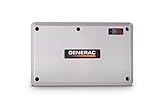
Products such as the Generac 7,000 50 Amp Load Manager, listed at about $119.99, and the Generac 7006 100 Amp Load Manager, listed at about $225.89, illustrate the range of hardware involved. The 50-amp and 100-amp ratings refer to the switching capacity for the controlled circuit or equipment; they do not magically add wattage to the generator. Compatibility with the generator, transfer equipment, voltage, and wiring layout is essential.
Installation is usually a job for a licensed electrician or generator installer. Depending on the panel layout, number of controlled loads, and local labor rates, a complete load-management installation can add roughly $300 to $1,500 or more to a generator project. A complicated retrofit may cost more than the controller itself.
Pros
- May let you choose a smaller generator. A managed 14- to 18-kilowatt generator may cover essential loads that would otherwise require a 22- to 26-kilowatt unit. Generator prices vary widely, but moving up one size can cost hundreds or thousands of dollars.
- Protects against overloads. The system helps prevent too many large appliances from operating simultaneously, reducing the risk of nuisance shutdowns during an outage.
- Handles startup surges automatically. Air conditioners, well pumps, heat pumps, and compressors can demand more power when starting than they use continuously. Load management can temporarily disconnect another load to make room.
- Improves fuel efficiency in some situations. Preventing unnecessary high-demand equipment from running can reduce the generator’s electrical and fuel burden. The actual savings depend on the generator, fuel type, runtime, and which appliances are controlled.
- More convenient than manual decisions. You do not have to walk to the electrical panel during an outage to turn off the dryer or water heater before starting the air conditioner.
- Useful for homes with electric appliances. Load shedding is especially valuable when the house uses electric heat, a heat pump, a well pump, an electric water heater, or central air conditioning.
- Can preserve comfort and safety. Prioritizing heating, cooling, medical equipment, refrigeration, and sump-pump circuits can make a smaller generator much more useful.
Cons
- It does not increase generator capacity. A load manager only decides which circuits receive power. If your generator is too small for essential loads even after nonessential circuits are removed, load shedding cannot solve the problem.
- Installation adds cost and complexity. Hardware prices may start near $120 to $225 for individual controllers, but labor, conduit, breakers, testing, and additional modules can make the installed price several times higher.
- Some appliances will be unavailable. If the electric water heater, dryer, range, pool pump, or second air conditioner is designated a low-priority load, it may remain off for part or all of the outage.
- Compatibility is not universal. The controller must work with the generator and transfer switch. A 50-amp device cannot simply be substituted for a required 100-amp application, and the nameplate rating alone does not confirm compatibility.
- There are more components to maintain. Additional relays, connections, and control wiring create more potential failure points than a simple transfer switch.
- It may be unnecessary with a generously sized generator. If your generator has ample capacity for all realistic simultaneous loads, paying for automatic load management may provide little benefit.
- Electrical planning matters. Poorly chosen priorities can leave a high-demand appliance running while an essential circuit is interrupted. The system should be designed around actual appliance wattage and startup behavior, not guesses.
Who Should Buy It
Buy generator load shedding if you are installing a standby generator and want to control the project’s total cost without giving up essential comfort. It is particularly appropriate when your home has one or more large electric loads, such as central air conditioning, a heat pump, an electric water heater, a well pump, or a large workshop.
It also makes sense when your generator has a clearly defined priority list. For example, you might want the refrigerator, furnace, sump pump, internet equipment, and selected lights always available, with the air conditioner operating only when the water heater and dryer are disconnected.
It can be a smart choice for homes with limited service capacity or difficult generator upgrades. If installing a larger generator would require a larger gas line, bigger propane tank, upgraded transfer equipment, or changes to the electrical service, load management may be the simpler solution.
Who Should Skip It
Skip it if you have a portable generator connected only to a few manually selected circuits, unless a qualified electrician recommends a compatible system. In that setup, manually choosing the circuits may already provide adequate control.
You may also skip load shedding if your standby generator is comfortably larger than your calculated peak demand and you do not use multiple high-wattage appliances during outages. Likewise, it is a poor substitute for proper generator sizing. If you need an electric furnace, a 5-ton air conditioner, an electric range, and a 4,500-watt water heater simultaneously, the answer may be a larger generator rather than more controls.
Cheaper Alternatives
| Option | Cost | Trade-off |
|---|---|---|
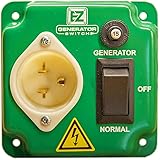
| Manual circuit selection with a transfer switch | About $300–$900 installed, depending on panel and labor | Lower cost, but you must turn off or avoid large appliances yourself. |
| Basic interlock and portable generator inlet | About $200–$700 installed | Works well for selected circuits, but requires setup, supervision, and safe outdoor generator operation. |
| Time-delay or priority relay for one major appliance | About $150–$500 installed | Can control one load, but offers less flexibility than a whole-home load-management system. |
| Buy a larger standby generator | Often $1,000–$4,000 more for equipment, before possible installation changes | Provides more available power, but increases purchase price, fuel demand, space requirements, and sometimes utility or gas-line work. |
| Generac 7,000 50 Amp Load Manager | About $119.99 for the hardware | Affordable controller option, but installation and compatibility still determine the final cost. |
| Generac 7006 100 Amp Load Manager | About $225.89 for the hardware | Handles a higher-rated application, but it is not automatically better for every generator or circuit. |
FAQ
Does load shedding save fuel?
It can, but fuel savings are not guaranteed. The main benefit is keeping the generator within its safe electrical capacity. If load shedding prevents high-wattage appliances from running, the generator may use less fuel, particularly during long outages. However, the controller itself is primarily a capacity-management device, not a guaranteed fuel-saving appliance.
Can load shedding run my whole house on a small generator?
No. It can make a smaller generator practical by disconnecting selected loads, but the remaining priority circuits still need enough capacity. Have an installer calculate both running wattage and startup surge for pumps, compressors, air conditioners, and other motor-driven equipment.
Will my air conditioner work with generator load management?
Often, yes. The air conditioner may be assigned a priority or delayed until the generator has enough capacity. Some systems can manage multiple large loads, while others are designed for a particular circuit or contactor. Confirm the air conditioner’s voltage, amperage, startup characteristics, and compatibility before buying hardware.
Is load shedding better than buying a larger generator?
It depends on your priorities. Load shedding usually costs less when only a few appliances create the capacity problem, and it can reduce fuel use and installation demands. A larger generator is better if you want nearly unrestricted simultaneous use or if essential loads already exceed the smaller unit’s capacity. Get an itemized quote for both options before deciding.
Ready to decide? Our #1 pick for 2026 is the Manual circuit selection with a transfer switch.
Live price & availability on Amazon.



Write Your Review
No reviews yet. Be the first to share your experience!