
🛒 Best Price Today on Amazon
Prime members get fast, free shipping on everything above, plus member-only deals. New members get a 30-day free trial — cancel anytime.
- Top Pick: FDJ Universal 5 Gallon Generator Gas Fuel Tank, Compatible with Honda EC2500 & Predator 2000/4000, Extended Run Fuel Tank Assembly for 2-3KW Portable Generators, Easy Installation (5 Gallon)
- Best Value: JJing Universal 7 Gallon Generator Gas Fuel Tank Compatible with Honda EC6500 EM6500 EM5000S EB6500 Predator Champion Chicago ETQ HomeSite UST Wen 5000 5500 6500 7500 8750 9000 and More Generators
- Premium Choice: Strongthium 389cc 420cc Generator Gas Fuel Tank
Choosing a generator fuel tank is not simply a matter of buying the largest container that fits your budget. A tank that is too small can force inconvenient overnight refueling, while one that is too large may add substantial weight, create fitment problems, or exceed the generator’s safe fuel-system capacity. The right choice depends on generator wattage, fuel consumption, available mounting space, and how long you need power between refills.
Many buyers also make the mistake of treating advertised gallon capacity as guaranteed runtime. A 5-gallon tank does not provide the same number of hours on a 2,000-watt inverter generator as it does on a 7,000-watt open-frame model. Others overlook fuel-line compatibility, venting, mounting hardware, or whether the listed capacity is usable capacity rather than the tank’s total physical volume.
As an Amazon Associate we earn from qualifying purchases at no extra cost to you. Product prices and availability are accurate as of the date shown and are subject to change.
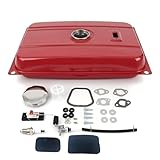


This guide explains what actually matters when comparing generator fuel tanks in 2026, including capacity, construction, compatibility, price, and installation.
Decide These 3 Things First
- Your generator’s fuel demand: Find the owner’s manual specification for gallons per hour or runtime at a stated load. If the manual says a generator uses 0.4 gallons per hour at half load, a 5-gallon tank theoretically supplies about 12.5 hours before allowing for reserve and unusable fuel.
- Your required runtime: Decide whether you need 8 hours, 12 hours, 24 hours, or multiple days between refueling. A small tank may be adequate for occasional tools but inconvenient for overnight backup power.
- Physical and connection compatibility: Measure the available space and verify the fuel outlet, cap, vent, mounting points, and fuel-line arrangement. “Universal” usually means broadly compatible, not guaranteed to fit every generator without modification.
Tank Size and Expected Runtime
Capacity is the most visible specification, but it should be matched to load rather than generator wattage alone. A portable generator may be rated for 4,000 starting watts and 3,200 running watts, yet consume far less fuel when powering a refrigerator, lights, and a few electronics than when operating near full output.
As a general planning range, a 2,000- to 3,000-watt generator may use approximately 0.15 to 0.3 gallons per hour under moderate loads. A 5-gallon auxiliary tank could therefore provide roughly 17 to 30 hours of theoretical operation. A 5,000- to 9,000-watt generator may consume approximately 0.4 to 0.9 gallons per hour, making a 7-gallon tank useful for roughly 8 to 17 hours, depending on load and engine design.
These are planning estimates, not guaranteed runtimes. Always prioritize the manufacturer’s consumption figures. Leave room for a fuel reserve rather than filling to the brim; gasoline expands with temperature, and many tanks work best when filled below the neck. A tank advertised as 5 gallons may deliver slightly less usable fuel after accounting for reserve space and fuel that cannot safely flow to the outlet.
For short outages or daytime projects, a 3- to 5-gallon tank is often practical. For overnight operation, 5 to 7 gallons is a more useful range. Larger tanks can reduce refueling frequency, but they become harder to move and may be inappropriate for a portable generator designed around its original tank.
Material and Fuel Compatibility
Most replacement generator tanks are made from molded polyethylene, painted steel, or stainless steel. Polyethylene tanks are usually lighter and resist exterior rust, making them a sensible choice for portable equipment. Steel tanks can offer strong mounting surfaces and good impact resistance, but chipped paint may lead to corrosion. Stainless steel is durable and corrosion-resistant but typically costs more.
Confirm that the tank is intended for gasoline and compatible with the fuel recommended for your engine. Do not assume a diesel or kerosene container can be substituted. If you use gasoline containing ethanol, check the tank and hose specifications for fuel compatibility. The cap gasket, outlet fitting, and fuel line should all be designed for gasoline exposure.
Material thickness matters, but sellers do not always publish it. Look for a molded tank with protected fittings, a robust threaded outlet, and a cap that seals without cross-threading. Avoid relying on vague claims such as “heavy duty” unless the listing also provides construction details.
Construction, Venting, and Fitment
A good tank needs more than a container and a cap. It should have a secure fuel outlet, a properly vented cap or vent system, and mounting points that keep the tank stable while the generator vibrates. Poor venting can interrupt fuel flow, cause the engine to surge, or create pressure and vapor concerns.
Measure the tank’s length, width, and height—not just its gallon rating. A typical 5-gallon auxiliary tank may occupy roughly 20 to 24 inches in length, 14 to 18 inches in width, and 6 to 10 inches in height. A 7-gallon model may be approximately 24 to 30 inches long and 16 to 20 inches wide. Actual dimensions vary significantly, so use the seller’s drawing when available.
Check whether the product includes brackets, straps, a fuel line, shutoff valve, fittings, and a selector or transfer arrangement. Some tanks are designed to sit beside a generator, while others attach to a frame or replace the original tank. A product that fits the engine but lacks the required mounting hardware is not a complete solution.
Comfort and Performance in Real Use
A larger tank reduces refueling interruptions, but every gallon of gasoline weighs about 6.1 pounds. A full 5-gallon tank adds roughly 30.5 pounds of fuel; a full 7-gallon tank adds approximately 42.7 pounds, before counting the tank itself. Depending on the tank’s empty weight, a filled 7-gallon assembly can add 50 pounds or more.
That weight can affect portability, frame stability, and vibration. Do not place a large tank on an unstable generator cover or an improvised shelf. The tank should be supported independently, kept level, and positioned away from hot exhaust components. Maintain the clearances specified by the generator manufacturer.
For a frequently moved 2,000- or 3,000-watt generator, a 5-gallon tank is often a better comfort-to-runtime compromise than a 7-gallon model. A 7-gallon tank is more appropriate when the generator remains stationary during outages or job-site use.
Price Tiers and What You Get
Replacement and auxiliary generator tanks commonly fall into three broad price tiers:
- Budget, about $40 to $60: These are often basic polyethylene or replacement-style tanks. The E-Gaultra EC2500-compatible tank is listed at $47.30, while the FDJ 5-gallon model is listed at $54.99. Expect to verify fittings, dimensions, and included hardware carefully.
- Mid-range, about $60 to $90: This tier includes larger capacities, better hardware packages, and broader compatibility claims. The Strongthium 389cc/420cc tank is listed at $59.99, and the JJing 7-gallon tank is listed at $74.95.
- Premium, about $90 to $150 or more: These products may offer stronger brackets, improved fittings, corrosion-resistant construction, clearer documentation, or specialized compatibility. A higher price is worthwhile only if those features solve a real installation or durability need.
Compare the complete package, not just the gallon rating. A $50 tank requiring $30 in fittings and a replacement fuel line may cost more than a $75 kit that includes everything needed for installation.
Warranty and Seller Support
A fuel tank should have a clearly stated return period and a warranty covering manufacturing defects, leaks, cracked fittings, and faulty seams. A 30-day return window is common for online purchases, while a one-year limited warranty provides more meaningful protection for a component exposed to vibration and gasoline.
Read the exclusions. Warranties may not cover damage from over-tightening fittings, using the wrong fuel, modifying the tank, installing it near excessive heat, or failing to secure it properly. Keep the receipt and photograph the tank before installation if the product arrives with visible damage.
Seller support is especially important for “universal” products. Before buying, confirm the generator model, engine displacement, fuel outlet size, and whether the seller can provide a fitting diagram. A responsive seller can prevent an otherwise avoidable return.
Delivery and Assembly Requirements
Check whether the tank ships empty and whether it arrives with all necessary components. A typical installation may require a fuel hose, clamps, a shutoff valve, a vented cap, mounting straps, and a fuel selector or transfer kit. Some generators need a specific adapter to prevent fuel from flowing incorrectly between the original tank and auxiliary tank.
Assembly should be straightforward, but it should never involve drilling into a pressurized or fuel-filled tank, heating plastic, or routing a hose next to the muffler. Allow the engine and exhaust to cool completely. Inspect every connection for leaks before starting the generator, and test the setup outdoors in a well-ventilated area.
Shipping damage is another consideration. Look for crushed corners, warped mounting surfaces, cracked caps, or damaged threads as soon as the package arrives. Do not install a tank that smells strongly of fuel, shows a seam defect, or cannot maintain a secure seal.
Spec Checklist
| Spec | Budget | Mid | Premium |
|---|---|---|---|
| Capacity | 3 to 5 gallons | 5 to 7 gallons | 7 to 10+ gallons |
| Best use | Daytime tools and short outages | Overnight backup and job sites | Stationary, extended-runtime setups |
| Added fuel weight | About 18 to 31 pounds | About 31 to 43 pounds | About 43 to 61+ pounds |
| Typical price | $40 to $60 | $60 to $90 | $90 to $150+ |
| Construction | Basic molded plastic or painted steel | Reinforced plastic or improved steel assembly | Heavy-duty construction and upgraded hardware |
| Included parts | Tank and cap; verify everything else | Tank, cap, hose, and selected fittings | Complete mounting and fuel-transfer hardware |
| Warranty target | 30-day returns | 30-day returns to one year | One year or longer |
Red Flags
- No exact dimensions, outlet size, material, or capacity information.
- A “universal” claim with no generator list or compatibility chart.
- No explanation of venting, mounting, or fuel-line routing.
- Fittings that appear plastic, loose, poorly threaded, or unsupported.
- Reviews mentioning leaks, cracked seams, fuel starvation, or warped caps.
- A tank larger than the generator frame can safely support.
- Instructions that recommend drilling, welding, or modifying the fuel tank.
- No return policy or unclear responsibility for shipping damage.
FAQ
How many hours will a 5-gallon generator tank last?
It depends on fuel consumption and electrical load. At 0.25 gallons per hour, 5 gallons represents about 20 hours theoretically. At 0.6 gallons per hour, it represents about 8.3 hours. Reduce those figures slightly for reserve fuel, temperature, and fuel that cannot be safely drawn from the tank.
Is a 7-gallon tank better than a 5-gallon tank?
Only if the extra runtime justifies the added weight and space. A full 7-gallon tank contains about 43 pounds of gasoline, compared with about 31 pounds for 5 gallons. Choose 7 gallons for a stationary generator or long overnight periods; choose 5 gallons when portability matters.
Can any universal tank fit my generator?
No. Universal tanks may work with several models, but fuel outlets, mounting points, venting, dimensions, and transfer systems differ. Confirm every connection and measure the installation area before ordering.
Should I replace the original generator tank?
Replace it only with a tank specifically designed for your generator or engine family. An auxiliary tank can extend runtime while preserving the original setup, but it still needs secure mounting, proper venting, compatible fuel lines, and safe clearance from heat.
Ready to decide? Our #1 pick for 2026 is the Capacity.
Live price & availability on Amazon.



Write Your Review
No reviews yet. Be the first to share your experience!