
🛒 Best Price Today on Amazon
Prime members get fast, free shipping on everything above, plus member-only deals. New members get a 30-day free trial — cancel anytime.
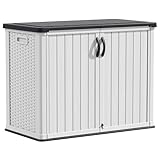
- Top Pick: Devoko Outdoor Storage Cabinet 26 Cu Ft with Lockable Doors, Horizontal Storage Shed Waterproof Patio Tools Storage Box for Sofa Cushions, Gardening Tools and Accessories (White)
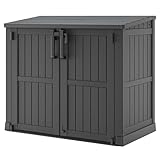
- Best Value: WTFGO 36 Cu Ft Resin Outdoor Storage Shed, Weatherproof Horizontal Outdoor Storage Cabinet with Dual Lock Door for Backyard, Patio, Garage, Garden(Black)
- Premium Choice: Aoxun Outdoor Storage Cabinet 35 Cu.Ft Outdoor Trash Can Storage Shed,White
Choosing the right cabinet starts with more than matching a generator’s length and width. You also need room for the handles, wheels, fuel container, extension cords, and safe ventilation while the generator is stored. This generator dimensions for storage cabinet guide explains common cabinet sizes, how much interior clearance to allow, and which dimensions work best for portable generators, inverter models, batteries, and accessories.
Use the cabinet for storage only. Never run a gasoline, propane, or dual-fuel generator inside a resin shed, deck box, garage cabinet, or enclosed storage unit. Generators produce carbon monoxide, heat, and exhaust gases that require outdoor operation in a properly open area.
As an Amazon Associate we earn from qualifying purchases at no extra cost to you. Product prices and availability are accurate as of the date shown and are subject to change.


The Short Answer
For most portable generators, choose a cabinet with at least 6 inches of extra width and depth beyond the generator’s outside measurements, plus 8 to 12 inches of extra height. A compact inverter generator generally fits a cabinet measuring about 36 to 48 inches wide, 24 to 30 inches deep, and 30 to 36 inches high. A conventional 3,000- to 5,000-watt portable generator usually needs a cabinet closer to 48 to 60 inches wide, 30 to 36 inches deep, and 36 to 48 inches high.
For a generator and accessories, a cabinet with roughly 20 to 30 cubic feet of interior capacity is a practical starting point. Large horizontal cabinets in the 26- to 36-cubic-foot range can hold a generator, cables, wheel chocks, maintenance supplies, and a cover, provided the door opening is wide enough. Expect many resin outdoor cabinets in this size category to cost approximately $140 to $230, depending on capacity, locks, shelves, and weather resistance.
Standard Sizes
Cabinet dimensions vary by manufacturer, and advertised measurements often describe the outside of the unit. Always compare the generator with the cabinet’s interior dimensions and door opening. The table below gives useful planning sizes rather than a guarantee that every product in a category will match exactly.
| Cabinet type | Typical outside size (inches) | Approximate outside size (cm) | Best use |
|---|---|---|---|
| Compact vertical cabinet | 30 W × 20 D × 36 H | 76 W × 51 D × 91 H | Small inverter generator, battery power station, cords |
| Small horizontal cabinet | 42 W × 24 D × 30 H | 107 W × 61 D × 76 H | 1,000- to 2,000-watt inverter generator |
| Medium horizontal cabinet | 48 W × 28 D × 36 H | 122 W × 71 D × 91 H | 2,000- to 3,500-watt portable generator |
| Large horizontal cabinet | 60 W × 30 D × 40 H | 152 W × 76 D × 102 H | 3,500- to 5,000-watt generator and accessories |
| Extra-large storage cabinet | 72 W × 36 D × 48 H | 183 W × 91 D × 122 H | Large generator, fuel-free accessories, tools, and covers |
As a general rule, a cabinet listed at 26 cubic feet may be adequate for one medium generator and equipment, while a 35- or 36-cubic-foot model provides more convenient storage space. Product examples in these categories include 26-cubic-foot cabinets priced around $145 to $150, a 35-cubic-foot cabinet around $225, and a 36-cubic-foot cabinet around $190. Prices change, so treat these figures as shopping ranges rather than fixed values.
Capacity alone does not tell you whether a generator will fit. A long, low cabinet may offer plenty of cubic feet but have a narrow door or an interior height too short for a fuel tank and handle. Check the door width, threshold height, lid clearance, floor load rating, and whether shelves reduce usable space.
How to Measure Your Space
- Measure the generator itself. Record the maximum length, width, and height, including wheels, handles, feet, control panels, and removable parts that you intend to leave attached. Measure in inches, then convert to centimeters by multiplying by 2.54.
- Measure the access route. Check gates, stairs, doorways, turns, and the path to the cabinet. A cabinet that fits the final location may still be impossible to assemble or move through a 30-inch gate.
- Add working clearance. Add at least 6 inches to the generator’s width and depth. Add 8 to 12 inches to its height, especially if you need to lift it by a handle or store a cover above it.
- Check the door opening. Use the clear opening, not the cabinet’s overall width. Double doors are helpful for wheeled generators, but confirm that the doors open far enough to avoid scraping the handle.
- Plan for weight. A portable generator may weigh 50 to 250 pounds, while a loaded cabinet can weigh considerably more. Set the cabinet on a level, firm surface such as a concrete slab or properly supported pavers.
- Allow outdoor clearance. Keep the cabinet away from downspouts, standing water, corrosive chemicals, and areas where snow or leaves can block doors. Follow the cabinet and generator manufacturers’ clearance instructions.
- Plan fuel storage separately. Gasoline should not be stored casually beside a generator in a warm, unventilated resin cabinet. Use an approved fuel container and follow local fire-safety rules.
By Room or Use Case
Patio or Deck
A 26-cubic-foot horizontal cabinet is often a sensible choice for a compact generator, extension cords, and outdoor cushions. Look for lockable doors, a raised or water-resistant floor, and a footprint no deeper than about 24 to 30 inches if the deck is narrow. Confirm the deck can support the combined weight of the cabinet and generator without sagging.
Garage
Garages offer the easiest access, but a generator should still be operated outdoors, never with the garage door partly open. For storage, a 48- to 60-inch-wide cabinet can organize a 3,000- to 5,000-watt generator with wheel chocks, cords, oil, and tools. Leave enough room to roll the generator out without lifting it over a tall threshold.
Garden or Side Yard
Choose a weather-resistant resin cabinet with a locking point and a solid base. A medium or large horizontal unit is usually easier to load than a tall, narrow cabinet. Keep at least a few inches between the cabinet and fences or walls so doors can open and moisture does not remain trapped around the exterior.
Battery Power Station
Battery stations are usually smaller and lighter than fuel generators, but they still need ventilation during charging. A 30- to 42-inch-wide cabinet may be sufficient for a power station, charging cables, solar panels, and adapters. Do not cover charging equipment with loose blankets or pack it tightly against the cabinet walls.
Trash Can and Utility Storage
Large cabinets marketed for trash cans may have enough volume for a generator, but their door layout and floor height matter. Check whether the generator can roll straight in and whether the cabinet floor is rated for concentrated wheel loads. Avoid storing a generator beside wet garbage, fertilizers, pool chemicals, or other corrosive materials.
Common Sizing Mistakes
- Using the generator’s shipping box size: The box does not show the space needed for handles, wheels, or loading.
- Buying by cubic feet alone: Two cabinets with the same capacity can have very different door widths and interior shapes.
- Ignoring the control side: A tight fit can damage outlets, switches, fuel valves, or recoil starters.
- Forgetting the cover: A fitted cover can add several inches to the required width and height.
- Assuming “waterproof” means climate-controlled: Outdoor cabinets can reduce rain exposure but may still develop condensation and heat.
- Storing fuel without checking rules: Fuel storage limits vary by location, and an enclosed cabinet may be unsuitable.
- Planning to run the generator inside: No storage cabinet is a safe substitute for open-air operation and carbon-monoxide precautions.
FAQ
What size cabinet do I need for a 2,000-watt generator?
Start with a cabinet around 42 to 48 inches wide, 24 to 28 inches deep, and 30 to 36 inches high. Compare those dimensions with the generator’s actual size and add at least 6 inches of width and depth for easy loading.
Can a generator fit in a 26-cubic-foot cabinet?
Often, yes. A 26-cubic-foot cabinet can work for a compact or medium portable generator and basic accessories. Verify the interior dimensions, clear door opening, floor rating, and height before buying. Capacity does not guarantee a usable fit.
How much clearance should be around a stored generator?
Allow at least 6 inches on the sides and behind the unit, with 8 to 12 inches above it. More space is helpful for lifting, rolling, cleaning, and storing a protective cover. Follow the generator manufacturer’s instructions if they require greater clearance.
Can I run a generator in an outdoor storage cabinet?
No. Do not run a generator in an enclosed cabinet, shed, garage, or deck box. Move it completely outdoors into a well-ventilated location, keep it away from doors and windows, and use carbon-monoxide alarms in nearby occupied spaces.
Ready to decide? Our #1 pick for 2026 is the Compact vertical cabinet.
Live price & availability on Amazon.



Write Your Review
No reviews yet. Be the first to share your experience!