
🛒 Best Price Today on Amazon
Prime members get fast, free shipping on everything above, plus member-only deals. New members get a 30-day free trial — cancel anytime.
Learning how to connect generator to transfer switch equipment starts with one nonnegotiable rule: a portable generator must never be connected directly to a home’s electrical panel or a wall outlet. Without a properly installed transfer switch, electricity can flow backward onto utility lines, creating a lethal hazard for lineworkers and damaging appliances when power returns. An overloaded cable, undersized switch, poor grounding, or an outdoor generator placed too close to the house can also cause fire, carbon-monoxide poisoning, or shock.
The safest approach is to choose compatible equipment, have a licensed electrician install and wire the transfer switch, and then learn how to operate and maintain the finished system. The steps below explain the process, what to verify, and how to use the system safely in 2026.
What You Need
| Item | Why | Optional? |
|---|---|---|
| Portable generator with a 120/240-volt output, if required | Provides backup power. Check the running wattage, starting wattage, outlet type, and neutral-bonding arrangement before buying a switch. | No |
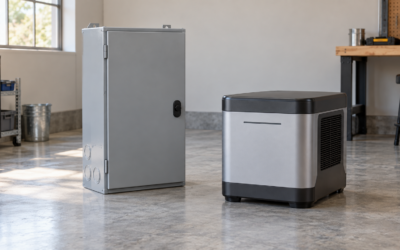
| Manual transfer switch rated for the installation | Prevents utility power and generator power from feeding the panel at the same time. Have the installer verify the switch listing, installation instructions and suitability for the exact circuit arrangement. | No |
| Outdoor generator inlet box | Provides a weather-resistant connection point between the generator cord and the house wiring. | No for a permanent setup |
| Properly rated generator cord | Connects the generator to the inlet. Common cord lengths are 10 to 25 feet; choose the wire gauge and amperage rating required by the generator and installation. | No |
| Compatible circuit breakers and wiring | These must match the transfer switch, panel, circuit load, conductor size, and local electrical code. | No |
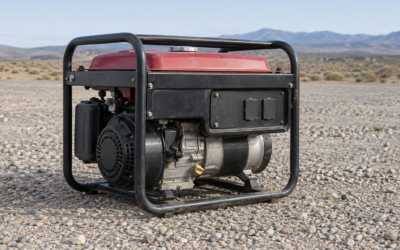
| Concrete, paver, or other stable generator surface | Keeps the generator level and away from standing water. Keep a fuel-burning generator outdoors at least 20 feet from the home, with exhaust pointed away from doors, windows and vents; follow any greater required clearance. | No |
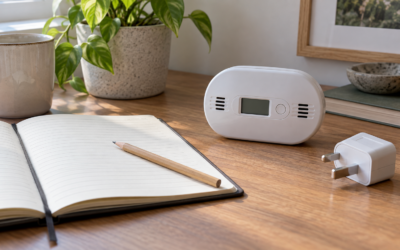
| Carbon-monoxide alarms | Provide an additional warning inside the home, though they do not make indoor generator operation safe. | Strongly recommended |
| Licensed electrician and permit, where required | Panel work, service conductors, grounding, and transfer-switch wiring can be fatal when performed incorrectly. | No |
Step-by-Step
1. Calculate the backup load
List the appliances you want to run during an outage, such as a refrigerator, furnace blower, sump pump, lights, internet equipment, or a well pump. Record both running watts and starting watts. Use the appliance manufacturer’s documented starting requirements; motor and compressor demand varies by equipment.
Do not assume a generator’s advertised maximum equals its continuous capacity. A unit labeled 7,500 watts may have a lower running-watt rating. Add the running watts of equipment likely to operate at the same time, then allow room for starting surges. Large electric water heaters, ranges, clothes dryers, central air conditioners, and electric vehicle chargers often exceed the practical capacity of a portable generator.
2. Confirm compatibility before installation
Check the generator manual, transfer-switch instructions, panel brand, available breaker spaces, voltage, amperage, and neutral configuration. A switch rated for 100 amps or 24,000 watts does not mean a portable generator can safely supply that much power. The generator, inlet, conductors, breakers, and switch must all be compatible.
Also verify whether the transfer switch switches the neutral conductor. That detail affects grounding and bonding. Never modify the generator’s neutral or grounding system based on a guess or a generic online diagram.
3. Choose the locations
The transfer switch is typically installed near the main electrical panel, while the inlet box is mounted on an exterior wall. Select a location protected from rain and physical damage, with enough working space for the electrician to open the equipment safely. The generator must sit outside on a stable, level surface, well away from the house and openings.
Keep the generator’s exhaust pointed away from the building. Never operate it in a garage, shed, basement, crawlspace, porch, or partially enclosed area, even with doors or windows open.
4. Have the transfer switch and inlet wired
This is the professional-installation stage. The electrician will shut off power as permitted, verify that circuits are deenergized with appropriate test equipment, mount the switch, install the inlet, route correctly sized conductors, connect the selected branch circuits or service conductors, and install or verify the required overcurrent protection.
The electrician should also confirm grounding and bonding, tighten terminals to the manufacturer’s specified torque, label the generator inlet and backed-up circuits, and test that the transfer mechanism cannot select utility and generator sources simultaneously. Do not remove the panel cover or make these connections yourself unless you are qualified and local rules explicitly allow it.
5. Inspect the completed installation
Before starting the generator, check that the inlet cover closes, the cord has no cuts or crushed areas, the transfer-switch handle moves smoothly, and all labels are readable. Make sure the generator is outdoors in the correct location and that its fuel, oil, ventilation, and exhaust clearances meet the owner’s manual.
Ask the installer to show you the normal, off, and generator positions, if your switch has all three. Confirm which circuits are backed up and whether loads must be turned off before transfer.
6. Transfer power during an outage
Turn off or unplug nonessential loads first. Move the generator outdoors, check the oil and fuel, and start it according to the manufacturer’s instructions. Let it stabilize for the time specified in the manual. Plug the generator cord into the generator inlet; never use a male-to-male “suicide cord.”
Operate the transfer switch exactly as labeled, generally moving it from utility to generator only after the utility supply is unavailable. Turn on backed-up circuits gradually and watch for overload, unusual noise, hot plugs, flickering lights, or a generator that repeatedly trips its breaker. If any of these occur, shut down unnecessary loads and stop if the problem continues.
7. Return to utility power
When utility power is stable, switch the transfer switch back to the utility position before shutting down the generator, following the switch manual. Turn off large loads, allow the generator to cool if directed, shut it down, and unplug the cord. Let the generator cool completely before refueling, and store the cord dry with the inlet cover closed.
Mistakes to Avoid
- Connecting a generator to a household receptacle with a backfeed cord.
- Skipping the transfer switch or using a device with an unsuitable voltage, amperage, pole count, or neutral arrangement.
- Running the generator indoors, under a carport, or near windows, doors, or vents.
- Operating more appliances than the generator can support, especially motor-driven loads starting together.
- Using extension cords that are too long, damaged, undersized, or not rated for outdoor generator use.
- Refueling a hot generator or storing gasoline inside living areas.
- Assuming a lower price means universal compatibility. Obtain an installation-specific quote that includes the required switch, inlet, wiring, protective devices, labor, permits and inspection.
How Often
Follow the exact generator manufacturer’s exercise and maintenance schedule and the installer’s instructions for the transfer equipment. Use the prescribed load, duration and inspection intervals rather than a universal monthly routine. Inspect the cord, inlet, switch enclosure, fuel system, oil level, battery if equipped, and carbon-monoxide alarms as directed. Change oil, replace filters, and manage fuel according to the generator manual.
After any storm, flooding, electrical surge, or physical impact, have the equipment inspected before using it again.
When to Call a Pro or Replace
Call a licensed electrician for any panel wiring, new circuit, grounding question, service upgrade, damaged enclosure, nuisance tripping, burning smell, buzzing, or unexplained voltage problem. Stop using the system if the transfer handle will not fully engage, the inlet or cord becomes hot, or the generator breaker trips repeatedly.
Replace a transfer switch or inlet with cracked insulation, corrosion, water intrusion, melted plastic, loose terminals, or obsolete parts that cannot be verified. Replace a generator that has severe fuel-system deterioration, damaged exhaust components, recurring carbon-monoxide alarms, or unstable voltage confirmed by a qualified technician.
FAQ
Can I install a manual transfer switch myself?
Because installation involves the electrical panel, grounding, overcurrent protection, and potentially service conductors, it is best handled by a licensed electrician. Local permits and inspection may also be required. Homeowners can safely learn the operating procedure without performing energized wiring work.
What size transfer switch do I need?
The switch must match the generator connection, voltage, number of poles, circuit arrangement, and electrical code requirements. Its maximum rating can be higher than the generator’s output, but it cannot make a small generator produce more power. Size the system around the actual loads and generator running watts.
Does a transfer switch power the whole house?
Usually not with a portable generator. Many manual switches supply a selected group of circuits, such as refrigeration, heating, lighting, and a sump pump. Whole-house operation generally requires a properly sized standby generator, automatic transfer equipment, and a professional load assessment.
Can I leave the generator connected to the inlet?
Disconnect and store the cord when the generator is not operating unless the manufacturer specifically permits another arrangement. Keep the inlet covered, protect the cord from moisture and damage, and never leave a running generator unattended or connected while refueling.
Primary safety references
See OSHA grounding guidance, OSHA portable-generator safety, and CPSC generator placement guidance. These general references do not replace the equipment manuals or a qualified installer’s assessment.


Write Your Review
No reviews yet. Be the first to share your experience!