
🛒 Best Price Today on Amazon
Prime members get fast, free shipping on everything above, plus member-only deals. New members get a 30-day free trial — cancel anytime.
Corded electric chainsaws are popular for storm cleanup and firewood, and a generator is the obvious power source when branches have taken down the lines. Chainsaws are rough loads, though. The motor surges on every trigger pull and bogs down in dense hardwood, and a generator that seems adequate on the driveway can trip repeatedly once you’re 100 feet out on a thin extension cord. Here’s how to size a generator for an electric chainsaw, and when a battery saw or a gas saw is simply the better tool.
Electric chainsaw power figures
| Saw class | Bar length | Amps | Running watts (cutting) | Surge on trigger |
|---|---|---|---|---|
| Light-duty corded | 12-14 in. | 8-10A | 900-1,200W | 1,800-2,400W |
| Mid-duty corded | 14-16 in. | 12-13A | 1,300-1,600W | 2,400-3,000W |
| Heavy-duty corded | 16-18 in. | 14.5-15A | 1,600-1,800W | 2,800-3,600W |
| Pole saw, corded | 8-10 in. | 6-8A | 700-950W | 1,400-1,900W |
| Battery pack charger (rapid) | – | – | 150-500W | Negligible |
Generator recommendations
Best overall for a 14-16 inch corded saw: 3,000-3,500W inverter
A 3,000-3,500W generator handles the repeated surge of a 12-15A chainsaw without drama. Unlike a circular saw, which starts once per cut, a chainsaw starts and stops dozens of times per session, so fast load response matters. Modern inverters recover well. Cheaper open-frame units may let voltage sag noticeably each time you squeeze the trigger. Budget about $700-$1,300 for a quality unit in this class.

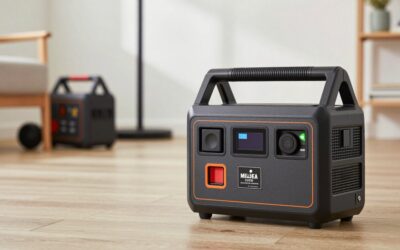
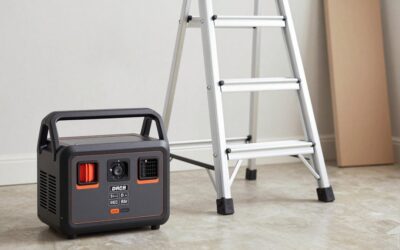
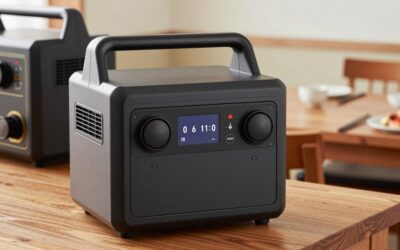
Oxseryn 5000W Inverter Generator Gas Powered, Portable Open Frame Generator
Included for 'Best Generator for Running a Chainsaw' because the listing specifies Portable Open Frame Generator, details this guide uses to compare options.
View on AmazonLight pruning and pole saws: 2,000-2,300W inverter
For an 8-10A saw used on limbs under 6 inches, a small inverter is enough. It’s easy to carry to the back of the lot, sips about 0.1-0.15 gallons per hour at this load, and runs quietly enough not to bother neighbors during a cleanup weekend.
Clearing a lot of downed trees: 5,500W+ open-frame
If two people are cutting at once, or you’re adding a wood splitter with an electric motor (often 2-3 HP at 120V or 240V), step up. Electric log splitters commonly surge past 4,000W.
Extension cords: the hidden generator killer
Chainsaw work happens at a distance, and that’s where cords cause trouble. A 15A saw on 100 feet of 16-gauge cord can lose more than 10% of its voltage, so the motor draws more current and the generator’s breaker trips. Use 12-gauge cord for runs up to 100 feet and 10-gauge beyond that. Keep the cord behind you and out of the cut path. A nicked cord is a shock hazard in wet cleanup conditions, so use GFCI protection at the generator or inline.
Should you use a generator at all?
Be honest about the job. For storm cleanup far from the house, a 40V-80V class battery saw with two or three packs is often faster to deploy, and there is no cord to cut. A small generator can recharge packs at the truck. For heavy firewood production, a gas chainsaw is still the standard. Corded saws on a generator make most sense within about 100 feet of where the generator can safely sit.
Sharpness and chain tension matter
A dull chain makes an electric motor work harder, raising current draw 15-25% and producing sawdust instead of chips. Sharpen after every tank-equivalent of work, or roughly every hour of cutting. Keep chain oil topped up, because a dry bar adds friction and load. Proper tension also keeps the chain from binding and stalling, one of the main causes of mid-cut trips.
Carbon monoxide during storm cleanup
After storms, people set generators on porches or in open garages to keep them out of the rain. That’s how CO poisonings happen. Keep the generator at least 20 feet from any home, with the exhaust pointed away from doors, windows, and air intakes. Use a generator tent or cover rated for running operation if it’s wet out. Make sure the house has working battery-backed CO alarms, especially if the generator is also powering a refrigerator overnight. Never backfeed the house through an outlet. Use an electrician-installed transfer switch or interlock.
FAQ
Can a 2,000-watt generator run a 15-amp electric chainsaw?
It may start the saw, but repeated triggers and bogging in hardwood will often trip a 2,000W-class inverter. A 3,000W or larger generator is the more reliable match for a 15A saw.
Is inverter power required for an electric chainsaw?
No. Chainsaw universal motors tolerate conventional generator power. Choose an inverter for lighter weight, quieter operation, and better fuel economy during the long idle stretches between cuts.
Bottom line
For a typical 14-16 inch corded chainsaw, a 3,000-3,500W inverter generator and a 12-gauge cord make a dependable pair. Drop to 2,000W for light pruning only. For big cleanup jobs far from the generator, a battery or gas saw may simply be the better tool.





Write Your Review
No reviews yet. Be the first to share your experience!