
🛒 Best Price Today on Amazon
Prime members get fast, free shipping on everything above, plus member-only deals. New members get a 30-day free trial — cancel anytime.
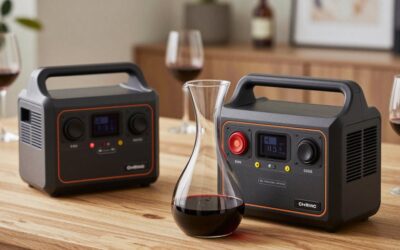
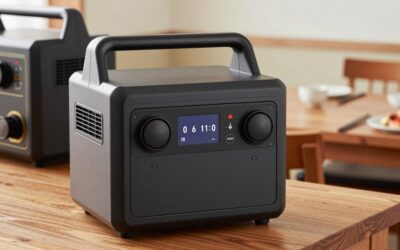
The Anker SOLIX C1000 sits in a popular spot for campers: roughly a kilowatt-hour of storage, enough output to run a coffee maker or microwave and a weight most people can carry to a picnic table. For boondocking, its most useful traits are generous solar input for its size and the option to add an expansion battery later. Here is how it performs in real dry-camping situations.
Specs from a camper’s perspective
Anker lists about 1,056 Wh of LFP capacity, roughly 1,800 W of continuous AC output with a higher surge, up to around 600 W of solar input through an XT-60 port and an hour-long wall recharge. It weighs around 27 to 28 pounds and supports one expansion battery for about double capacity. A newer C1000 Gen 2 exists with different figures, so confirm which version a listing refers to.
What 600 W of solar means
Many 1 kWh stations accept 200 to 400 W of solar. The C1000’s higher ceiling lets you refill from near-empty in roughly two hours of strong sun with a full array. In practice, two or three 200 W portable panels in summer produce roughly 1,500 to 2,200 Wh per day. That is more than the base battery holds, so extra solar can run loads during the day while the battery refills.
Sample boondocking day
| Item | Watts | Use | Wh/day |
|---|---|---|---|
| 12V compressor fridge (car socket) | 40–50 avg | 24 h cycling | 700–900 |
| Laptop | 50 | 4 h | 200 |
| Fan | 20 | 8 h | 160 |
| Coffee maker | 900 | 10 min | 150 |
| Lights and phones | 25 | 5 h | 125 |
| Total | about 1,350–1,550 |
Without solar, that profile empties the base unit in less than a day. With 400 to 600 W of panels in good sun, it becomes sustainable. With the expansion battery, you have enough buffer for a cloudy day.
Where it fits and where it doesn’t
Good fits
- Vans, truck campers, teardrops and small trailers with propane or 12V fridges.
- Tent campers who want a real coffee maker or electric kettle at camp.
- Remote workers with modest loads and good solar access.
Poor fits
- Running a rooftop air conditioner beyond brief use.
- Powering a whole RV through its shore cord all day; converter overhead drains it.
- Absorption fridges on electric mode, which can use 2 to 3 kWh per day.
Output headroom
With roughly 1,800 W of continuous output, the C1000 can handle a hair dryer on low, an induction burner on moderate settings or a compact microwave. That is more headroom than many 1 kWh competitors, which matters when two people want coffee and toast at the same moment.
Stowing and securing
At about 27 to 28 pounds, it fits under dinettes, in pass-through bays or behind van seats. Secure it with straps for travel, and keep it out of direct sun and away from heaters. In cold camps, bring it into the living space overnight; LFP batteries generally will not charge near freezing.
Generator neighbors and CO
The C1000 is silent and emission-free, so it is perfect for quiet hours. Many campgrounds still see generators running nearby, and exhaust can drift into your rig. Keep a working CO alarm inside, and if you carry a small generator yourself, run it at least 20 feet from any camper with the exhaust pointed away.
Panel wiring tips for the XT-60 input
Because the C1000 takes solar through an XT-60 connector within a limited voltage window, check your panels’ open-circuit voltage before wiring anything in series. Two typical 100 W panels in series usually stay within range, but cold mornings raise panel voltage, so leave margin below the maximum. Parallel wiring keeps voltage low but increases current, which requires thicker cable on long runs. A short, heavy extension cable lets you park in shade while the panels sit in full sun twenty or thirty feet away, a small trick that keeps both the battery and the campers cooler. Label your cables and adapters so setup at a new campsite takes minutes, not a frustrating half hour.
FAQ
Should I get the expansion battery for camping?
If you camp in shady forests or frequent cloudy weather, yes. It doubles your buffer. In sunny deserts, extra panels may give you more benefit than extra storage.
Can I charge it from my tow vehicle?
Yes, through the car input, though it is slower than AC or solar. Long drives help top it off between campsites.
Bottom line
The Anker SOLIX C1000 is good for RV boondocking in small rigs and camping setups, especially if you take advantage of its 600 W solar input. It handles fridges, electronics and short cooking loads with ease. Add the expansion battery for cloudy trips, and choose a larger system if you need air conditioning or full-RV power for days.
Write Your Review
No reviews yet. Be the first to share your experience!