
🛒 Best Price Today on Amazon
Prime members get fast, free shipping on everything above, plus member-only deals. New members get a 30-day free trial — cancel anytime.
After a hurricane, flood, wildfire or ice storm, one of the first things survivors ask for is a place to charge their phone. A charged phone means calling family, contacting insurers, receiving emergency alerts and accessing aid. Disaster relief volunteers who bring reliable portable power can serve dozens or hundreds of people a day. The best setup depends on your role, whether you run a community charging station, support medical needs at a shelter, or work in a debris-cleanup crew, but the principles are the same: plan capacity per person, keep it safe in chaotic conditions, and keep it recharging.
How many people can you serve?
Most smartphone batteries hold roughly 12 to 20Wh. After charger and conversion losses, each full charge draws roughly 15 to 30Wh from a station, and many people only need a partial top-up.
| Station class | Approx. usable energy | Full phone charges | Partial (50%) top-ups |
|---|---|---|---|
| 500Wh | about 400 to 450Wh | about 15 to 30 | about 30 to 60 |
| 1,000Wh | about 850 to 900Wh | about 30 to 60 | about 60 to 120 |
| 2,000Wh | about 1,700 to 1,800Wh | about 60 to 120 | about 120 to 240 |
| 4,000Wh | about 3,400 to 3,600Wh | about 115 to 240 | about 230 to 480 |
Charging through USB ports directly, rather than through AC wall chargers plugged into the inverter, stretches these numbers further.
Running a community charging station
Hardware
Use stations with many USB-A and USB-C ports, plus multi-port USB charging hubs. Bring a mix of short USB-C, Lightning and micro-USB cables, since many people arrive with a phone but no cable. Label every cable with tape and a marker.
Flow
A simple sign-in sheet with first name and phone description, a 30 to 45 minute time limit per person, and a volunteer watching the table prevents lost phones and arguments. Encourage people to switch to low-power mode while charging.
Recharging the stations
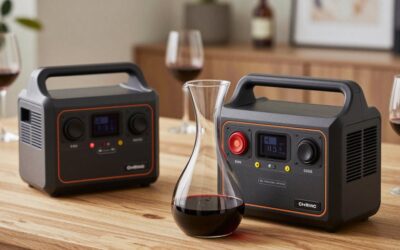
Rotate stations: while one serves the public, another recharges from solar panels, a vehicle or a generator. Two 1kWh stations are often more practical than one 2kWh unit because you can always have one charging.
Medical and accessibility needs
Shelters and aid points often see people who depend on powered medical equipment: CPAPs, nebulizers, oxygen concentrators, powered wheelchairs, and insulin that needs cooling. A dedicated station reserved for medical use, separate from the phone table, keeps these needs from competing. Only charge devices with their own manufacturer-supplied chargers, and defer to your organization’s medical staff about which devices you can support. Oxygen concentrators draw significant power and should be handled per your organization’s medical protocols.
Safety in disaster conditions
- Carbon monoxide. Generators must run outdoors, at least 20 feet from shelters, tents and building openings, with exhaust pointed away. Never in garages, porches, tents or enclosed spaces. After hurricanes and ice storms, CO poisoning from generators is a leading cause of preventable injury. Place CO alarms in any shelter space.
- Water and flooding. Never operate stations, cords or generators in standing water or on wet ground. Use GFCI-protected outlets and outdoor-rated cords.
- Heat. Keep stations shaded. Lithium batteries age quickly and may throttle when hot.
- No backfeeding. Volunteers are sometimes asked to help power a home or a building. That requires a transfer switch or interlock installed by a licensed electrician. Never connect to a building panel through an outlet; it can electrocute line crews restoring power.
- Damaged batteries. Do not charge swollen, punctured or water-damaged lithium batteries. Set them aside away from people and combustibles.
What to look for in a volunteer power station
- Plenty of USB-C PD and USB-A ports, not just AC outlets.
- LiFePO4 chemistry for durability and thermal stability.
- Fast AC charging and at least 400 to 600W of solar input.
- Weight one person can lift, typically under about 30 pounds for 1kWh-class units.
- A clear display showing remaining capacity, so you know when to rotate.
Well-known 1kWh-class examples include the Anker SOLIX C1000 and the Jackery Explorer 1000 v2; check current specs and availability before buying, and follow your relief organization’s equipment policies.
FAQ
Can I donate portable power stations to a relief organization?
Many organizations accept equipment, but ask first; some prefer cash or specific equipment that fits their logistics and liability rules.
Is solar enough to keep a charging station running?
In sunny post-storm weather, 400 to 800W of panels can refill a 1kWh station in a day, often enough for dozens of phone charges daily.
Bottom line
For disaster relief volunteers, the best portable power is a set of rotating 1kWh-class LiFePO4 stations with many USB ports, plus solar and a generator run safely outdoors at least 20 feet from shelters. Plan capacity per person, keep medical charging separate, never backfeed buildings, and confirm current specs and availability of any station before you deploy.

Write Your Review
No reviews yet. Be the first to share your experience!