
🛒 Best Price Today on Amazon
Prime members get fast, free shipping on everything above, plus member-only deals. New members get a 30-day free trial — cancel anytime.
A dishwasher seems like a luxury during a power outage, until the sink fills with three days of plates and there’s no hot water to wash them by hand. Dishwashers are more generator-friendly than you might think. Most are 120V appliances drawing 1,200-1,800 watts at peak, and only while the internal heater is warming water or drying. The rest of the cycle is a low-wattage pump and some electronics. Here’s how to size a generator and run a cycle efficiently.
Where a dishwasher’s power goes
| Cycle phase | Typical draw | Duration (normal cycle) | Energy |
|---|---|---|---|
| Fill, pumps, and circulation | 60-200W | 60-120 min total | ~0.1-0.3 kWh |
| Water heating (booster element) | 1,000-1,500W | 15-40 min cumulative | ~0.3-0.8 kWh |
| Heated dry | 500-1,000W | 15-30 min | ~0.2-0.4 kWh |
| Standby / controls | 1-5W | – | Negligible |
| Whole cycle (normal, heated dry) | Peak 1,200-1,800W | 1.5-3 hrs | ~0.9-1.5 kWh |
| Whole cycle (eco, air dry) | Peak 1,200-1,500W | 2-4 hrs | ~0.5-0.9 kWh |
Your dishwasher’s EnergyGuide label gives estimated annual kWh. Divide by about 215 cycles for a per-cycle figure.
Generator picks
Best overall: 3,000-3,500W inverter
A 3,000-3,500W inverter runs a dishwasher through its heating phase while the refrigerator and a few lights stay on, without approaching its limit. Dishwasher control boards are sensitive electronics, and inverter power (typically under 3% THD) keeps them happy. At the partial load of a dishwasher cycle, fuel use is modest, often 0.15-0.25 gallons per hour.
Dishwasher-only runs: 2,000-2,300W inverter
A 2,000W-class inverter, rated around 1,600-1,800W running, handles most dishwashers on their own. Turn off anything else heavy during the heating phase, and skip heated dry.
Whole-home backup: 5,500-7,500W with transfer switch
If the dishwasher is one item on a broad essentials list, a larger generator feeding selected circuits through a transfer switch is the practical route.
How to get power to a built-in dishwasher
This is the tricky part. Many dishwashers are hardwired into a junction box under the counter, and others plug into an outlet in the sink cabinet. For hardwired units, the circuit has to be fed through a transfer switch or panel interlock installed by a licensed electrician. For plug-in units, you can run a heavy cord to that outlet, but a cord across the kitchen floor is a trip hazard during an outage. The transfer switch route is cleaner and safer. Never backfeed a kitchen outlet with a double-male cord. It energizes the utility lines and is illegal.
Cutting the energy per load
Choose eco or light cycles
Eco cycles use lower water temperatures over a longer time, which cuts heater on-time significantly. The cycle may run 3-4 hours, but average power stays low.
Turn off heated dry
Air-dry or crack the door at the end of the cycle. That alone saves about 0.2-0.4 kWh per load.
Run full loads only
A half-empty dishwasher uses nearly the same energy as a full one. During an outage, wait for a full rack.
Feed it hot water if you have it
If a gas water heater is still making hot water, run the kitchen tap until it’s hot before starting the cycle. That shortens the dishwasher’s own heating phase.
Is it worth it versus handwashing?
During a short outage, handwashing a day’s dishes is simpler. During a long one, the dishwasher is often the better use of generator fuel. A modern machine uses about 3-5 gallons of water per cycle, while handwashing the same load commonly takes 15-25 gallons. If you’re on a well, every gallon also costs pump runtime. And if your water heater is electric and off, the dishwasher’s own booster heater is the most efficient way to get sanitizing-hot water onto the plates. One eco cycle at under 1 kWh costs roughly 0.15-0.25 gallons of gasoline, far less than heating a sink of wash water on a camp stove.
Outdoor generator placement
Kitchens often sit next to a side yard or patio, which is the generator’s favorite place to end up. Keep it at least 20 feet from the house, with the exhaust away from kitchen windows, range hood outlets, and doors. Never run it in an attached garage, even briefly. Test the home’s battery CO alarms. Refuel only after the engine has cooled, and store fuel away from the running generator.
FAQ
Will a 2,000-watt generator run a dishwasher?
Most 120V dishwashers peak at 1,200-1,500W, within a 2,000W-class inverter’s running rating, as long as nothing else significant runs at the same time. Skip heated dry to stay well within capacity.
Can a power station run a dishwasher?
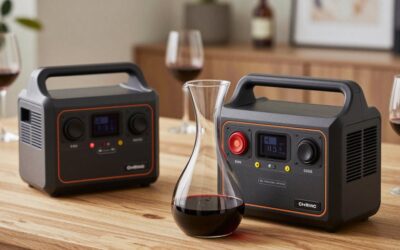
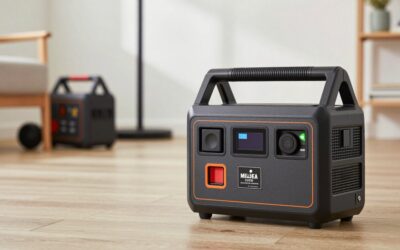
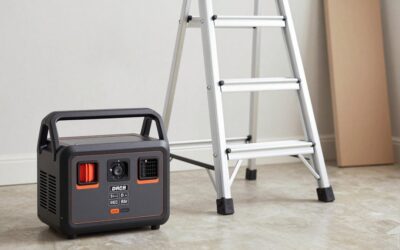
A 1,500Wh+ station with an 1,800W+ inverter can run an eco cycle using about 0.5-0.9 kWh. The main hurdle is connecting a hardwired dishwasher, not capacity.
Bottom line
A 3,000-3,500W inverter is the comfortable generator class for a dishwasher plus the fridge. A 2,000W inverter can handle it alone. Run eco cycles, skip heated dry, and route power through an electrician-installed transfer switch, especially for hardwired units.



Write Your Review
No reviews yet. Be the first to share your experience!