
🛒 Best Price Today on Amazon
Prime members get fast, free shipping on everything above, plus member-only deals. New members get a 30-day free trial — cancel anytime.
Hurricane outages are a different animal from a summer thunderstorm blip. When a major storm takes down transmission lines, restoration across a region can take three days, ten days, or longer, and fuel stations often close or run dry in the same window. That changes the generator-versus-power-station question from “which is better?” to “which can keep my household running for a week in heat and humidity, with limited fuel and no guarantee of sunshine?” This comparison is built around that specific scenario rather than generic outage advice.
What a hurricane outage actually demands
Heat is the defining feature. Refrigerators and freezers work harder, fans become essential for sleep, and many households want at least one room cooled. Phones and radios matter for storm updates, and a well pump or sump pump may be critical after heavy rain. A typical minimal hurricane load profile looks like this.

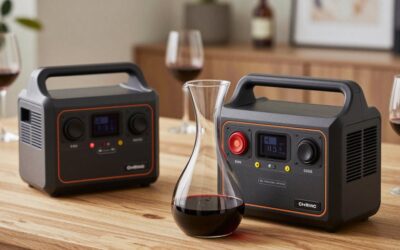
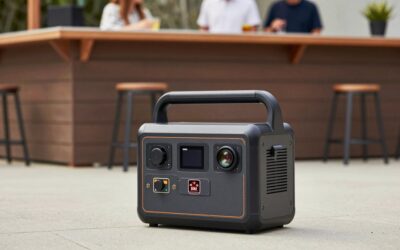
P5000 Plus 5120Wh Portable Power Station, 3600W Solar Generator
Included for 'Best Power Solution for Hurricane Season: Generator or Power Station?' because the listing specifies 3600W Solar Generator, details this guide uses to compare options.
View on Amazon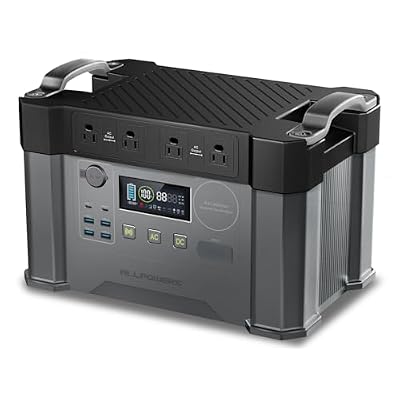
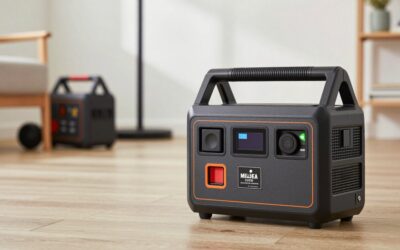
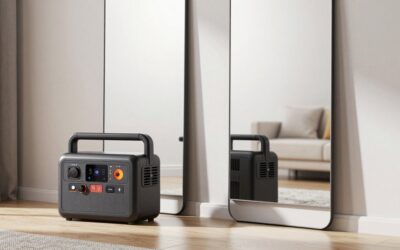
ALLPOWERS S2000 PRO Portable Power Station, 1452Wh 2400W Solar Generator
Included for 'Best Power Solution for Hurricane Season: Generator or Power Station?' because the listing specifies 1452Wh 2400W Solar Generator, details this guide uses to compare options.
View on Amazon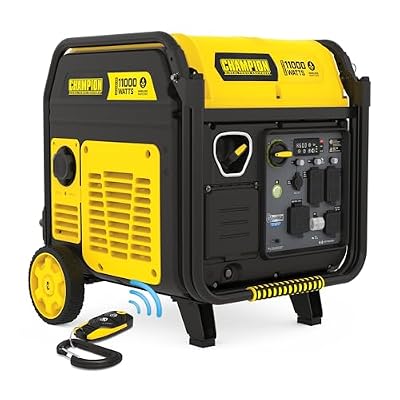
Champion 11,000-Watt Wireless Remote Start Portable Inverter Generator
Included for 'Best Power Solution for Hurricane Season: Generator or Power Station?' because the listing specifies 000-Watt Wireless Remote Start Portable Inverter Generator, details this guide uses to compare options.
View on Amazon
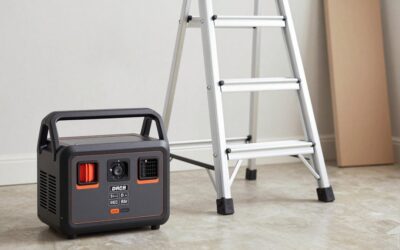
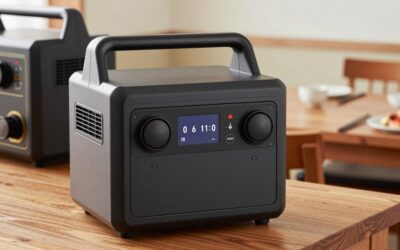
Anker SOLIX S2000 Portable Power Station with Alternator Charger
Included for 'Best Power Solution for Hurricane Season: Generator or Power Station?' as a relevant option in this category; details come from the product listing.
View on Amazon| Load | Running watts | Daily energy (approx.) |
|---|---|---|
| Refrigerator | 100–250W (cycling) | 1.0–2.0 kWh |
| Chest freezer | 60–120W (cycling) | 0.5–1.2 kWh |
| Two box or pedestal fans | 100–200W | 1.0–2.0 kWh (10 h) |
| Window AC, 5,000–8,000 BTU | 450–750W | 3.0–6.0 kWh (8 h) |
| Router, phones, lights | 30–80W | 0.4–0.8 kWh |
| Total without AC | — | 2.5–6.0 kWh |
| Total with one window AC | — | 5.5–12 kWh |
The key number is daily kWh. Even a stripped-down plan uses 3 kWh or more per day, and adding a window air conditioner roughly doubles it.
Where a gas or dual fuel generator wins
A 3,500 to 5,000 running-watt generator covers the entire table, including a window AC, and produces those kilowatt-hours from fuel you can store. As a planning range, a mid-size inverter generator burns roughly 0.2 to 0.35 gallons per hour at a quarter to half load, while a larger open-frame unit may use 0.5 to 0.8 gallons per hour at half load. Running an inverter generator 12 hours a day at light load means about 3 to 4 gallons daily, so 20 to 25 gallons of stabilized fuel carries you close to a week.
The fuel problem
Gas stations need grid power to pump, and many shut down before landfall and reopen slowly. Dual fuel generators help here because propane stores for years without stabilizer and cylinders can be filled well ahead of the season. Expect 10 to 20 percent less output on propane and higher consumption by volume; a standard 20 lb cylinder lasts roughly 6 to 10 hours on a mid-size generator at moderate load.
Where a power station wins
A portable power station is silent, emission free, and safe indoors. For a hurricane, that means you can run a fan and charge phones in the bedroom overnight without a running engine outside, and without the carbon monoxide risk that claims lives after nearly every major storm. The limit is capacity. A 2,000Wh station powers a fridge for about a day, or two fans overnight with room to spare, but it cannot sustain a window AC for more than two to four hours.
Solar recharging after the storm
Skies often clear within a day or two after a hurricane passes, and 400 to 800W of portable panels can put back 1.5 to 3 kWh per day in strong subtropical sun. That can make a large station self-sustaining for fridge, fans, and communications, but not for air conditioning.
Side-by-side for a seven-day outage
| Factor | Generator (3,500–5,000W) | Power station (2,000–3,600Wh) |
|---|---|---|
| Can run window AC | Yes, all day | 2–5 hours per charge |
| Indoor use | Never | Yes |
| Fuel/energy needed for 7 days | 20–35 gal gas or 6–10 propane cylinders | 800–1,200W solar or generator top-ups |
| Noise | 55–70 dBA at 23 ft | Near silent |
| Typical cost range | $600–1,800 | $1,200–3,500 plus panels |
The combination most coastal households settle on
The strongest setup is a hybrid. The generator runs during the day for four to six hours to cool the house, chill the fridge down hard, and recharge the power station. At night the generator is shut off and secured, and the power station runs fans, a CPAP if needed, and phones until morning. This cuts fuel use by roughly a third to a half, reduces theft risk, and lets everyone sleep without engine noise.
FAQ
How far from the house should a generator run during a hurricane outage?
At least 20 feet from doors, windows, and vents, with the exhaust pointed away from the home, and never in a garage, carport, or screened porch. Use a battery CO alarm inside on every sleeping level.
Is a power station alone enough if I can evacuate?
If your plan is to leave for any storm above a certain category, a 1,000 to 2,000Wh station covers the short outages you ride out plus communications on the road, and a generator may not be worth storing fuel for.
Bottom line
For a household that stays through multi-day outages and needs cooling, a dual fuel generator in the 3,500 to 5,000W range is the backbone. A 2,000Wh-plus power station is the best companion for overnight, indoor, and quiet loads. If you can only buy one and heat is survivable for you, the power station plus solar is the safer choice; if you need AC, it has to be the generator.

Write Your Review
No reviews yet. Be the first to share your experience!