
🛒 Best Price Today on Amazon
Prime members get fast, free shipping on everything above, plus member-only deals. New members get a 30-day free trial — cancel anytime.
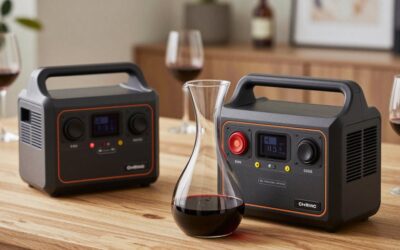
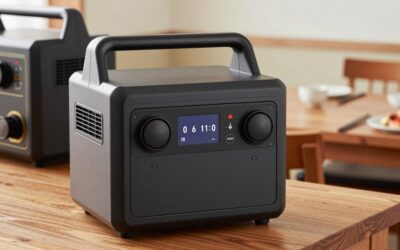
Hurricane outages follow a pattern that is different from winter storms: they arrive with days of warning, often last from several days to a couple of weeks, and are followed by hot, humid weather with plenty of sun. That pattern favors a mid-size power station that charges quickly before landfall and refills from solar afterward. The EcoFlow Delta 3 Plus fits much of that profile. This guide explains where it works well for hurricane season and where it falls short.
Delta 3 Plus key figures
Confirm against EcoFlow’s current spec sheet: about 1,024Wh of LiFePO4 capacity, 1,800W continuous AC output (with an X-Boost mode for resistive loads and a higher surge rating), fast AC charging around 1,500W, dual solar inputs totaling around 1,000W and expandability to roughly 5kWh with compatible EcoFlow extra batteries. EcoFlow also lists a fast UPS switchover and compatibility with its Smart Generator for automatic recharging.
A hurricane-season timeline
72 to 24 hours before landfall
Charge the Delta 3 Plus and any extra battery to 100%. At fast AC charging rates, the base unit fills in about an hour. Freeze water jugs to pack the freezer, and pre-cool the fridge.
During the storm
Keep the unit indoors in an interior room away from windows. Do not deploy solar panels while winds are high. Use the power station for phones, a weather radio, lights and a CPAP. Leave the fridge closed as long as possible.
After the storm
This is where the Delta 3 Plus pays off. Post-storm skies are often clear, and with up to about 1,000W of solar input, several hundred watts of panels can refill the battery daily.
A realistic daily energy budget
| Load | Typical daily use | Share of ~870Wh usable |
|---|---|---|
| Efficient refrigerator | ~1.0-1.2 kWh | more than 100% |
| Refrigerator on a rest schedule | ~0.6-0.7 kWh | ~70-80% |
| Box fan, 8 hours | ~0.4 kWh | ~45% |
| Phones, lights, radio | ~0.1 kWh | ~11% |
| Wi-Fi router + modem, 12 hours | ~0.2 kWh | ~23% |
| CPAP, no humidifier | ~0.3 kWh | ~35% |
With the base unit alone, you must pick priorities. With one extra battery and 400 to 800W of solar in good weather, you can cover a fridge, fans and essentials day after day.
Where it falls short
- Central air: it cannot run a central air conditioner. A small inverter window unit for a couple of hours in the evening is realistic; whole-house cooling is not.
- 240V loads: well pumps, electric ranges and dryers are out of reach.
- Cloudy stretches: tropical systems can bring days of overcast skies. Plan for solar yields at a third of normal.
Flooding, generators and wiring
Keep the power station above potential flood levels, off the floor and away from standing water. Do not use it if it has been submerged. If you pair it with a gas generator or EcoFlow’s Smart Generator, run the generator outdoors at least 20 feet from the house, never in a garage, carport or porch, with the exhaust aimed away from doors and windows. Post-hurricane carbon monoxide poisonings are common; keep battery-backed CO alarms on every level. If you want the Delta 3 Plus to feed house circuits, a licensed electrician must install a transfer switch, interlock or EcoFlow-compatible panel. Never backfeed through an outlet.
Pre-season checklist
- Update firmware and the app while you still have reliable internet.
- Test the fridge, fans and CPAP on the unit; note the actual watt readings.
- Set up and test solar panels once in the yard so you know cable lengths and angles.
- Label a bin with cables, adapters, a watt meter and a CO alarm.
- Check the unit monthly through November and top it up to 100% when a storm is forecast.
FAQ
How many solar panels do I need for hurricane recovery?
Two 200W panels can produce about 1.6 to 2kWh on a clear day, enough to refill the base unit and cover much of a day’s essentials. Store panels indoors until winds die down.
Is the base unit alone enough?
For phones, lights, a CPAP and fans, yes. For a fridge over several days, plan on an extra battery or solar.
Bottom line
The EcoFlow Delta 3 Plus is a strong hurricane-season choice for essentials: it charges quickly before landfall, recovers well with solar afterward and expands if you need more storage. It won’t replace central air or whole-home backup, but it can keep food cold, phones charged and fans turning through a typical post-storm outage.
Write Your Review
No reviews yet. Be the first to share your experience!