
🛒 Best Price Today on Amazon
Prime members get fast, free shipping on everything above, plus member-only deals. New members get a 30-day free trial — cancel anytime.
Air compressors are notorious generator trippers. The problem isn’t their running wattage. A compressor motor often restarts against pressure already in the tank, and that pressure-loaded start can pull several times the running current. A 6-gallon pancake compressor that runs on 1,200 watts can demand 3,000-4,500W for the first half-second. This guide explains that surge, sizes a generator for common compressor classes, and shows how to set up the pair so the breaker stays put.
Compressor power by class
| Compressor class | Motor | Voltage | Running watts | Starting surge (loaded start) | CFM @ 90 PSI (typical) |
|---|---|---|---|---|---|
| Inflator / small portable | 1/4-1/3 HP | 120V | 300-600W | 700-1,500W | 0.5-1.5 |
| Pancake / hot dog (2-6 gal) | 0.6-1 HP | 120V | 900-1,500W | 2,500-4,500W | 2.0-2.8 |
| Quiet dual-piston (8-10 gal) | 1-2 HP | 120V | 1,200-1,800W | 3,000-4,500W | 2.5-5.0 |
| Wheelbarrow (8-10 gal, 120V) | 2 HP | 120V | 1,600-1,900W | 4,000-5,500W | 4.0-5.5 |
| Stationary 60-80 gal | 3-5 HP | 240V | 3,000-5,000W | 7,000-12,000W | 10-18 |
Check your compressor’s manual. Many list a minimum generator size, and those figures account for the loaded start. Compressors with soft-start or an unloader valve that vents the head on shutdown start more easily.

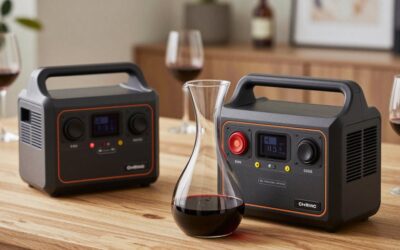
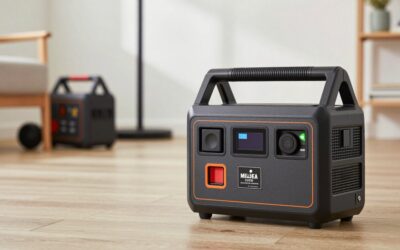
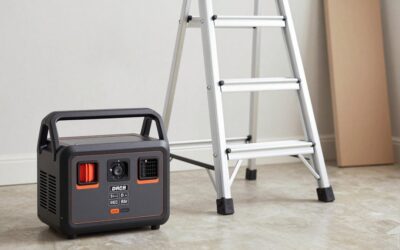
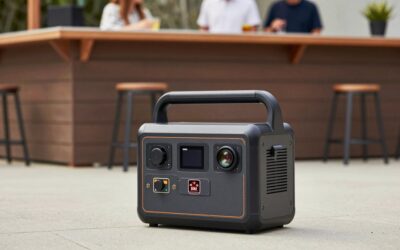
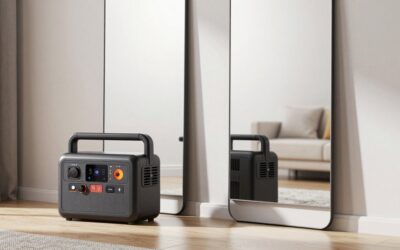
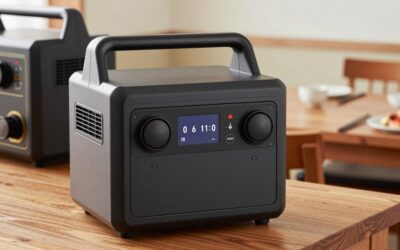
maXpeedingrods 4000 Watt Inverter Generator, Bluetooth® App Data Monitor
Included for 'Best Generator for Running an Air Compressor' because the listing specifies Bluetooth® App Data Monitor, details this guide uses to compare options.
View on AmazonGenerator picks
Pancake and hot dog compressors: 3,500-4,500W
This is the most common pairing: trim carpentry, nail guns, and tire inflation. A 3,500-4,500W generator, with a starting rating near 4,000-5,000W, reliably starts a 6-gallon compressor even with the tank partly charged. Inverter models give cleaner power for a job-site radio and chargers on the same unit. Open-frame models cost less per watt.
Twin-stack and wheelbarrow compressors: 5,500-7,500W
Framing crews running two nailers from a wheelbarrow compressor need a larger generator. The 5,500-7,500W class handles the 2 HP start and still carries saws on separate outlets. Look for a full frame with large never-flat wheels and GFCI-protected outlets.
Stationary shop compressors: 10,000W+ at 240V
A 5 HP two-stage compressor can surge past 10,000W. Portable generators in the 10,000-12,000W class with 240V 50A outlets can do it, but for regular use a proper electrical service is usually more practical than a generator.
Setup tricks that prevent tripping
Start with an empty tank
Drain the tank before connecting to the generator, so the first start is unloaded. After that, the unloader valve should vent head pressure at each shutoff. If you hear a hiss when the compressor stops, it’s working. If not, the unloader may be faulty and every restart becomes a hard start.
Use a short, heavy cord and a long air hose
Compressor manufacturers almost universally recommend running more air hose rather than more extension cord. A long thin cord starves the motor during its surge. Keep the power cord short, 12-gauge and ideally under 25-50 feet, and use extra air hose to reach the work.
Stagger other loads
Don’t let a table saw and the compressor start at the same moment. Start the compressor first, let the tank fill, then run other tools.
Cold weather makes it worse
Oil-lubricated compressors are harder to start in the cold, because thick oil increases motor load. The surge can climb well beyond summer figures. Warm the compressor indoors before use, or use an oil-free model for winter job sites. Cold also affects the generator, so let it warm up for a couple of minutes before applying the compressor load.
Job-site and home safety
Compressors and generators often sit together in garages and workshops, but only the compressor belongs inside. The generator runs outdoors, at least 20 feet from occupied buildings, with the exhaust pointed away from open doors and windows. A CO alarm in the shop is inexpensive protection. Use GFCI outlets for tool circuits, and bond the generator frame according to the manufacturer’s instructions. Connecting to a shop subpanel requires an electrician-installed transfer switch or interlock. Never backfeed.
FAQ
Can a 2,000-watt generator run a pancake air compressor?
Sometimes, with an empty tank and a healthy unloader valve. Loaded restarts often trip 2,000W-class units. A 3,500W+ generator is the dependable choice for a 6-gallon pancake.
Why does my compressor start fine on the first fill but trip the generator later?
Later starts may occur against residual head pressure if the unloader isn’t venting, or the cord may be too long and thin. Check the unloader, shorten the cord, and add air hose instead.
Bottom line
Size the generator for the compressor’s loaded start, not its running watts. That means 3,500-4,500W for pancakes, 5,500-7,500W for wheelbarrow units, and 10,000W+ at 240V for stationary shop compressors. Use a short heavy cord, a long air hose, and a working unloader valve.
Write Your Review
No reviews yet. Be the first to share your experience!