
🛒 Best Price Today on Amazon
Prime members get fast, free shipping on everything above, plus member-only deals. New members get a 30-day free trial — cancel anytime.
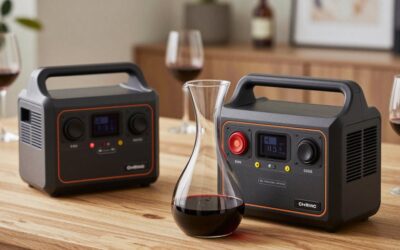
A portable power station is a practical gift for anyone who camps, fishes, overlands, tailgates, or just worries about outages. The challenge is picking the right size: too small and it disappoints; too big and it stays in the closet because it is heavy. This guide matches power station classes to specific outdoor lifestyles, with capacity, weight, and budget ranges so you can choose confidently without knowing every spec.
How to choose by recipient
| Recipient | Capacity range | Weight range (typical) | Budget (broad) |
|---|---|---|---|
| Day hiker, photographer, drone flyer | 100-300 Wh | ~3-8 lb | ~$100-$300 |
| Weekend tent camper | 300-700 Wh | ~8-18 lb | ~$200-$500 |
| Car camper, overlander | 700-1,500 Wh | ~18-35 lb | ~$400-$900 |
| Van-lifer, RV owner | 1,500-3,000 Wh | ~35-70 lb | ~$800-$2,000 |
| Tailgater, backyard party host | 500-1,500 Wh | ~12-35 lb | ~$300-$900 |
Figures vary by model and chemistry; check the current spec sheet before buying.

EF ECOFLOW DELTA 3 Max Portable Power Station, 2048Wh LFP Battery, 2400W
Included for 'Holiday Gift Guide 2026: Best Portable Power Stations for Outdoor Lovers' because the listing specifies 2048Wh LFP Battery and 2400W, details this guide uses to compare options.
View on Amazon
EF ECOFLOW Portable Power Station RIVER 2, 256Wh 300W
Included for 'Holiday Gift Guide 2026: Best Portable Power Stations for Outdoor Lovers' because the listing specifies 256Wh 300W, details this guide uses to compare options.
View on Amazon
EF ECOFLOW Solar Generator Delta 3 Classic with 220W Solar Panel, 1024Wh
Included for 'Holiday Gift Guide 2026: Best Portable Power Stations for Outdoor Lovers' because the listing specifies 1024Wh, details this guide uses to compare options.
View on Amazon
Jackery Explorer 300 Portable Power Station,292Wh
Included for 'Holiday Gift Guide 2026: Best Portable Power Stations for Outdoor Lovers' because the listing specifies 292Wh, details this guide uses to compare options.
View on AmazonWhat each outdoor lifestyle needs
Photographers and drone pilots
Camera batteries and drone packs typically hold 20 to 100 Wh each. A 200 to 300 Wh station recharges several drone batteries or dozens of camera batteries. Prioritize USB-C PD ports of 60 to 100 watts and a light, packable form.
Tent campers
Phones, headlamps, a small fan, string lights, and maybe a CPAP. A 300 to 700 Wh station covers a weekend. A 100 to 200 W folding solar panel extends it indefinitely in good sun.
Overlanders and car campers
12V compressor fridges are the main load, commonly using 400 to 800 Wh per day. A 1 to 1.5 kWh station with a strong 12V output and car charging input fits well.
Van-lifers and RVers
Larger stations with high AC output run induction cooktops, coffee makers, and laptops. Look for fast charging and expandable batteries.
Tailgaters
Speakers, TV, blender, and lights. Check AC output rating for blenders and small grills; 1,000 to 1,800 watts of AC output covers most tailgate gear.
Features that make a good gift
- LFP chemistry: Long cycle life and better thermal stability; slightly heavier.
- Pure sine wave AC: Safe for laptops and sensitive devices.
- USB-C PD ports: Charge laptops without the AC inverter.
- Fast AC charging: Ready in one to two hours before a trip.
- Solar input: Match panel wattage to the station’s max solar input.
- Handles and weight: Test that the recipient can carry it comfortably.
Pair it with the right solar panel
| Station size | Suggested panel | Approx. recharge in good sun |
|---|---|---|
| 300 Wh | 100 W | ~4-6 hours |
| 700 Wh | 200 W | ~5-7 hours |
| 1,500 Wh | 400 W | ~5-7 hours |
Real solar output is usually 60 to 80 percent of panel rating due to angle, heat, and clouds.
Gift-giving tips
- Buy from authorized sellers to protect the warranty.
- Include a charging cable for their vehicle.
- Charge it to about 60 percent before wrapping; it will be ready to use and stays healthy in storage.
- Add a short card with runtime examples for their gear.
Safety note
Power stations are safe to use inside tents, vans, and homes because they produce no exhaust. Keep vents clear, avoid charging in a hot vehicle, and do not cover them with sleeping bags. Gas generators are a different story and should never be used inside tents, campers, or vehicles.
Add-ons that make the gift better
A few inexpensive accessories turn a power station into a complete kit. A carrying case or padded bag protects it in a truck bed or trunk. A 12V extension cord lets the recipient run a fridge or cooler at a distance from the station. A USB-C to USB-C cable rated for 100 watts ensures laptops charge at full speed. For tent campers, a string of LED lights with a USB plug adds instant ambiance and uses only a few watts. For drone pilots and photographers, a multi-battery charging hub reduces the number of ports needed. These extras typically cost $15 to $60 each and make the gift immediately useful.
FAQ
Is a bigger power station always a better gift?
No. Weight grows with capacity. A hiker will not carry a 40-pound station; a van owner will not be satisfied with 300 Wh.
Can a power station run a mini fridge while camping?
A 12V compressor fridge uses roughly 400 to 800 Wh per day. A 700 Wh station handles about a day; add solar for longer trips.
Bottom line
Match capacity to lifestyle: 100 to 300 Wh for hikers and creators, 300 to 700 Wh for tent camping, 1 to 1.5 kWh for overlanding, and 1.5 kWh or more for vans and RVs. Favor LFP, USB-C PD, and a matching solar panel.
Write Your Review
No reviews yet. Be the first to share your experience!