
🛒 Best Price Today on Amazon
Prime members get fast, free shipping on everything above, plus member-only deals. New members get a 30-day free trial — cancel anytime.
- Top Picks at a Glance
- Comparison Table
- How Big Is “Small”? A Simple Load Worksheet
- 1. WEN 2800-Watt 56280iX: Best Overall Small Portable Generator
- 2. AIVOLT 1750W: Best Lightweight Camping Pick
- 3. WEN 2350-Watt 56235i: Best Quiet Compact Pick
- 4. POXURIO 2550-Watt: Best for Long Run Time per Tank
- 5. PowerSmart 3000 Watt Inverter: Best for Slightly Larger Home Loads
- 6. Westinghouse 4650 Peak Watt Dual Fuel: Best Dual Fuel Value
- 7. Honda EU3000iS: Best Premium Small Generator
- Also Consider
- How We Chose
- Buying Guide
- Which Small Generator for Which Job
- Common Mistakes to Avoid
- Frequently Asked Questions
- Which One Should You Buy?
- Sources
The best small portable generator for most people who camp and also want a modest home backup is the WEN 2800-Watt Inverter Generator (56280iX), because it has enough output for a refrigerator, a few lights and device charging, includes a CO Watchdog shutoff and stays light enough to carry. If you only camp and want the lightest unit, the AIVOLT 1750W is the runner-up at about 26.5 pounds, and if you want a premium, long-lived inverter that also runs a bigger load, the Honda EU3000iS is the benchmark.
“Small” is vague, so this guide sizes each pick by what it can realistically run. It covers the best small generators for camping, the best small generators for home outages and the best small portable generators that do both, and it shows a simple load worksheet so you can pick by watts instead of by brand. It is a research-based guide: we did not personally use these generators, and wherever a listing does not state a runtime, noise level or weight, we write “not listed”.

Oxseryn Power Equipment 4400 Watts Inverter Generator Gas Powered, Portable Open Frame Generator, Low Noise with ECO Mode, RV Ready, Emergency Home Backup
Included for 'Best Small Portable Generators for Camping and Home Backup (By Load)' because the listing specifies Portable Open Frame Generator and Low Noise with ECO Mode, details this guide uses to compare options.
View on Amazon
Jackery Explorer 300 Portable Power Station,292Wh | Backup LiFePO4 Battery, Solar Generator for Outdoors, Camping, Travel, Hunting, Blackout (Solar Panel Optional)
Included for 'Best Small Portable Generators for Camping and Home Backup (By Load)' because the listing specifies 292Wh and Backup LiFePO4 Battery, details this guide uses to compare options.
View on Amazon
Honda EU2200i 2200 Watt Inverter Generator (EU2200ITAN) | Super Quiet 120V Gas Powered Portable Generator for Camping or Home Backup Power Supply, Up to 8.1 Hour Run Time
Included for 'Best Small Portable Generators for Camping and Home Backup (By Load)' because the listing specifies Up to 8.1 Hour Run Time, details this guide uses to compare options.
View on Amazon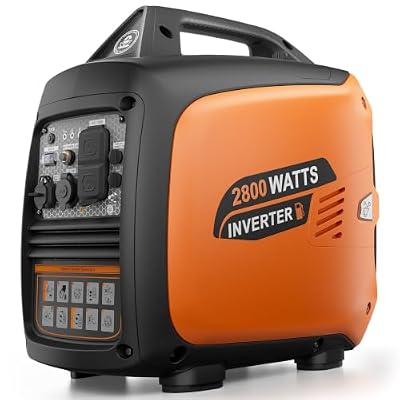
2800W Portable Inverter Generator, Quiet Gas Generator for Camping, RVs, Home Backup and Outdoor Activities, EPA Compliant
Included for 'Best Small Portable Generators for Camping and Home Backup (By Load)' because the listing specifies Quiet Gas Generator for Camping and RVs, details this guide uses to compare options.
View on AmazonTop Picks at a Glance
- Best Overall Small Generator: WEN 2800-Watt Inverter Generator 56280iX (fuel shut off, CO Watchdog).
- Best Lightweight for Camping: AIVOLT 1750W Inverter Generator (listed at 26.5 lbs, one-hand carry).
- Best Quiet Compact Pick: WEN 2350-Watt Inverter Generator 56235i (super quiet, ultra lightweight per the listing).
- Best Long Run Time per Tank: POXURIO 2550-Watt Inverter Generator (1.06 gallon tank, up to 10 hours per listing).
- Best for Home Backup Loads: PowerSmart 3000 Watt Inverter Generator (CO sensor, home or camping use).
- Best Dual Fuel Value: Westinghouse 4650 Peak Watt Dual Fuel Portable Generator (gas and propane, RV-ready 30A outlet).
- Best Premium: Honda EU3000iS 3000 Watt Inverter Generator.
Comparison Table
| Product | Best for | Key specs (from listing) | Watch for | Price tier |
|---|---|---|---|---|
| WEN 56280iX 2800W | Camping plus basic home backup | 2800 W inverter, fuel shut off, CO Watchdog | Weight and runtime not listed in the title | Mid-range |
| AIVOLT 1750W | Backpack-style campsite power | 1750 W inverter, 26.5 lbs, one-hand carry | Limited for a fridge plus anything else | Budget to mid-range |
| WEN 56235i 2350W | Quiet campgrounds, RV lights and devices | 2350 W inverter, fuel shut off | Check the manual for the continuous rating | Mid-range |
| POXURIO 2550W | Long outages on one tank | 2550 W, 1.06 gallon tank, up to 10 hours per listing, 120V | The hours figure depends on load and is the seller’s number | Mid-range |
| PowerSmart 3000W inverter | Slightly larger loads | 3000 W inverter, CO sensor, camping or home use | Weight not listed | Mid-range |
| Westinghouse 4650 dual fuel | Home backup, propane option | 4650 peak W, gas and propane, RV-ready 30A, CO sensor | Peak rating is not the running rating | Mid-range |
| Honda EU3000iS | Long-term reliability, bigger loads | 3000 W inverter, 120V, gas | Cost and weight; the listing does not state weight | Premium |
How Big Is “Small”? A Simple Load Worksheet
Before comparing models, add up what you want to run. Look at the label on each appliance for running watts, then add a margin for motors that surge on startup, such as refrigerators, pumps and air conditioners. The ranges below are typical figures drawn from manufacturer and utility guidance; always check your own labels.
| Load | Typical running watts (range) | Startup surge |
|---|---|---|
| Phone, laptop, router charging | 10 to 100 W combined | None |
| LED lights (several) | 20 to 100 W | None |
| Full-size refrigerator | 100 to 250 W running | Often 2 to 3 times running watts for a few seconds |
| Chest or upright freezer | 100 to 250 W running | Often 2 to 3 times running watts |
| Microwave | 600 to 1,500 W | Low |
| Window air conditioner | 500 to 1,500 W | High, often 2 to 3 times |
| Sump pump | 300 to 1,000 W | High, often 2 to 3 times |
Worked example for a power outage: refrigerator at 200 W running with a 600 W startup surge, a few LEDs at 60 W, a router and chargers at 50 W and a small fan at 50 W. Running total is about 360 W, with a brief spike near 760 W when the fridge compressor starts. Any generator in this guide with a 1,750 W or higher rating covers that load with room to spare, which is why small generators are popular for outage kits. Add a microwave and the running load jumps toward 1,500 W, which is when 2,350 to 3,000 W units earn their keep.
Worked example for a campsite: LED lantern at 10 W, two phone chargers at 20 W, a laptop at 65 W and a small electric cooler at 60 W comes to about 155 W. A 1,750 W inverter generator is more than enough, and a small battery power station might also do the job. That is why we list battery alternatives in the Also Consider section.
1. WEN 2800-Watt 56280iX: Best Overall Small Portable Generator
- 2800-watt inverter generator, 120V
- Fuel shut off and CO Watchdog carbon monoxide shutoff, per the listing
- Marketed as quiet, portable and lightweight
- Weight, noise level in decibels and runtime: not listed in the title, check the maker page
Best for: campers and homeowners who want one small generator for both. Skip if: you only need to charge phones at a campsite and want the lightest possible unit.
The 2800 W class is the sweet spot for “small but useful”. It covers a refrigerator, lights, a router and chargers for outage backup with plenty of headroom, and at the campsite it will run an RV air conditioner in some small trailers only if the manual says so. An inverter generator produces cleaner power than a basic open-frame unit, which is better for laptops, CPAP machines and other electronics that dislike voltage swings, though you should check each device’s requirements.
The CO Watchdog feature is a feature worth paying attention to. Carbon monoxide from generators kills people every year, and a shutoff sensor is a backup, not a license to run a generator near a window. Whichever generator you buy, run it outdoors, well away from doors, windows and vents, and use battery-powered CO alarms inside.
Pros: enough power for typical outage loads; CO shutoff; inverter power; fuel shut off for easier storage. Cons: weight not listed; costs more than open-frame units; check the manual for the continuous rating.
2. AIVOLT 1750W: Best Lightweight Camping Pick
- 1750-watt inverter generator
- Listed at 26.5 lbs with a one-hand carry handle
- Marketed as super quiet; no decibel number in the title
- Fuel tank size and runtime: not listed in the title
Best for: tent camping, tailgating and van trips where weight and noise matter more than raw wattage. Skip if: you want to run a refrigerator plus a microwave at once.
At 26.5 pounds this is the one to pick if you often lift a generator in and out of a car trunk. 1,750 W is enough for lights, chargers, a laptop and a small cooler, and it will run a fridge by itself during an outage. What you give up is headroom: add a coffee maker and a few devices and you can reach the ceiling quickly.
Weight in a listing is the dry weight, so add fuel. A full tank adds several pounds. Most campgrounds also have generator quiet hours, so check the rules and the maker’s noise figure before you plan to run overnight.
Pros: light; easy one-hand carry; inverter power; suitable for camping. Cons: limited headroom; small output for home backup beyond the basics; weight is the seller’s figure and does not include fuel.
3. WEN 2350-Watt 56235i: Best Quiet Compact Pick
- 2350-watt inverter generator
- Fuel shut off, per the listing
- Marketed as super quiet and ultra lightweight
- Noise, weight and runtime numbers: not listed in the title
Best for: quiet campgrounds, small RVs and trailers with a modest load. Skip if: you need more than about 2,000 W running.
This is the older-generation WEN in the lineup with a lower rating than the 2800 W model. It fits readers who want a compact inverter generator for camping, tailgating and basic outage backup without paying for extra capacity. Compare it with the 2800 W model on the maker page for weight and noise before you decide, because the price gap between them tends to be small.
Like any gas generator, it needs fresh fuel, an occasional oil change and a start every few months if it sits. Treat stored fuel with a stabilizer and follow the oil change interval in the manual, because most generator failures come from stale fuel and neglected oil.
Pros: quiet; compact; inverter power; good value for camping. Cons: lower output than the 2800 W; fewer outlet details in the listing; no CO sensor mentioned in the title.
4. POXURIO 2550-Watt: Best for Long Run Time per Tank
- 2550-watt inverter generator, 120V gas power
- 1.06 gallon fuel tank, “up to 10 hours use” in the listing
- Marketed for home use
- Noise and weight: not listed in the title
Best for: outages where you want to refuel as rarely as possible. Skip if: you want a recognised brand with wide service coverage.
Long runtime per tank matters during a storm, because refuelling a hot generator at night is the most dangerous part of using one. A 1.06 gallon tank that the seller says lasts up to 10 hours suggests that figure was measured at a light load. Expect shorter runs at higher output. Treat the runtime as an upper bound and plan your fuel supply around your own load, not the listing number.
POXURIO is a lesser-known brand. Before you buy, check the warranty terms, parts availability and whether the maker publishes a manual and a CARB or EPA compliance statement. Those details matter more with new brands than any spec line.
Pros: long listed runtime; 2550 W rating; home-use focus. Cons: less established brand; runtime is the seller’s best-case figure; weight and noise not listed.
5. PowerSmart 3000 Watt Inverter: Best for Slightly Larger Home Loads
- 3000-watt portable inverter generator
- CO sensor, per the listing
- Marketed as super quiet; for camping or home use
- Weight and runtime: not listed in the title
Best for: homeowners who want to run a fridge, lights, a router and a microwave or small appliance together. Skip if: you need to pack it into a small kayak or carry it far.
At around 3,000 W, you get more flexibility to run a microwave or a space heater at moderate settings while the fridge cycles. That is the upper end of “small” in the portable generator world. Weight rises with output, so check the maker page, and remember that any inverter generator with this rating is heavier than the 1,750 W camping unit.
If you plan to power something through a home transfer switch or a manual interlock kit, have a licensed electrician install it. Never back-feed a house panel through a wall outlet, which is dangerous for you and for line workers.
Pros: more headroom; CO sensor; inverter power; camping and home flexibility. Cons: heavier than 2,000 W units; weight not listed; fewer brand service centres than major names.
6. Westinghouse 4650 Peak Watt Dual Fuel: Best Dual Fuel Value
- 4650 peak watts (running watts: not listed in the title)
- Dual fuel: gasoline and propane
- RV-ready 30A outlet and a CO sensor, per the listing
- Inverter or open-frame design: not listed in the title
Best for: home backup where propane storage is easier than gasoline. Skip if: you want the quietest or lightest option for camping.
Dual fuel gives you flexibility. Propane stores well for years and burns cleaner, which is a real advantage if you keep a generator for emergencies. The peak rating is the number to read carefully: peak watts are a short-term surge, and the running rating is lower. Check the maker’s listing for the running wattage and propane output before you size a load around it.
It is larger than the inverter picks above, so it is a home backup unit that can also go camping in a truck bed, not a backpack camping unit. The 30A RV outlet makes it useful for small trailers.
Pros: gas and propane flexibility; RV-ready outlet; CO sensor; strong value for home backup. Cons: bigger and heavier; peak rating can mislead; probably louder than inverter models.
7. Honda EU3000iS: Best Premium Small Generator
- 3000-watt inverter generator, 120V, gasoline
- Marketed as super quiet
- Electric start is implied by the “iS” model code but is not stated in the title; confirm on the Honda page
- Weight and runtime: not listed in the title
Best for: anyone who wants a generator that is widely supported by a dealer network and that will be used for many years. Skip if: your priority is the lowest purchase cost.
Honda inverter generators are the standard others are compared with, mostly because of build quality, dealer service and parts availability. Parallel capability for linking two Honda units is a feature of the line, which makes the 3,000 W class a scalable option if your needs grow, though you should confirm it for this exact model on Honda’s site.
The cost gap against budget inverter generators is large. For a generator you will use a few weekends a year, a cheaper model can make sense. For heavy use, remote travel or a household that depends on power for medical devices, a well-supported unit is easier to justify.
Pros: strong reputation; dealer service; quiet inverter output; 3000 W capacity. Cons: premium price; heavy for its class; not the right choice for backpack camping.
Also Consider
- PowerSmart 1200 Watt Portable Generator: an ultralight, small unit listed for camping. Good for lights and phones; not for a refrigerator and extras unless the maker page says so.
- Champion 4000-Watt Dual Fuel RV Ready Inverter: a larger gas and propane inverter with an RV-ready outlet and recoil start. Heavier than the picks here.
- Jackery Explorer 300 (292Wh): a battery power station, not a generator, with a LiFePO4 battery and no fuel or fumes. Best for phones, laptops and lights where running indoors or on a balcony is a must.
- BLUETTI Elite 30 V2 (288Wh, 600W): a small LFP battery power station that lifts to 1500 W for some appliances, per the listing title. Suited to tents and short outages with light loads.
Battery power stations are quiet and safe to use indoors in terms of exhaust, because they have no engine, but their capacity is small. A 288 Wh unit supplies roughly one hour for a 250 W load before efficiency losses, which is why they suit light loads instead of whole-fridge backup.
How We Chose
This guide is research-based. We did not personally use these products. We started with generators available in the store behind this site, filtered for small output (roughly 1,200 to 4,650 W) and for intent: camping, tailgating or light home backup. We compared listing details, maker pages and independent guidance. Publications such as Consumer Reports, Popular Mechanics and the US Consumer Product Safety Commission were used as the basis for the safety and sizing advice. We use tier words instead of prices, and we mark any figure that is not in the listing as “not listed”.
No ranking here depends on a claimed benchmark. No noise or runtime figures here are our own, and the numbers we quote (such as the 10-hour figure for the POXURIO and the 26.5 lb weight for the AIVOLT) come from the seller’s listing and should be confirmed with the maker.
Buying Guide
Start with running watts, then add headroom
Add up the running watts of everything you want to power at once, then add 20 to 30 percent headroom and account for the startup surge of your largest motor. For a refrigerator-and-lights outage kit, 1,750 to 2,500 W is often enough. For a fridge, microwave and a few devices, aim for 3,000 W. For a sump pump or a window air conditioner, plan for more and check the pump’s starting watts.
Inverter or open-frame?
Inverter generators produce cleaner power, which is better for electronics, and they tend to be quieter and more fuel efficient at partial load because the engine speed varies. Open-frame generators usually cost less per watt but are louder and heavier. For camping, inverter is the better fit. For a garage emergency unit, open-frame or dual fuel can be a good value.
Fuel type
Gasoline is easy to find but degrades in storage, so use a stabilizer and rotate it. Propane stores for years and burns cleaner, and dual fuel units let you switch. Check the maker’s output on propane, since it is usually lower than on gasoline.
Weight and portability
Under about 30 pounds, you can lift a generator with one hand. In the 40 to 60 pound range, you will want wheels or a second person. Remember that fuel adds weight, and that listings generally give dry weight.
Safety features and rules that matter
Choose a unit with a CO shutoff, then place it outdoors, at least 20 feet from the house with the exhaust pointing away from doors, windows and vents, as federal safety guidance advises. Never run a generator in a garage, tent, camper cabin or near an open window, even with the door open. Keep it dry and covered from rain using an approved generator tent or a canopy with open sides, never an enclosed box. Let it cool before refuelling. Use battery-powered CO alarms in the home. Connect to a house panel only through a transfer switch or interlock installed by a licensed electrician.
Which Small Generator for Which Job
| Your use | Typical load | Pick |
|---|---|---|
| Tent camping, phones and lights | 50 to 200 W | AIVOLT 1750W or a battery power station |
| Small trailer or van, quiet hours | 200 to 1,000 W | WEN 56235i or WEN 56280iX |
| Outage kit: fridge, lights, router | 300 to 600 W | WEN 56280iX or POXURIO 2550W |
| Outage plus microwave or small heater | 1,200 to 2,000 W | PowerSmart 3000W or Honda EU3000iS |
| Home backup with propane option | 1,000 to 3,500 W | Westinghouse 4650 dual fuel |
Common Mistakes to Avoid
- Sizing by peak watts and forgetting that the running rating is lower.
- Running the generator in a garage or too close to a window.
- Leaving old gas in the tank for months and then finding the carburetor clogged.
- Plugging a generator into a wall outlet to feed the house.
- Buying more generator than you need and then carrying extra weight every trip.
Frequently Asked Questions
What is the best small portable generator for camping?
A lightweight inverter generator in the 1,750 to 2,800 W range is the best fit for camping, since it is quiet and light enough to carry. The AIVOLT 1750W is the lightest pick here, and the WEN 2800 W adds more output.
What is the best small generator for home backup?
A 2,500 to 3,000 W inverter generator is enough for a refrigerator, lights, a router and chargers, which makes the WEN 2800 W, the POXURIO 2550 W or the PowerSmart 3000 W good choices. If you want propane, consider the Westinghouse dual fuel model and check its running watts.
How many watts can a small portable generator run?
It depends on the model, but a 2,000 to 3,000 W inverter generator can usually run a fridge, lights and electronics at once. Add up your running watts, include startup surge for motors, and stay within the running rating, not the peak rating.
Can a small generator run a refrigerator?
Yes, most small inverter generators can run a typical full-size refrigerator, since a fridge draws roughly 100 to 250 W running with a brief higher startup surge. Check your fridge label and the generator’s running wattage, and let the generator run first before plugging in a compressor load.
Are small generators safe to run near a tent or camper?
Only outdoors and well away from sleeping areas, with the exhaust pointing away. Carbon monoxide can build up in tents, campers and garages even when ventilated. Use a battery-powered CO alarm, and consider a battery power station for use close to your sleeping area.
Is an inverter generator worth it for a small unit?
Usually yes for camping and electronics, because inverter units are quieter and produce cleaner power. Open-frame units can cost less per watt for emergency use, but they are generally louder and heavier.
How long will a small generator run on a tank?
It depends on load. Listings often quote a best-case figure at partial load, such as the POXURIO’s up to 10 hours, so expect less at higher output. Check the maker’s runtime chart for 25, 50 and 100 percent load.
Which One Should You Buy?
For one generator that covers camping and a small home outage kit, choose the WEN 56280iX. For a lighter camping-only unit, choose the AIVOLT 1750W. For long unattended runs on a tank, look at the POXURIO, and for a larger load such as a microwave, the PowerSmart 3000 W or the Honda EU3000iS. If you prefer propane, the Westinghouse dual fuel model is the value pick. Whichever you pick, run it outdoors, install a CO alarm in your home and confirm weight, noise and runtime on the maker page.
Sources
- WEN product pages and manuals
- Honda Power Equipment generator pages
- Westinghouse Outdoor Power Equipment product pages
- US Consumer Product Safety Commission generator safety guidance
- Consumer Reports generator buying guide
Last updated: October 2026



Write Your Review
No reviews yet. Be the first to share your experience!