
🛒 Best Price Today on Amazon
Prime members get fast, free shipping on everything above, plus member-only deals. New members get a 30-day free trial — cancel anytime.
An off-grid cabin is not a camping trip or an outage. It is a place where every light, pump, and appliance depends on power you make yourself, sometimes every weekend and sometimes year-round. That shifts the generator-versus-power-station question toward long-term economics, reliability through all four seasons, and how much you are willing to maintain. This comparison works through weekend cabins and full-time homesteads separately because the answer changes significantly between them.
How much energy does a cabin use?
| Cabin profile | Typical loads | Daily energy (approx.) |
|---|---|---|
| Rustic weekend cabin | LED lights, phone charging, 12V fridge, fan | 0.5–1.5 kWh |
| Comfortable weekend cabin | Above plus water pump, TV, Wi-Fi hotspot, laptop | 1.5–3 kWh |
| Full-time small cabin, efficient | Fridge, freezer, well pump, lights, electronics, washer | 3–6 kWh |
| Full-time cabin with electric cooking | Above plus induction cooktop, microwave, tools | 6–12 kWh |
Efficient full-time cabins in the 3 to 6 kWh range are common; homes with electric water heating, electric cooking, and air conditioning quickly move past 15 kWh, which changes the economics dramatically.

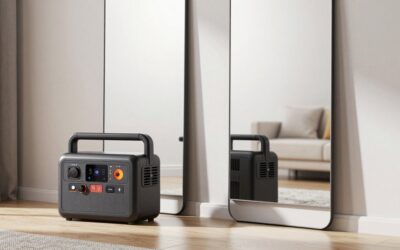
Lipower 2400W Portable Power Station, 2150Wh Solar Generators for Home Use
Included for 'Best Power Solution for Off-Grid Cabin Living: Generator or Power Station?' because the listing specifies 2150Wh Solar Generators for Home Use, details this guide uses to compare options.
View on Amazon
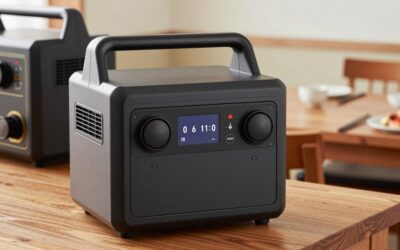
BP3000 Portable Power Station 3200W Solar Generator with 200W Panel
Included for 'Best Power Solution for Off-Grid Cabin Living: Generator or Power Station?' as a relevant option in this category; details come from the product listing.
View on Amazon
P5000 Plus 5120Wh Portable Power Station, 3600W Solar Generator
Included for 'Best Power Solution for Off-Grid Cabin Living: Generator or Power Station?' because the listing specifies 3600W Solar Generator, details this guide uses to compare options.
View on Amazon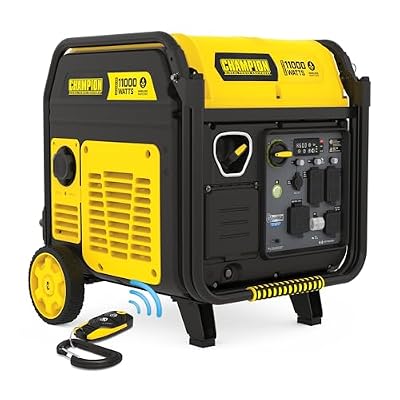
Champion 11,000-Watt Wireless Remote Start Portable Inverter Generator
Included for 'Best Power Solution for Off-Grid Cabin Living: Generator or Power Station?' because the listing specifies 000-Watt Wireless Remote Start Portable Inverter Generator, details this guide uses to compare options.
View on AmazonWeekend cabins: a power station often wins
For a cabin used on weekends and holidays, a 2,000 to 3,600Wh power station paired with 400 to 800W of solar panels covers lights, a fridge, a water pump, and electronics. The station charges from the sun during the week while you are away, so you arrive to a full battery. It needs no fuel, makes no noise, and involves no winterizing of an engine. Many stations also accept expansion batteries, letting you grow to 6 to 10 kWh over time.
The winter weekend exception
If you visit in winter, short days and snow on panels can cut harvest to under 1 kWh per day. Bring a small inverter generator for recharge sessions or plan to keep loads lean during dark months.
Full-time cabins: a hybrid system is standard
Full-time off-grid living almost always uses a solar array, a battery bank, and a backup generator together. The solar and battery do the daily work, and the generator covers extended cloudy periods, heavy tool use, and winter shortfalls. Relying on a generator alone for full-time living is expensive: running 8 to 12 hours a day at 0.3 to 0.6 gallons per hour means 900 to 2,500 gallons of fuel per year, plus oil changes every 50 to 100 hours.
| Approach for full-time cabin | Upfront range | Annual fuel/maintenance | Noise |
|---|---|---|---|
| Generator only | $800–3,000 | High: fuel, oil, rebuilds | Constant during use |
| Solar + battery, no generator | $10,000–30,000+ | Very low | Silent |
| Solar + battery + backup generator | $12,000–35,000+ | Low: 50–200 gen hours/year | Occasional |
Why the generator stays in the plan
Battery systems are sized for average days, not a week of snow or smoke. Oversizing solar and storage to cover the worst week of the year gets very expensive. A generator running 50 to 200 hours a year fills that gap for a small fraction of the cost.
Power stations versus a built-in battery system
A portable power station is a self-contained battery, inverter, and charger. It is plug-and-play and portable, which suits weekend cabins and renters. A built-in system with a separate inverter-charger and wall-mounted lithium battery scales higher, typically to 10 to 30 kWh or more, supports 240V well pumps, and integrates better with a permanent solar array. For full-time living, the built-in system is usually the better long-term investment.
Decision guide
- Occasional use, summer only: 1,000 to 2,000Wh station and 200 to 400W of solar.
- Weekend use, all seasons: 2,000 to 3,600Wh station, 400 to 800W solar, small inverter generator for winter.
- Full-time, efficient: built-in 10 to 20 kWh battery, 3 to 6 kW solar, 5,000 to 7,500W backup generator.
- Full-time with heavy shop tools: add a larger 240V-capable generator for tool days.
FAQ
Can I run an off-grid cabin on a generator alone?
You can, but fuel, noise, and maintenance add up quickly. Generator-only cabins typically run the machine a few hours a day and use a small battery to cover the quiet hours, which is essentially a hybrid anyway.
How long does a power station last in daily cabin use?
LiFePO4-based stations are often rated for roughly 3,000 to 4,000 cycles to about 70 to 80 percent capacity, which is around 8 to 10 years of daily cycling.
Bottom line
For weekend cabins, a large power station with solar is the simplest, quietest, lowest-maintenance answer. For full-time off-grid living, build around solar and a battery bank, and keep a generator as a backup that runs only when the sun cannot keep up.
Write Your Review
No reviews yet. Be the first to share your experience!