
🛒 Best Price Today on Amazon
Prime members get fast, free shipping on everything above, plus member-only deals. New members get a 30-day free trial — cancel anytime.
A location shoot fails in a very specific way: the light is perfect, the client is ready, and the last camera battery blinks red. Portable power for photographers and videographers is less about raw capacity and more about matching three things: what your gear actually draws over a shoot day, how you will move the power (car, cart, backpack or airplane), and how quiet and clean that power has to be on set. This guide covers each, with a shoot-day budget you can adapt and a short list of well-known stations to check against your needs.
Build a shoot-day energy budget
List every device you will charge or run, its draw, and the hours or charges you need. Add about 15 to 20 percent for inverter and charger losses if you are charging from AC outlets. The table shows typical ranges; check your own chargers and fixtures, which print their input watts on the label.
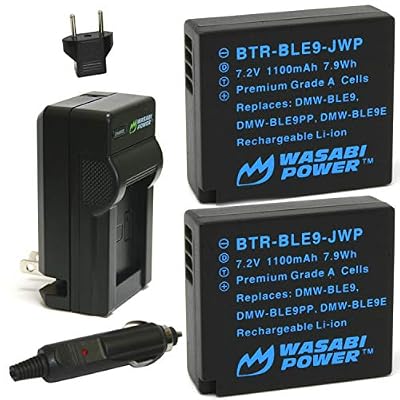
Wasabi Power Battery (2-Pack) and Charger for Panasonic DMW-BLE9, DMW-BLG10 and Panasonic Lumix DMC-GF3, DMC-GF5, DMC-GF6, DMC-GX7, DMC-LX100
Included for 'Best Portable Power for Photographers and Videographers on Location' because the listing specifies DMW-BLG10 and Panasonic Lumix DMC-GF3 and DMC-GF5, details this guide uses to compare options.
View on Amazon| Gear | Typical draw or capacity | Typical shoot-day use | Approx. energy from the station |
|---|---|---|---|
| Mirrorless camera batteries (charging) | about 15 to 20Wh each | 6 recharges | about 110 to 140Wh |
| NP-F style batteries for monitors and small lights | about 40 to 50Wh each | 4 recharges | about 190 to 240Wh |
| V-mount cinema batteries | about 98Wh each (typical airline-friendly size) | 4 recharges | about 450 to 480Wh |
| Bi-color LED panel, running on AC | about 60 to 150W | 4 hours | about 280 to 700Wh |
| COB LED light, running on AC | about 150 to 350W | 2 hours | about 350 to 820Wh |
| Laptop for tethering or offload | about 45 to 100W | 3 hours | about 160 to 350Wh |
| Drone batteries (charging) | about 60 to 100Wh each | 4 recharges | about 280 to 470Wh |
A stills photographer charging cameras, a laptop and a few drone batteries might need only 500 to 800Wh a day. A video crew running COB lights on AC can burn through 2kWh or more.
Pick a size tier
Carry-on tier: 100Wh and below
If you fly, this is your hard limit for batteries you can carry without extra approval. Under FAA rules, spare lithium batteries up to 100Wh generally go in carry-on bags, those between 101 and 160Wh need airline approval with a limit of two spares, and larger batteries, including almost every portable power station, are not allowed on passenger aircraft. Check the airline’s current policy before every trip. Travelling shooters therefore rely on V-mounts, USB-C power banks and multi-bay chargers, and rent or ship a larger station to the destination.
Location tier: roughly 500 to 1,200Wh
This is the sweet spot for most road shoots. Stations in the 1kWh class weigh roughly 20 to 30 pounds and can charge everything in a kit and run a mid-size LED for a few hours. Examples worth checking include the Anker SOLIX C1000 (about 1kWh, rated around 1,800W AC output), the Jackery Explorer 1000 v2 (about 1kWh, rated around 1,500W) and the Bluetti AC180 (about 1.15kWh). Retailer listings indicate the AC180 has been discontinued in some regions, so check availability. Confirm all specs on the current spec sheet.
Production tier: 2kWh and up
For all-day LED lighting, video village monitors and DIT stations, look at 2kWh-class units or expandable systems. They are heavy, often 40 to 60 pounds or more, so plan for a cart.
Set-friendly features that matter
- Pure sine wave AC output. Nearly all modern lithium stations provide it. It keeps LED drivers, chargers and audio gear happy and reduces the chance of flicker or hum.
- Fan noise. Stations spin up cooling fans under load and during fast charging. Place the unit away from the microphone, use a longer cable, or choose a quiet or silent charging mode where available. Test it before a sync-sound interview.
- USB-C power delivery. 60 to 100W USB-C ports can charge laptops and many camera batteries directly, skipping the inverter and saving energy.
- Charge speed. Many stations now refill from a wall outlet in one to two hours, which lets you top up during a lunch break at a location with power.
- Solar input. For multi-day landscape or wildlife trips, a foldable 100 to 200W panel can put back several hundred watt-hours on a clear day.
What about AC strobes and generators?
Battery-powered monolights have largely replaced AC strobes on location. If you do run AC studio strobes, be aware they can pull large bursts of current while recycling; check the strobe maker’s guidance on use with inverters and stations. Fuel generators are occasionally used on bigger sets, but they must be placed outdoors, well downwind and at least 20 feet from any occupied space or building openings, never in a garage or enclosed porch, with CO monitoring where crew work. They also bring noise that battery power avoids.
Care between jobs
Lithium stations last longest when stored partly charged in a cool place, not in a hot car trunk. Top them up the day before a shoot rather than leaving them at 100 percent for weeks, and keep V-mount and NP-F batteries on the same habit.
FAQ
Can I take a portable power station on a plane?
Almost never. Stations are usually far above the 160Wh passenger aircraft limit. Carry compliant smaller batteries and ship or rent a station at your destination.
Is 1kWh enough for a one-day wedding shoot?
For stills with battery-powered flashes, usually yes with room to spare. For video with AC-powered lights all day, budget more or plan a recharge.
Bottom line
For most photographers and small video teams, a 1kWh-class station with strong USB-C output and quiet operation is the best all-rounder, backed by airline-compliant batteries for travel. Crews running lights on AC should step up to 2kWh or more. Build a shoot-day budget, test fan noise before recording, and confirm current specs and availability of any model before you buy.



Write Your Review
No reviews yet. Be the first to share your experience!