
🛒 Best Price Today on Amazon
Prime members get fast, free shipping on everything above, plus member-only deals. New members get a 30-day free trial — cancel anytime.
Nobody asks whether a 5kWh home-backup battery can start a refrigerator; of course it can. The useful question for an Explorer 5000 Plus owner is how many days the fridge will last, what else can share the battery, and whether solar input can make the setup self-sustaining through a long outage. This article answers those three questions with realistic consumption figures rather than best-case marketing numbers.
What you are working with
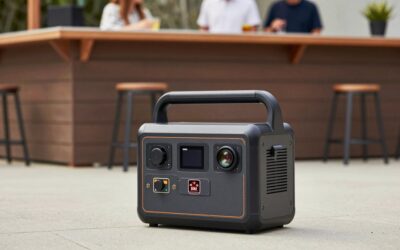
Jackery lists the Explorer 5000 Plus at about 5,040Wh of LiFePO4 capacity, 7,200W of continuous AC output at 120V and 240V, and support for add-on battery packs. It also accepts high solar input, in the multi-kilowatt range. Treat these as class figures and confirm them on the current spec sheet, since bundles and firmware change. After inverter losses and a small idle draw, plan on roughly 4,300 to 4,500Wh of usable energy from a full charge.
Startup surge is a non-issue
A typical refrigerator compressor spikes to somewhere between 600 and 1,500W for a split second at start. The 5000 Plus has thousands of watts of headroom, so the fridge can start while other loads are running without any risk of tripping the inverter.
How many days the fridge runs
| Refrigerator type | Typical daily use | Days on one charge (~4,400Wh) |
|---|---|---|
| Energy Star 18-21 cu ft top-freezer | 1.0-1.3kWh | ~3.4-4.4 days |
| 25 cu ft side-by-side or French door | 1.5-2.0kWh | ~2.2-2.9 days |
| Older (pre-2005) full-size fridge | 2.0-3.0kWh | ~1.5-2.2 days |
| Fridge plus 7 cu ft chest freezer | 1.7-2.1kWh combined | ~2.1-2.6 days |
Daily use swings with kitchen temperature and how often the door opens. A fridge in a 90°F kitchen can use 30 to 50 percent more than the same model in a 70°F room.
Sharing the battery with other essentials
Most people want the fridge plus a handful of other things. A realistic outage day might include the fridge at 1.3kWh, a router and modem at 0.3kWh, LED lights at 0.2kWh, phone and laptop charging at 0.2kWh, and a furnace blower or fans at 0.5 to 1kWh. That totals 2.5 to 3kWh per day, which gives you about a day and a half on battery alone.
Solar turns days into weeks
A 5000 Plus paired with a 1,000 to 2,000W solar array can harvest roughly 4 to 8kWh on a clear summer day in much of the US, less in winter or under cloud. That is enough to replace a fridge-plus-essentials load entirely on good days. On a string of overcast days, expect to ration.
Connecting to the house the right way
Many owners want the fridge to stay on its normal kitchen outlet. The safe way is a transfer switch installed by a licensed electrician; Jackery sells a matching smart transfer switch, and third-party manual switches also work. Never run a double-male cord from the station into a wall outlet. That backfeeds the utility line, can energize wires that line crews believe are dead, and can start a fire in your panel.
If a gas generator is part of the plan
The 5000 Plus can be topped up by a generator. The generator must sit outdoors, at least 20 feet from the house, with exhaust aimed away from doors, windows, and vents. Never run it in a garage, carport, basement, or on a porch, even with the door open. Keep battery CO alarms on every floor.
Battery care for a fridge-duty station
- Keep it in a conditioned space. A hot garage above 95°F accelerates cell aging and throttles charging.
- If it lives on standby for months, store it around 60 to 80 percent and use the app to check state of charge.
- Do not charge in freezing temperatures unless the model’s manual confirms low-temperature charging protection.
FAQ
Can the Explorer 5000 Plus run a fridge in UPS mode during a blackout?
Yes, that is one of its intended uses. Note that UPS-mode output current may be lower than the station’s full rating, so check the manual’s UPS specifications before putting several heavy loads behind it.
Is 5kWh overkill if I only need a fridge?
For fridge-only backup of one or two days, a 2 to 3kWh unit costs less and weighs far less. The 5000 Plus makes sense when you also want well pumps, 240V loads, or multi-day solar-backed resilience.
Bottom line
The Jackery Explorer 5000 Plus runs a modern refrigerator for roughly three to four days on a full charge, or about a day and a half alongside other essentials. With a solar array it can keep a fridge going indefinitely in good weather. Confirm current specs, install a transfer switch through a licensed electrician, and keep any backup generator well outside the house.








Write Your Review
No reviews yet. Be the first to share your experience!