
🛒 Best Price Today on Amazon
Prime members get fast, free shipping on everything above, plus member-only deals. New members get a 30-day free trial — cancel anytime.
Tailgating power needs are unusual: a relatively short window of four to eight hours, a dense lot full of people and cars, and a load mix that ranges from a TV and speakers to a blender, slow cooker, or electric griddle. Stadium lot rules add another layer, since some venues restrict generators or open flames. This comparison looks at what each option does well for a typical game-day setup, how to size it, and which one causes fewer headaches in a crowded lot.
Common tailgate loads
| Load | Running watts | Energy over a 5-hour tailgate |
|---|---|---|
| 43–55 inch LED TV | 60–150W | 300–750Wh |
| Streaming box or satellite receiver | 15–40W | 75–200Wh |
| Portable PA or party speaker | 30–150W | 150–750Wh |
| Slow cooker (warm/low) | 150–250W | 750–1,250Wh |
| Blender (short bursts) | 300–1,000W | 30–80Wh |
| Electric griddle | 1,200–1,500W | 600–1,500Wh (30–60 min) |
| Mini fridge or 12V cooler | 40–80W | 200–400Wh |
| Phone charging | 10–30W | 50–150Wh |
A TV, speaker, streaming box, and phone charging use roughly 600 to 1,500Wh per game. Add a slow cooker and the total reaches 1,500 to 2,500Wh. Add electric griddle cooking and you can exceed 3,000Wh.

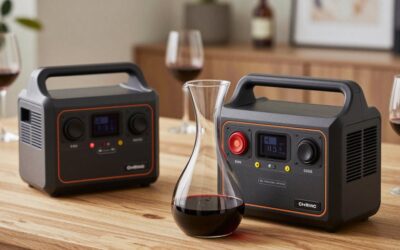
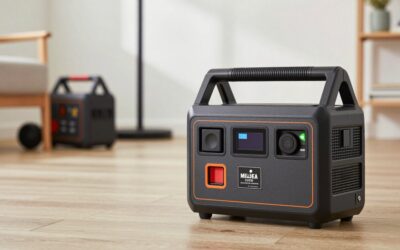
Jackery Explorer 300 Portable Power Station,292Wh
Included for 'Best Power Solution for Tailgating: Generator or Power Station?' because the listing specifies 292Wh, details this guide uses to compare options.
View on Amazon
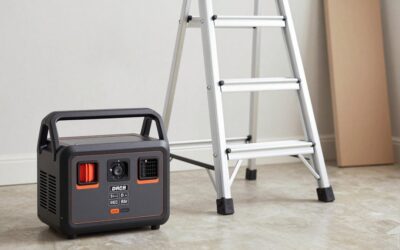
DaranEner 300W Portable Power Station with 30W Solar Panel
Included for 'Best Power Solution for Tailgating: Generator or Power Station?' as a relevant option in this category; details come from the product listing.
View on Amazon
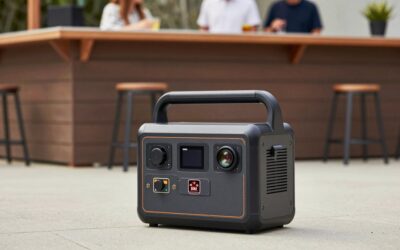
BLUETTI Elite 30 V2 Portable Power Station 288Wh 600W LFP Solar Generator
Included for 'Best Power Solution for Tailgating: Generator or Power Station?' as a relevant option in this category; details come from the product listing.
View on Amazon
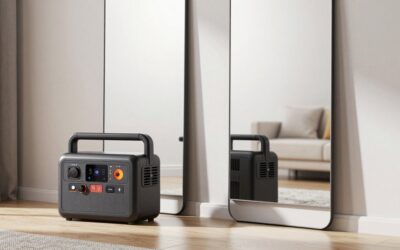
EnginStar Solar Generator, 300W Portable Power Station, 296Wh Lithium Battery Backup w/Two 110V Pure Sine Wave AC Outlet for Camping Road Trip RV, 80000mAh Sufficient Power Supply for Blackout
Included for 'Best Power Solution for Tailgating: Generator or Power Station?' because the listing specifies 300W Portable Power Station and 80000mAh Sufficient Power Supply for Blackout, details this guide uses to compare options.
View on AmazonThe power station case
For the classic TV, sound, and charging setup, a 1,000 to 2,000Wh power station is ideal. It is silent, so you can hear the pregame show and your friends. It produces no exhaust in a lot packed with people standing between vehicles. It works under a canopy, next to the food table, and in the back of an SUV. Many stadiums that restrict or ban generators still permit battery units, which makes a power station the rule-safe option.
Charging between games
You can recharge at home before each game, from the car’s 12V outlet on the drive (slowly, typically 100 to 120W), or from a solar panel set on the canopy. A season of home games costs pennies in electricity.
The generator case
If your tailgate involves serious electric cooking, a big TV, and a long pregame, a 2,000 to 3,500W inverter generator produces all of it from about a gallon of gasoline. It is far cheaper per kilowatt-hour than batteries and can power a griddle, slow cooker, blender, and TV at the same time without watching a percentage display.
The downsides in a crowded lot
Even quiet inverters produce 50 to 60 dBA at 23 feet, which is audible under a canopy. Exhaust must be directed away from your group and your neighbors, and in tight lots that is hard to arrange. Hot mufflers and gasoline cans around crowds and kids add risk. And some venues simply do not allow them, or require them to be a set distance from vehicles and tents.
Side-by-side on game day
| Factor | 2,000W inverter generator | 1,500Wh power station |
|---|---|---|
| Stadium acceptance | Varies; sometimes prohibited | Rarely restricted |
| Noise | 50–60 dBA | Silent |
| Runs TV + speakers + slow cooker 5 hours | Yes, about 0.5–1 gal fuel | Yes, uses about 80–100% |
| Runs electric griddle for an hour | Yes | Drains roughly 1,300–1,500Wh |
| Setup near guests and food | Needs distance, exhaust planning | Anywhere |
| Weight | 40–55 lb plus fuel can | 30–45 lb |
Choosing by tailgate style
Watch party tailgate
TV, speakers, streaming, chargers, and a cooler: a 1,000 to 1,500Wh station covers the day with margin.
Watch party plus crockpot food
A 2,000Wh station, or a 1,500Wh station if the slow cooker only needs to hold food warm for two to three hours.
Full electric kitchen
Griddles, roaster ovens, coffee urns, and blenders call for a 2,000 to 3,500W inverter generator, placed downwind and away from the crowd, with the station kept for the TV area.
Cook with propane, power with batteries
Many experienced tailgaters cook on a propane grill or griddle and use a power station only for entertainment and charging. This avoids the heaviest electric loads altogether and keeps the setup quiet.
FAQ
How long will a 1,000Wh power station run a TV at a tailgate?
A 55-inch LED TV averaging about 100W plus a 20W streaming device draws roughly 120W. At around 85 percent inverter efficiency, a 1,000Wh station lasts about 7 hours.
Can I run a generator in the bed of my truck at a tailgate?
It is common, but make sure the exhaust points away from people and your cab, keep the tailgate down for airflow, and never run it inside a camper shell or enclosed bed.
Bottom line
For most tailgates, a 1,000 to 2,000Wh power station is the best solution: quiet, safe in a crowd, and allowed at more venues. Choose a small inverter generator only when electric cooking is central to your game day and your venue allows it, and pair it with a station so the entertainment stays silent.

Write Your Review
No reviews yet. Be the first to share your experience!