
🛒 Best Price Today on Amazon
Prime members get fast, free shipping on everything above, plus member-only deals. New members get a 30-day free trial — cancel anytime.
Search and rescue operations run on batteries: radios, GPS units, headlamps, satellite messengers, thermal drones, mapping laptops and satellite internet at the command post. When a search stretches past the first night, power becomes a logistics problem as real as food and water. The best portable power for SAR teams is a layered system, from what a searcher carries on their body to what sits in the command trailer, with each layer able to recharge the one below it. This guide sets out those layers and what to look for at each.
Layer 1: what each searcher carries
Field teams need light, rugged, simple power. That means spare batteries for radios and headlamps and a USB power bank, typically 10,000 to 20,000mAh, or roughly 37 to 74Wh. Keep packs under 100Wh so they are easy to transport, including on commercial flights for mutual-aid deployments. In cold weather, keep batteries in an inside pocket; lithium cells can lose much of their usable capacity when cold soaked.

CZI CZ10 Tethered Drone Light 16000lm High-Brightness LED Work Light, 1300sqm Illumination, ≤3.5kg Portable, Over 24h Runtime for Emergency, Camping, Rescue & Outdoor Lighting
Included for 'Best Portable Power for Search and Rescue Teams' because the listing specifies 1300sqm Illumination and ≤3.5kg Portable, details this guide uses to compare options.
View on Amazon
ATAK Enabled SpecFive Pulse Pack – Meshtastic LoRa Off-Grid Mesh Radio with GPS, 915 MHz, Two-Way Voice & Text Communication, Rugged Design, Ideal for Outdoor Adventures
Included for 'Best Portable Power for Search and Rescue Teams' because the listing specifies Meshtastic LoRa Off-Grid Mesh Radio with GPS and 915 MHz, details this guide uses to compare options.
View on Amazon
SKILHUNT EC500 2100 Lumen USB-C Rechargeable Long-Range Flashlight Powerful LED Thrower Torch for Outdoor, Hiking, Camping, Search and Rescue (Cool White 6500K, Black)
Included for 'Best Portable Power for Search and Rescue Teams' because the listing specifies Hiking and Camping, details this guide uses to compare options.
View on AmazonLayer 2: vehicle and trailhead power
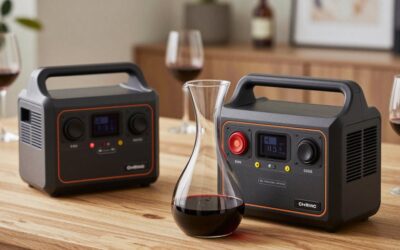
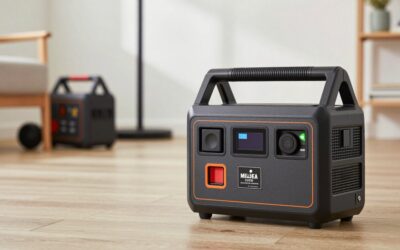
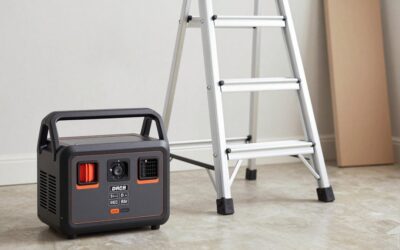
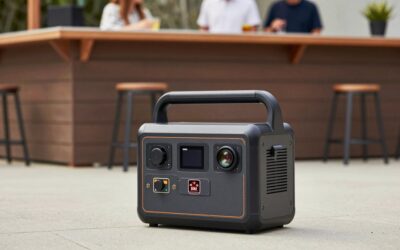
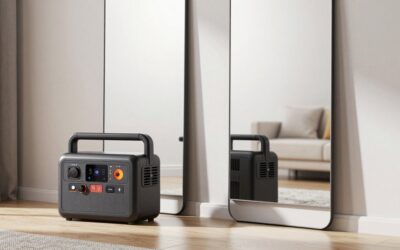
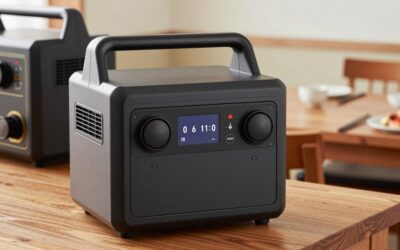
A 500 to 1,200Wh station in a team vehicle bridges field and base. It recharges radio batteries, headlamps and drone packs between assignments and can be recharged from the vehicle’s 12V system while driving, or with a portable solar panel at the trailhead. Stations in the 1kWh class, such as the Anker SOLIX C1000 or Jackery Explorer 1000 v2, weigh roughly 24 to 30 pounds, light enough for one person to lift from a truck bed. Check each model’s current spec sheet for ports, charge speed and operating temperature range.
Layer 3: command post power
An incident command post may run laptops for mapping, radio base stations and repeaters, lighting, a small printer, satellite internet and a charging station for dozens of devices. Here a 2 to 4kWh station or an expandable home-backup unit provides silent power, often supplemented by a generator for extended operations.
| Command post load | Typical draw | 12-hour operational period |
|---|---|---|
| Two mapping laptops | about 50 to 90W each | about 1.2 to 2.2kWh |
| Satellite internet terminal | about 25 to 100W depending on model | about 0.3 to 1.2kWh |
| Radio base station or repeater (mixed transmit/receive) | about 20 to 60W average | about 0.25 to 0.7kWh |
| LED area lights (two) | about 30 to 100W each | about 0.4 to 1.2kWh at night only (6 hours) |
| Drone battery charging (six packs) | about 70 to 120Wh per pack plus losses | about 0.5 to 0.85kWh |
| Radio, headlamp and phone charging | varies | about 0.3 to 0.6kWh |
A total of roughly 3 to 6kWh per 12-hour operational period is common for a modest command post. These are planning ranges; measure your own equipment during a training exercise.
Generators at the command post
For multi-day searches, a quiet inverter generator can recharge the battery bank during the day. Keep it outdoors, at least 20 feet from tents, vehicles with people inside, the command trailer and any air intakes, with exhaust directed away. Never run a generator inside a trailer, enclosed tent, garage or vehicle bay. Place a battery-powered CO alarm in any shelter where team members rest. The battery bank then carries quiet overnight operations so radio traffic stays clear and resting searchers can sleep.
What to look for in a SAR power station
- Operating temperature range. Searches happen in snowstorms and heat waves. Many lithium stations should not be charged below freezing unless they have built-in battery heating.
- Rugged build. Look for solid handles, protected ports and a case that tolerates bouncing in a vehicle. Few stations are waterproof; keep them under cover.
- Multiple charge inputs. AC wall, 12V vehicle and solar inputs let you recharge wherever you are.
- USB-C PD ports of 60 to 100W to charge laptops and modern radios without the inverter.
- Pure sine wave AC for radio chargers and base stations, which can be sensitive to noisy power.
- Weight a single person can handle. Two 1kWh units are often more practical than one 2kWh unit in the field.
Standardize and train
Standardize charging cables and connectors across the team, label every battery and cable, and log charge status on the command board. Practice deploying and recharging the power kit during regular trainings, not for the first time on a real callout.
FAQ
Should SAR teams choose LiFePO4 or NMC stations?
LiFePO4 offers longer cycle life and better thermal stability, which suits heavily used team gear. NMC can be lighter per watt-hour, which may matter for gear that is carried rather than driven.
How should batteries be stored between callouts?
Store stations around 50 to 80 percent in a climate-controlled space and top them up on a monthly checklist so they are ready to deploy.
Bottom line
The best SAR power is layered: sub-100Wh packs for searchers, 1kWh-class stations in team vehicles, and 2 to 4kWh plus a generator at the command post. Budget energy per operational period, keep generators 20 feet from shelters with CO alarms inside, and verify each station’s temperature limits and ports on its current spec sheet.

Write Your Review
No reviews yet. Be the first to share your experience!