
🛒 Best Price Today on Amazon
Prime members get fast, free shipping on everything above, plus member-only deals. New members get a 30-day free trial — cancel anytime.
- Top Picks at a Glance
- Comparison Table
- Will a Solar Generator Run Your Fridge? The Math
- 1. EcoFlow Delta 3 Classic with 220W Panel: Best Overall
- 2. Jackery Solar Generator 1000 v2 with 200W Panel: Best Known Kit
- 3. Anker SOLIX C1000 Gen 2 with 200W Panel: Best for Heavier Appliances
- 4. EcoFlow Delta 3 Max with 220W Panel: Best Mid-Size Capacity
- 5. Jackery HomePower 3600 Plus with 2 x 200W Panels: Best Whole-Home Starter
- 6. ABOK Ark3600 with 400W Panel: Best High Capacity with Big Solar Input
- 7. EBL 2400W Portable Power Station: Best Value High Capacity
- Also Consider
- How We Chose
- Buying Guide
- Which Size Fits Which Use
- Common Mistakes to Avoid
- Frequently Asked Questions
- Which One Should You Buy?
- Sources
The best solar generator for running a refrigerator and basic home backup in most households is the EcoFlow Delta 3 Classic with a 220W solar panel (1,024 Wh, 1,800 W AC), with the Jackery Solar Generator 1000 v2 and 200W panel as the runner-up for people who prefer a simple, well-known kit. If you need more than a day of fridge power or want to expand later, step up to the EcoFlow Delta 3 Max (2,048 Wh) or the Jackery HomePower 3600 Plus (3,584 Wh, expandable).
A solar generator is not a generator in the engine sense. It is a battery power station with an inverter, paired with solar panels that recharge it. That is why the most useful way to shop is by capacity in watt-hours and AC output in watts, and why this guide starts with a fridge runtime worksheet before any product. It is research-based: we did not personally use these units, and where a listing leaves out a number we write “not listed”. We also do not promise exact runtimes, because they depend on your fridge, the weather and how often you open the door.
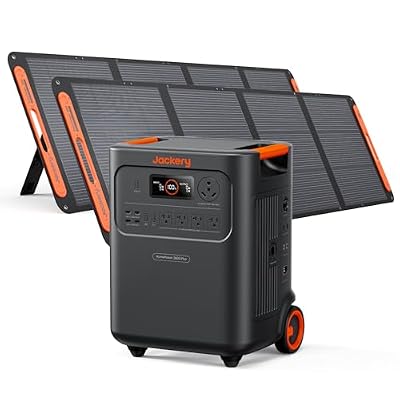
Jackery HomePower 3600 Plus & 2x200W Solar Panels, 3584Wh, 3600W AC Output | LFP Battery, Expandable to 21kWh, Solar Generator, Essential Home Backup for Home Use, Emergencies, RV
Included for 'Best Solar Generators for Home Backup, Fridges and Off-Grid Use' because the listing specifies 3584Wh and 3600W AC Output, details this guide uses to compare options.
View on Amazon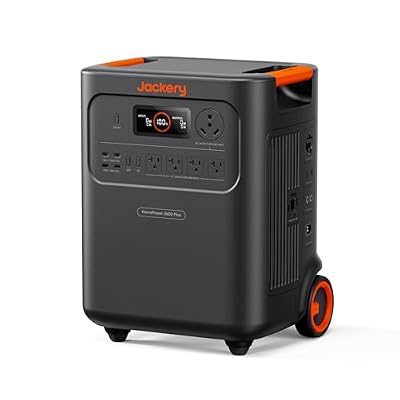
Jackery HomePower 3600 Plus Power Station, 3584Wh, 3600W AC Output | LFP Battery, Expandable to 21kWh, Solar Generator, Essential Home Backup for Home Use, Emergencies, RV (Solar Panel Optional)
Included for 'Best Solar Generators for Home Backup, Fridges and Off-Grid Use' because the listing specifies 3584Wh and 3600W AC Output, details this guide uses to compare options.
View on Amazon
Jackery HomePower 3000 and 2x200W Solar Panels, 3072Wh, 3600W AC Output | 7200W Surge, LFP Battery, Solar Generator, Essential Backup for Home Use, Power Outage, RV, Emergencies
Included for 'Best Solar Generators for Home Backup, Fridges and Off-Grid Use' because the listing specifies 3072Wh and 3600W AC Output, details this guide uses to compare options.
View on AmazonTop Picks at a Glance
- Best Overall for Fridge and Basic Backup: EcoFlow Delta 3 Classic with 220W solar panel (1,024 Wh).
- Best Known Kit: Jackery Solar Generator 1000 v2 with 200W panel (1,024 Wh LiFePO4, 1,500 W AC).
- Best for Heavier Appliances: Anker SOLIX C1000 Gen 2 with 200W panel (1,024 Wh, 2,000 W).
- Best Mid-Size Capacity: EcoFlow Delta 3 Max with 220W bifacial panel (2,048 Wh, 3,400 W X-Boost).
- Best Whole-Home Starter: Jackery HomePower 3600 Plus with 2 x 200W panels (3,584 Wh, expandable to 21 kWh).
- Best High Capacity with Big Solar Input: ABOK Ark3600 with 400W panel (3,840 Wh, 2,000 W solar input).
- Best Value High Capacity: EBL 2400W Portable Power Station (1,843.2 Wh LiFePO4, 12 outlets).
Comparison Table
| Product | Best for | Key specs (from listing) | Watch for | Price tier |
|---|---|---|---|---|
| EcoFlow Delta 3 Classic + 220W | One fridge plus essentials | 1,024 Wh, 1,800 W AC (3,600 W surge), 100 W USB-C, LiFePO4 | Single day of fridge use at most in poor sun | Mid-range |
| Jackery Solar Generator 1000 v2 + 200W | Easy, familiar kit | 1,024 Wh LiFePO4, 1,500 W (3,000 W peak), 50-min fast charge per listing | Lower output than the Anker or EcoFlow Classic | Mid-range |
| Anker SOLIX C1000 Gen 2 + 200W | Appliances with higher running watts | 1,024 Wh LiFePO4, 2,000 W | Same capacity as the Delta 3 Classic | Mid-range to premium |
| EcoFlow Delta 3 Max + 220W | Fridge plus freezer or small tools | 2,048 Wh, 3,400 W X-Boost, bifacial 220 W panel | Heavier and bulkier; weight not listed | Premium |
| Jackery HomePower 3600 Plus + 2 x 200W | Whole-home starter system | 3,584 Wh, 3,600 W AC, expandable to 21 kWh, LFP | Two panels recharge slowly for this capacity | Premium |
| ABOK Ark3600 + 400W | Large capacity, big solar input | 3,840 Wh LiFePO4, 2,000 W solar input, expandable | Lesser-known brand; check support and warranty | Premium |
| EBL 2400W | Home backup on a tighter budget | 1,843.2 Wh LiFePO4, 12 outlets, 2,400 W | Panels not shown in the listing title; buy compatible panels | Mid-range to premium |
Will a Solar Generator Run Your Fridge? The Math
Use this four-step estimate to size a unit before you buy. These are planning ranges, not guarantees, and your own fridge label matters most.
- Find daily use. Many full-size refrigerators use roughly 1 to 2 kWh per day, depending on size, age and kitchen temperature. The yellow EnergyGuide label on your fridge shows yearly kWh, so divide by 365.
- Subtract inverter loss. A power station delivers about 85 to 90 percent of its rated watt-hours to AC devices, so a 1,024 Wh unit offers roughly 870 to 920 Wh of usable power.
- Divide. 870 to 920 Wh divided by a 1,000 to 2,000 Wh daily need gives roughly 10 to 22 hours. A 2,048 Wh unit gives roughly 20 to 44 hours, and a 3,584 Wh unit roughly 36 to 75 hours before any solar recharge.
- Add solar. A 200 W panel might yield about 600 to 1,000 Wh on a clear day with several good sun hours, and far less when cloudy. That is how a modest kit can keep a fridge going day after day in good weather but not in a week of overcast.
Two cautions follow. First, a fridge compressor draws a brief surge when it starts, often two to three times its running watts, so choose a unit whose AC output and surge rating comfortably exceed that figure. Second, keep the fridge door shut as much as possible during an outage, and do not rely on solar alone for medical devices without asking the device maker and your clinician about backup plans.
1. EcoFlow Delta 3 Classic with 220W Panel: Best Overall
- 1,024 Wh LiFePO4 battery
- 1,800 W AC output, 3,600 W surge
- 100 W USB-C output
- 220 W solar panel included in this bundle
- Weight and cycle life: not listed in the title
Best for: homeowners who want a fridge running through an outage and fast, flexible charging. Skip if: you need more than a day of autonomy without good sun.
The Delta 3 Classic hits the practical balance for home backup: 1,024 Wh is enough for about half a day to a day of one fridge on stored energy, and 1,800 W AC covers a fridge plus lights, a router and a microwave used briefly. A 3,600 W surge rating comfortably covers compressor starts. LiFePO4 batteries are known for long cycle life compared with older lithium chemistries, which is why most newer power stations use them.
Solar charging is the other half. A 220 W panel recharges slowly compared with the capacity, so treat solar as a daily top-up and not a quick refill. If you plan to rely on solar for days, add a second panel and confirm the maximum solar input on EcoFlow’s page.
Pros: strong AC output for the capacity; LiFePO4; bundle includes a panel; good for fridge plus essentials. Cons: limited capacity for multi-day outages; weight not listed; accessories cost extra.
2. Jackery Solar Generator 1000 v2 with 200W Panel: Best Known Kit
- 1,024 Wh LiFePO4 battery
- 1,500 W AC output (3,000 W peak)
- 200 W solar panel included
- 50-minute fast charge, per the listing
Best for: buyers who want a simple, familiar kit for outages and trips. Skip if: you need 2,000 W or more of continuous AC output.
Jackery is one of the most recognisable names in the category, and this kit pairs a 1,024 Wh LiFePO4 battery with a 200 W panel. That is enough for a fridge, lights and a router for most of a day in the math above, and the 3,000 W peak rating handles compressor starts. For camping, tailgating and van trips, it covers a laptop, lights and a cooler for days with sun.
Note that 1,500 W is a lower continuous rating than the Anker or the EcoFlow Classic here, so check any heavy appliance against it. A coffee maker or microwave alone can approach that limit.
Pros: well-known brand; panel included; LiFePO4; fast charging per the listing. Cons: lower AC output than rivals; capacity is the same as cheaper rivals; accessories add cost.
3. Anker SOLIX C1000 Gen 2 with 200W Panel: Best for Heavier Appliances
- 1,024 Wh LiFePO4 battery
- 2,000 W portable power station output
- 200 W solar panel included
- Surge rating and solar input limits: not listed in the title
Best for: people who want higher continuous output for tools or a larger appliance. Skip if: you need more capacity than about a day of fridge power.
2,000 W of AC output puts this above the Jackery 1000 v2 for running something like a pump, a small heater element or tools alongside a fridge, but capacity is the same, so the battery empties faster when you run heavier loads. For a pure fridge backup it performs like the others, so choose it when output matters more than capacity.
Anker publishes clear specifications for its power stations, so confirm solar input, battery cycle life and warranty on the maker page. Look for UPS-style switchover if you want it to bridge brief outages for a desktop or a router.
Pros: high AC output for the size; panel included; LiFePO4; strong brand support. Cons: limited capacity; premium relative to the Jackery 1000 v2; several specs not in the listing.
4. EcoFlow Delta 3 Max with 220W Panel: Best Mid-Size Capacity
- 2,048 Wh capacity
- 3,400 W X-Boost output, per the listing
- 220 W bifacial solar panel included
- Weight: not listed in the title
Best for: households that want a fridge and a freezer, or a fridge plus tools, for a day or more. Skip if: you need to carry it often; it is not a backpack unit.
Doubling capacity to 2,048 Wh roughly doubles the fridge runtime from the worksheet above, which is a big jump in comfort during an outage. X-Boost is EcoFlow’s feature for running some loads above the nominal AC rating, and it is worth reading the fine print on which appliances qualify. The bifacial panel is designed to collect some light from the rear, which only helps when the ground behind it is bright and reflective.
This tier is where solar generators stop being camping gear and start acting as real home backup. It is heavy, so plan a spot for it near the fridge and a path for cables that does not run through doors in a way that is a tripping hazard.
Pros: 2,048 Wh; high output; bifacial panel; strong fit for a fridge plus freezer. Cons: heavy; premium; single 220 W panel recharges slowly for the capacity.
5. Jackery HomePower 3600 Plus with 2 x 200W Panels: Best Whole-Home Starter
- 3,584 Wh LFP battery
- 3,600 W AC output
- Two 200 W solar panels included
- Expandable to 21 kWh, per the listing title
Best for: people planning a growing home backup system with a long-term upgrade path. Skip if: you mostly need camping power or have a tight budget.
The unit is designed as a home power system more than a camping box. 3,584 Wh gives roughly a day and a half to three days of fridge-only use in the math above, depending on your fridge, and the expansion path to 21 kWh suggests it is built for whole-home add-ons. Two 200 W panels give 400 W of solar, which is a start, not a full recharge for a battery this big on a cloudy day.
If you plan to connect it to household circuits, use a transfer switch or other approved connection installed by a licensed electrician and follow local code and the maker’s instructions. Do not back-feed a panel through a plug.
Pros: large capacity; high AC output; expandable; panels included. Cons: premium; heavy; installation planning needed for home integration.
6. ABOK Ark3600 with 400W Panel: Best High Capacity with Big Solar Input
- 3,840 Wh LiFePO4 battery
- 400 W solar panel included
- 2,000 W solar input, per the listing
- Expandable; maximum capacity is cut off in the title we have, so check the maker page
- AC output: not listed in the title
Best for: off-grid cabins and homes that want a large battery and a high solar input to recharge it faster. Skip if: brand support matters more than capacity; ABOK is newer than Jackery, EcoFlow or Anker.
A big battery is only useful if it can refill. A listed 2,000 W of solar input means that with enough panels you could recharge a lot of capacity on a good day, which is a strong point for off-grid use. The 400 W panel included in this kit is a starting point rather than a full solution for 3,840 Wh.
With a less established brand, read the warranty terms, support contact and manual before ordering, and check that the maker states the AC output and surge rating.
Pros: large capacity; high solar input; expandable; LiFePO4. Cons: less established brand; AC output not in the listing title; heavy.
7. EBL 2400W Portable Power Station: Best Value High Capacity
- 1,843.2 Wh LiFePO4 battery
- 2,400 W output
- 12 outlets
- Solar panels: not shown in the title; compatible panels sold separately or check the bundle
Best for: a larger-than-1 kWh battery at a lower tier, with outlets for many devices. Skip if: you want a panel in the box.
At 1,843.2 Wh, this sits between the 1 kWh class and the 2 kWh class. That gives it more than a day of fridge power in many cases and 2,400 W of output for appliances. Check the solar input limit and the panel connector type before buying panels, since mismatched panels are a common cause of slow charging.
Pros: large capacity for the tier; 12 outlets; LiFePO4. Cons: panels not clearly included; brand has less service reach than the major names; weight not listed.
Also Consider
- Anker SOLIX C300 with 60W panel (288 Wh, 300 W): a small solar generator for phones, laptops, lights and camping. It is not a fridge-backup unit.
- Jackery Solar Generator 300 with 40W panel (292 Wh, 300 W AC): compact and light for outdoors and short outages, with pure sine wave AC output per the listing.
- ZeroKor 300W with 60W panel (280 Wh): a lower-cost small option for light loads and trips.
- Jackery Explorer 2000 v2 with 2 x 200W panels (2,042 Wh, 2,200 W AC): a strong middle option with a 20 ms UPS function per the listing; skipped from the main list only to keep to two Jackery picks.
If you are looking for the best small solar generators, the first three are the entry points for camping and emergency charging. For anything resembling home backup, start at 1,000 Wh.
How We Chose
This guide is research-based. We did not personally use these products. We drew from the store behind this site, filtered for solar generator kits and large power stations that can run a household fridge, and compared listing details with maker pages. Our sizing worksheet is based on general guidance from the US Department of Energy and the EnergyGuide label program on appliance energy use, and on manufacturers’ published capacity and efficiency notes. Rankings reflect capacity, AC output, battery chemistry, solar input and expandability, with a preference for models that publish clear specifications.
We do not quote prices, runtimes or solar yields as facts. Runtime figures in this guide are ranges from a simple formula and will differ in your home. Any spec the listing does not state is marked “not listed”.
Buying Guide
Capacity in watt-hours decides how long it lasts
Watt-hours are the size of the fuel tank. Roughly: 300 Wh handles phones, laptops and lights; 1,000 Wh runs a fridge for around half a day to a day; 2,000 Wh doubles that; 3,500 Wh and up begins to cover multi-day outages for essentials. Choose capacity from your daily watt-hour need, not from the marketing name.
AC output in watts decides what you can plug in
Add the running watts of everything you want to use at once and compare with the continuous rating. Check the surge rating for motors such as fridge compressors and pumps. A 1,500 W unit is enough for a fridge and a few devices, while heavier items such as a toaster or space heater can exceed it.
Solar input decides how fast you recharge
Look for the maximum solar input in watts and the voltage window. A 220 W panel can add a few hundred watt-hours to about 1 kWh on a clear day, so a unit with 1,000 W or more of solar input only pays off if you plan to add panels. In winter, shade and cloud, expect far less. Position panels facing the sun and keep them clear of snow and leaves.
Battery chemistry and lifespan
LiFePO4 (LFP) batteries are favoured for home backup because they typically support more charge cycles than older lithium-ion packs and are generally regarded as more thermally stable. Check the cycle life on the maker page and the warranty length.
Expandability, UPS function and safety
If you may need more capacity later, choose a platform with expansion batteries. A UPS (uninterruptible) switchover is helpful for routers and desktops, with a switch time in milliseconds. Keep power stations in a dry, ventilated place, away from heat sources, and never cover the vents. Connect to your home only through a licensed electrician and an approved transfer arrangement.
Which Size Fits Which Use
| Use | Rough capacity | Pick |
|---|---|---|
| Phones, laptop, lights, camping | 250 to 500 Wh | Anker SOLIX C300 kit or Jackery 300 kit |
| One fridge for part of a day, plus essentials | 1,000 Wh | EcoFlow Delta 3 Classic, Jackery 1000 v2 or Anker C1000 Gen 2 |
| Fridge plus freezer, 1 to 2 days | 2,000 Wh | EcoFlow Delta 3 Max or EBL 2400W |
| Multi-day backup or off-grid cabin | 3,500 Wh and up | Jackery HomePower 3600 Plus or ABOK Ark3600 |
Common Mistakes to Avoid
- Buying by the name “1000” without checking watt-hours and AC output separately.
- Expecting a single panel to fully recharge a large battery in a day.
- Forgetting the surge rating needed for a fridge compressor.
- Plugging a power station into a house outlet to feed circuits, which is dangerous.
- Leaving a battery at zero or in a hot garage for months, which shortens its life.
Frequently Asked Questions
What is the best solar generator for home backup?
For a typical home backup that focuses on a refrigerator and essentials, a 1,000 to 2,000 Wh unit such as the EcoFlow Delta 3 Classic or Delta 3 Max is the sweet spot. For longer outages or an off-grid cabin, choose 3,500 Wh or more, such as the Jackery HomePower 3600 Plus.
What is the best solar generator to power a fridge?
One with at least 1,000 Wh of capacity, an AC rating above your fridge’s running watts and a surge rating high enough for the compressor start. The 1,024 Wh models here can run a typical fridge for roughly half a day to a day on stored energy, and longer with daily solar charging.
How long can a solar generator run a refrigerator?
Roughly 10 to 22 hours for a 1,024 Wh unit, 20 to 44 hours for 2,048 Wh and 36 to 75 hours for 3,584 Wh without solar, based on a 1 to 2 kWh per day fridge and typical inverter losses. Your fridge, the room temperature and door openings change the result.
Are solar generators better than gas generators?
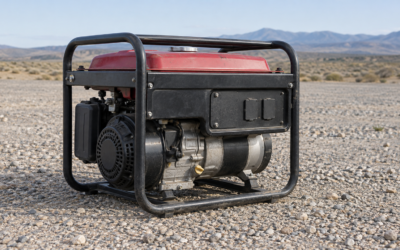
They are quieter, have no fumes and can be used where fuel is not available, but they hold far less energy per dollar and recharge slowly. Gas generators suit long, heavy-load outages, while solar generators suit quiet, light to medium loads.
What are the best small solar generators?
For small loads such as phones, laptops and lights, models in the 250 to 300 Wh range such as the Anker SOLIX C300 with 60W panel or the Jackery Solar Generator 300 with 40W panel are the typical choices. They are not designed to run a full-size fridge.
How many solar panels do I need?
It depends on how much you use per day and how many sun hours you get. As a rough guide, a 200 W panel can add several hundred watt-hours on a clear day, so a 1 to 2 kWh daily load would need many panels or a lower-use plan. Check the unit’s maximum solar input before adding panels.
Can a solar generator power a whole house?
Only the larger systems with expansion batteries and proper installation can power selected circuits, and even then you should plan on essentials, not air conditioning and electric heating. Have a licensed electrician install any connection to household wiring.
Which One Should You Buy?
If you want one dependable option for a fridge and essentials, choose the EcoFlow Delta 3 Classic with its included panel. If you prefer a simple, familiar brand, pick the Jackery 1000 v2 kit. If you need a bit more AC output, choose the Anker SOLIX C1000 Gen 2. For fridge plus freezer or longer outages, move to the Delta 3 Max or the EBL 2400W, and for a long-term off-grid or whole-home path, look at the Jackery HomePower 3600 Plus or the ABOK Ark3600. Confirm AC output, surge rating, solar input and weight on each maker page before ordering.
Sources
- EcoFlow product pages and manuals
- Jackery product pages and manuals
- Anker SOLIX product pages
- US Department of Energy appliance energy use guidance
- Consumer Reports portable power station guidance
Last updated: October 2026

Write Your Review
No reviews yet. Be the first to share your experience!