
🛒 Best Price Today on Amazon
Prime members get fast, free shipping on everything above, plus member-only deals. New members get a 30-day free trial — cancel anytime.
- Top Picks at a Glance
- How to Choose the Right Consumer Reports Best Solar Generator
- Top Picks: Best Solar Generators Reviewed
- Consumer Reports Best Solar Generator Kits: The Models CR Evaluated
- Comparison of Top Solar Generator Models
- Best Solar Generators for Homes by Use Case
- Price Tiers: What Your Budget Buys in 2026
- Maintenance and Storage Tips for a Longer Battery Life
- How We Chose These Solar Generators
- Frequently Asked Questions
- Conclusion
- Related Articles
- Related Guides
Consumer Reports Best Solar Generator testing standards highlight the critical balance between battery longevity, continuous output, and real solar charging capability. Finding a reliable solar unit requires looking past flashy manufacturer marketing claims to examine actual performance under emergency load conditions. In this comprehensive roundup, we analyze top-tier models that deliver dependable energy during grid blackouts or outdoor adventures.
Quick answer: The consumer reports best solar generator right now is the EcoFlow DELTA Pro, the 3,600Wh, 3,600W unit that sits at the top of Consumer Reports’ portable power station ratings (updated September 2026). Consumer Reports scores these units on five things: recharge speed, power delivery, power quality, portability, and ease of use. For most homes, a 2kWh-class unit such as the BLUETTI Elite 200 V2 covers a refrigerator, lights, and Wi-Fi overnight for far less money, while the Jackery Explorer 1000 v2 is the easiest 1kWh starting point for CPAP and phone-charging backup.
This guide is independent and not affiliated with Consumer Reports. Our picks are research-based: we compared manufacturer spec sheets, the models Consumer Reports and other independent reviewers have rated, and long-term ownership factors such as battery chemistry and warranty.
Top Picks at a Glance
- Top-rated by Consumer Reports: EcoFlow DELTA Pro — 3,600Wh · 3,600W AC · expandable
- Best overall for most homes: BLUETTI Elite 200 V2 — 2,073.6Wh · 2,600W AC · LFP
- Best 1kWh value: Jackery Explorer 1000 v2 — 1,070Wh · 1,500W AC · 23.8 lb
- Lightest 2kWh unit: Anker SOLIX S2000 — 2,010Wh · 1,500W AC · 35.7 lb
- Most rugged (IP65): Jackery Explorer 1500 Ultra — 1,536Wh · 1,800W AC · 800W solar
- Best budget kit with panel: EcoFlow DELTA 3 Classic + 220W panel — 1,024Wh · 1,800W AC
- Best compact 3kWh: BLUETTI Elite 300 + 350W panel — 3,014.4Wh · 2,400W AC
- Best whole-home backup: Anker SOLIX F3800 — 3,840Wh · 6,000W · 120V/240V
How to Choose the Right Consumer Reports Best Solar Generator
Finding the ideal solar generator requires understanding your specific energy demand, storage chemistry, and charging efficiency. Investing in quality off-grid backup power ensures your critical appliances stay running safely when the main electrical grid fails. Evaluating these core parameters will guide you toward a cost-effective purchase.

Jackery Solar Generator 1000 v2 and 200W Solar Panel,1070Wh,1500W AC
Included for 'Consumer Reports Best Solar Generator: Top 2026 Reviews' as a representative home product in this roundup; selection reflects the product set returned for this topic.
View on Amazon
Portable Solar Generator 300W Portable Power Station with 60W Solar Panel
Included for 'Consumer Reports Best Solar Generator: Top 2026 Reviews' as a representative home product in this roundup; selection reflects the product set returned for this topic.
View on Amazon
MARBERO 237Wh Solar Generator with Solar Panel Included Portable Power Station 300W Pure Sine Wave with Foldable Solar Panel 60W Set for Camping Outdoor Hiking Fishing Emergency
Included for 'Consumer Reports Best Solar Generator: Top 2026 Reviews' as a representative home product in this roundup; selection reflects the product set returned for this topic.
View on Amazon
Solar Powered Generator 100W, Portable Power Station with Solar Panels 40W
Included for 'Consumer Reports Best Solar Generator: Top 2026 Reviews' as a representative home product in this roundup; selection reflects the product set returned for this topic.
View on Amazon
Portable Solar Generator, 300W Portable Power Station with 40W Solar Panel
Included for 'Consumer Reports Best Solar Generator: Top 2026 Reviews' as a representative home product in this roundup; selection reflects the product set returned for this topic.
View on Amazon
Portable Solar Generator 300W Power Station with 60W Foldable Solar Panel
Included for 'Consumer Reports Best Solar Generator: Top 2026 Reviews' as a representative home product in this roundup; selection reflects the product set returned for this topic.
View on Amazon
500W Portable Power Station with 100W Solar Panel, 519.48Wh Solar Generator
Included for 'Consumer Reports Best Solar Generator: Top 2026 Reviews' as a representative home product in this roundup; selection reflects the product set returned for this topic.
View on Amazon
Jackery Solar Generator 5000 Plus and 2x200W Panels, 5040Wh,7200W AC Output
Included for 'Consumer Reports Best Solar Generator: Top 2026 Reviews' as a representative home product in this roundup; selection reflects the product set returned for this topic.
View on Amazon
Battery Chemistry and Cycle Life
Modern solar power stations rely heavily on LFP chemistry for maximum safety and extended operating lifespan. Choosing a unit built with reliable LiFePO4 battery storage guarantees over 3,000 charge cycles before reaching 80 percent capacity. This equates to nearly a decade of daily usage without significant battery degradation.
Older lithium-ion chemistries may offer lighter total weight, but they degrade rapidly after only 500 charge cycles. For long-term emergency readiness, prioritizing LFP technology delivers superior thermal stability and lower overall lifetime operating cost for homeowners.
Continuous Power Output and Surge Capacity
Understanding running watts versus starting surge capacity prevents overloading your generator during heavy motor startups. A unit capable of delivering high continuous wattage output handles power-hungry devices like refrigerators, sump pumps, and medical gear effortlessly. Always calculate total simultaneous wattage before buying.
Surge capacity is equally critical because compressors demand double their baseline wattage for two seconds upon starting up. Selecting an inverter that manages peak surges cleanly safeguards sensitive electronics like laptops and televisions from potential damage.
Solar Panel Charging Input and MPPT Efficiency
Solar panel efficiency determines how quickly your unit recharges from zero to full capacity under direct sunlight. Higher solar panel input capacity lets you connect larger PV arrays, drastically reducing sunlight recharge hours during extended emergency blackouts. Efficient charging keeps your system fully autonomous.
Integrated Maximum Power Point Tracking controllers optimize voltage conversion constantly to harvest maximum ambient solar energy. Buying a system with advanced MPPT tech guarantees reliable power generation even during overcast sky conditions or partial shade.
Portability, Form Factor, and Expandability
Weight and physical footprint dictate whether your generator serves purely home backup or mobile camping applications. A portable power station featuring heavy-duty wheels and telescoping handles makes transporting high-capacity battery units manageable for a single person. Balance capacity against physical storage space.
Modular expansion capability allows you to connect extra battery packs whenever your power needs grow over time. Scalable systems provide ultimate flexibility, letting you start small and expand into whole-home backup setups without purchasing a new base unit.
Check the latest price on Amazon:
- Best Power Bank With High Capacity
- What Is The Best Home Standby Generator
- Who Makes The Best Portable Power Station
- Best Electric Generator For Home Use
How a Solar Generator Actually Works
A solar generator is three components working as one system: photovoltaic panels that convert sunlight into DC electricity, a charge controller (almost always MPPT on current models) that conditions that power, and a battery bank paired with an inverter that turns stored DC energy into household-style AC power. Most products sold today combine the controller, battery, and inverter in a single chassis, usually called a portable power station. It becomes a “solar generator” once you pair it with compatible panels.
Unlike a fuel-burning generator, nothing combusts. There is no engine to maintain, no gasoline to stabilize, and no exhaust. The trade-off is that the energy available to you is limited by what is stored in the battery plus what your panels can replace during daylight hours. Understanding that balance is the key to choosing a system that will actually carry your household through an outage.
What Independent Testing Looks For
Independent evaluators such as Consumer Reports judge power stations and solar kits on measurable outcomes rather than marketing claims, and you can apply the same lens to any spec sheet. Ask how much of the rated capacity is actually usable after inverter losses, whether the unit sustains its rated continuous output without shutting down, how long it really takes to recharge from the wall and from the bundled panel, how loud the cooling fans become under load, and how easy the display or app is to understand when the lights are out.
Consumer Reports’ recent solar generator coverage has included complete kits such as the Goal Zero Yeti 1500 with the Nomad 200 panel, the Anker SOLIX S2000 with a 200W bifacial panel, the Jackery Explorer 1500 Ultra with a 200W panel, the BLUETTI Elite 300 Compact with a 350W panel, and the EcoFlow DELTA 3 Classic with a 220W panel. In its portable power station ratings, a large-capacity EcoFlow DELTA Pro has been named the top model. That pattern is worth noting: big capacity and high output are rewarded, but those units also cost considerably more than entry-level options, so the “best” choice still depends on what you need to power.
Sizing Your System: Appliance Wattage and Runtime
Two numbers decide whether a solar generator will work for you: watts, which describe how much power your devices draw at once, and watt-hours, which describe how long the battery can sustain that draw. Start by listing what you genuinely need during an outage. Then compare the combined running watts with the inverter’s continuous rating, and the start-up spikes with its surge rating.
| Appliance | Typical Running Watts | Start-Up Consideration |
|---|---|---|
| Wi-Fi router and modem | 10–30W | None |
| Smartphone or tablet charging | 5–30W | None |
| Laptop | 45–100W | None |
| LED light bulb | 8–12W each | None |
| CPAP machine (no humidifier) | 30–60W | Humidifier and heated hose add significantly |
| Full-size refrigerator | 100–250W while running | Compressor start can briefly reach several times running watts |
| Chest freezer | 50–150W while running | Compressor surge at start |
| 55-inch LED TV | 60–120W | None |
| Sump pump (1/3 HP) | 800–1,000W | High motor surge at start |
| Microwave | 1,000–1,500W draw | Brief spike at start |
| Coffee maker | 800–1,200W | None |
| Space heater | Up to 1,500W | Drains any battery very quickly |
| Window air conditioner | 500–1,200W | Compressor surge at start |
To estimate runtime, use this rule of thumb: runtime in hours ≈ battery capacity (Wh) × 0.85 ÷ load (W). The 0.85 factor accounts for inverter conversion losses, which typically run 10 to 15 percent on AC loads. A 1,070Wh unit powering a steady 150W load would last roughly six hours, while a 2,042Wh unit would stretch to around eleven or twelve hours on the same load.
Refrigerators deserve special attention because their compressors cycle on and off. A modern full-size refrigerator typically consumes around 1 to 2kWh per day, so a 1kWh-class generator can keep one running for roughly half a day to a full day, while a 2kWh-class unit topped up by solar can realistically carry it through a multi-day outage. Check the appliance’s energy label for a more accurate daily figure.
Matching Solar Panels to Your Generator
Panel wattage is only half the equation. Every power station lists an acceptable solar input voltage range and a maximum input current. Wiring panels in series adds their voltages, while wiring them in parallel adds their current. Exceeding the voltage ceiling can trigger protective shutdowns or damage the input, so always total the open-circuit voltage (Voc) of a series string before connecting it, and leave some headroom because panel voltage rises in cold weather.
Real-world harvest is also lower than the number printed on the panel. Expect roughly 70 to 80 percent of rated wattage in good conditions once panel angle, heat, and cable losses are factored in. A simple recharge estimate is: hours of strong sun ≈ battery capacity (Wh) ÷ (panel watts × 0.75). By that math, a single 200W panel needs about seven hours of strong sunlight to refill a 1,070Wh battery. Since much of the United States receives roughly three to six peak sun hours per day depending on season and latitude, larger arrays make a real difference during multi-day blackouts.
Brand-matched panels simplify connectors and are designed around each station’s input limits, but third-party panels work well when their voltage, current, and connector type (commonly MC4, with adapters to XT60 or Anderson inputs) fall within the generator’s specifications.
Pass-Through Charging and UPS Switchover
Many current models can charge and discharge at the same time, and some advertise uninterruptible power supply (UPS) switchover measured in milliseconds. For desktop computers, network equipment, and CPAP machines, a fast switchover means devices keep running when the grid drops instead of rebooting. Check the stated switchover time, whether the manufacturer calls it a true UPS or a slower “EPS” mode, and whether long-term pass-through use is recommended, since continuous operation can increase fan noise and battery wear on some units.
Warranty, Support, and Long-Term Ownership
A LiFePO4 solar generator can serve a household for a decade, so the company behind it matters as much as the spec sheet. Major brands commonly offer around five years of coverage on current LFP models, but terms vary by product and by where you buy. Look for the warranty length, whether registration is required, how repairs or replacements are handled, and whether firmware updates arrive through an app. Service experiences can differ noticeably even among well-known brands, so read recent owner feedback about support response times before committing.
Solar Generator vs. Gas Generator
Solar generators win on convenience and safety. They run silently, produce no carbon monoxide, can be operated indoors, need no fuel storage, and require almost no maintenance. Gas and inverter generators still win on sustained heavy output: as long as you have fuel, they can run high-draw appliances for days. Consumer Reports has pointed out that its top-rated power station costs more than a well-rated gas inverter generator of similar wattage, which is a fair reminder that you pay a premium for clean, quiet energy.
For many homeowners, the practical answer is not either-or. A solar generator handles overnight essentials, medical devices, and indoor loads safely, while a fuel generator — always operated outdoors, well away from doors and windows — can cover heavy, short bursts or recharge the battery during long cloudy stretches.
Top Picks: Best Solar Generators Reviewed
Selecting the Consumer Reports Best Solar Generator comes down to matching proven battery efficiency with real-world output needs. Below are the top-rated models on Amazon that offer superior reliability, fast charging times, and heavy-duty performance across various budget levels and home applications.
Jackery Explorer 1000 v2
Specs & Key Features:
- Capacity: 1,070Wh (LiFePO4 Chemistry)
- AC Output: 1,500W Continuous (3,000W Surge)
- Weight: 23.8 lbs (10.8 kg)
- Fast Charge: 0-100% in 1 Hour via AC
The Jackery Explorer 1000 v2 sets the benchmark for mid-sized emergency power by combining lightweight portability with robust LFP chemistry. Featuring an upgraded lithium solar battery system, this generator delivers reliable power for medical equipment, mini-fridges, and communications gear during unexpected residential power outages.
Its compact chassis includes multiple AC outlets and high-speed USB-C ports, making it extremely versatile for both indoor emergencies and outdoor camping trips. Dual charging capabilities allow fast replenishment through solar panels or wall outlets without excessive heat accumulation.
- Pros: Ultra-fast 1-hour wall charging, durable LiFePO4 cells, lightweight for its capacity class.
- Cons: Solar panel setup sold separately on basic power station package.
EcoFlow DELTA 3 Plus
Specs & Key Features:
- Capacity: 1,024Wh (Expandable up to 5kWh)
- AC Output: 1,800W Continuous (2,700W Surge)
- Weight: 27.5 lbs (12.5 kg)
- Solar Input: 500W Max MPPT Input
EcoFlow DELTA 3 Plus remains an industry leader thanks to its lightning-fast charging speeds and high continuous output capability. Built with an advanced inverter solar generator system, it powers high-draw appliances like microwave ovens and circular saws without tripping internal thermal safety breakers.
The intuitive companion mobile application provides precise real-time monitoring of power consumption, remaining runtime, and solar input wattage. Modular expansion ports allow homeowners to attach external battery modules for extended backup power during multi-day grid failure events.
- Pros: Exceptional continuous wattage output, seamless app control, expandable battery design.
- Cons: Fan noise can become elevated under maximum electrical loads.
Bluetti Elite 200 V2
Specs & Key Features:
- Capacity: 2,073.6Wh (Automotive-Grade LFP)
- AC Output: 2,600W Continuous (5,200W Surge)
- Weight: 53.3 lbs (24.2 kg)
- Cycle Life: 6,000+ Cycles to 80%
Bluetti Elite 200 V2 delivers premium automotive-grade battery technology in a remarkably compact, heavy-duty housing. Functioning as a high-efficiency rechargeable power generator, this unit provides over 2,000 watt-hours of capacity to run essential home appliances cleanly for extended durations.
Its industry-leading 6,000-cycle lifespan ensures decades of reliable service without significant capacity decline or thermal safety concerns. Multiple output ports and heavy-duty AC plugs handle full-sized refrigerators, power tools, and outdoor heating equipment simultaneously.
- Pros: Unmatched 6,000+ cycle life, massive 2,600W AC output, exceptionally quiet operation.
- Cons: Heavier chassis requires two hands or a transport cart to move long distances.
Anker SOLIX C1000
Specs & Key Features:
- Capacity: 1,056Wh (InfiniPower LFP Technology)
- AC Output: 1,800W Continuous (2,400W Surge)
- Weight: 28.5 lbs (12.9 kg)
- Warranty: 5-Year Full Coverage
Anker SOLIX C1000 combines rugged drop-resistant construction with ultra-reliable power output engineered specifically for harsh environments. Designed as a dependable solar generator for home backup, it keeps household essentials operational while remaining easy to store in tight utility closets.
HyperFlash AC technology allows full battery replenishment in under 58 minutes, ensuring you are quickly prepared when storm warnings arise. High-grade industrial components and a comprehensive 5-year warranty offer long-term peace of mind for security-conscious homeowners.
- Pros: Rapid 58-minute recharging, ultra-durable casing, outstanding 5-year warranty coverage.
- Cons: Expansion battery connection cable is somewhat rigid and bulky.
Jackery Solar Generator 2000 Plus
Specs & Key Features:
- Capacity: 2,042.8Wh (Expandable up to 24kWh)
- AC Output: 3,000W Continuous (6,000W Surge)
- Weight: 61.5 lbs (27.9 kg with integrated wheels)
- Solar Input: 1,200W Max Solar Input
Jackery Solar Generator 2000 Plus is engineered for serious off-grid living and heavy-duty home energy storage applications. This robust emergency power supply unit provides continuous 3,000-watt output, effortlessly running heavy air conditioners, sump pumps, and kitchen appliances during severe weather.
Equipped with heavy-duty luggage wheels and a sturdy pull handle, moving this high-capacity power station across rough terrain is simple. Its massive 1,200W solar panel input capacity allows full solar replenishment in roughly two hours under optimal sun conditions.
- Pros: Massive output power, built-in wheels for easy transport, huge solar input ceiling.
- Cons: Premium price point requires larger upfront financial investment.
EcoFlow DELTA Pro 3
Specs & Key Features:
- Capacity: 4,096Wh (LFP Chemistry)
- AC Output: 4,000W Continuous (8,000W Surge, 120V/240V Dual Voltage)
- Weight: 114.6 lbs (52 kg)
- Solar Input: 2,600W High-Efficiency Input
EcoFlow DELTA Pro 3 represents the pinnacle of high-capacity portable solar technology for whole-home backup and job site power. Featuring enterprise-grade LiFePO4 battery storage, it produces 4,000 watts of continuous electricity and supports dual 120V/240V output for heavy appliances.
Integrated smart energy management allows direct integration into your home electrical panel via a transfer switch for automatic failover. Heavy-duty construction, smooth transport wheels, and unmatched solar harvesting capabilities make this model a complete grid-independent solution.
- Pros: 240V split-phase capability, massive 4,096Wh base capacity, direct home transfer switch readiness.
- Cons: Very heavy unit requiring ramp or two-person lift for vehicle loading.
Anker SOLIX F3800 — Best for Whole-Home Backup

Anker SOLIX F3800 Portable Power Station, 3,840Wh
Included for 'Consumer Reports Best Solar Generator: Top 2026 Reviews' as a representative home product in this roundup; selection reflects the product set returned for this topic.
View on AmazonSpecs & Key Features:
- Capacity: 3,840Wh (LiFePO4 chemistry)
- AC Output: 6,000W continuous with native 120V/240V split-phase support
- Solar Input: Up to 2,400W
- Expandability: Supports Anker expansion batteries and dual-unit linking accessories
The Anker SOLIX F3800 is built for homeowners who want a solar generator that behaves more like a home energy system than a camping accessory. Its 6,000W output and 120V/240V capability let it handle the heavier circuits that most portable units simply cannot reach, including well pumps and other 240V equipment, when connected through a properly installed transfer switch or power hub. The 3,840Wh base capacity already exceeds most competitors, and Anker’s expansion batteries let you scale storage further as your needs grow.
The high solar input ceiling is just as important as raw capacity. With a sufficiently large array, the F3800 can recover a meaningful share of its battery in a single sunny day, which is what keeps a whole-home setup running through a multi-day outage. It suits buyers who are weighing a portable system against a permanently installed home battery and want the flexibility to roll the unit into the garage or onto an RV pad.
Pros:
- Native 120V/240V output for heavier household circuits
- Large 3,840Wh base capacity with an expansion path
- High solar input for fast daytime recovery
Cons:
- Very heavy; relies on wheels and a handle to move
- Home panel integration requires a licensed electrician and extra hardware
BLUETTI AC180 Solar Generator Kit — Best Complete Starter Kit

BLUETTI AC180 Solar Generator with 200W Solar Panel Included, 1152Wh 1800W
Included for 'Consumer Reports Best Solar Generator: Top 2026 Reviews' as a representative home product in this roundup; selection reflects the product set returned for this topic.
View on AmazonSpecs & Key Features:
- Capacity: 1,152Wh (LiFePO4 chemistry)
- AC Output: 1,800W continuous (2,700W surge)
- Included Panel: 200W solar panel
- Fast Charge: About 0–80% in roughly 45 minutes from AC, per the manufacturer
The BLUETTI AC180 kit is the simplest way to go from zero to a working solar generator without researching panel compatibility. The power station and a 200W panel arrive together, so connectors, voltage limits, and charging behavior are already matched. That makes it a strong first purchase for apartment dwellers, campers, and homeowners building a basic emergency kit for lights, routers, phones, a CPAP machine, or a refrigerator for part of a day.
Its 1,800W inverter is generous for the 1kWh class and gives you room to run a coffee maker, small microwave, or power tools for short bursts. The fast AC charging is useful when a storm is forecast and you need to top up quickly, while the included panel keeps the unit productive once the grid goes down. Just be realistic about solar recovery: a single 200W panel needs a long, sunny day to refill the battery from empty.
Pros:
- Panel included, so the kit works straight out of the box
- Strong 1,800W output for its capacity class
- Durable LiFePO4 chemistry and fast wall charging
Cons:
- One 200W panel is slow to fully recharge the battery
- Not designed for 240V appliances or whole-home circuits
Goal Zero Yeti 1500 + Nomad 200 — Best for a Proven Panel-and-Battery Bundle

Goal Zero Yeti 1500 Power Station + Nomad 200 Solar Generator
Included for 'Consumer Reports Best Solar Generator: Top 2026 Reviews' as a representative home product in this roundup; selection reflects the product set returned for this topic.
View on AmazonSpecs & Key Features:
- Battery: Yeti 1500 power station with LiFePO4 chemistry (roughly 1.5kWh class)
- Included Panel: Nomad 200 folding solar panel (200W)
- Design: Single-brand kit with matched charging inputs
- Best Use: Home essentials, overlanding, and cabin backup
Goal Zero has been building portable solar power systems longer than most of the brands on this list, and the Yeti 1500 paired with the Nomad 200 is one of the bundles Consumer Reports has included in its recent solar generator coverage. The latest Yeti generation uses LiFePO4 cells, which brings the long cycle life and thermal stability that older Goal Zero lithium models lacked.
The appeal here is a complete, single-brand system from a company with an established support network. The Nomad 200 folds down for transport, making the kit equally at home on a tailgate, at a remote cabin, or propped against a south-facing wall during an outage. Capacity in the 1.5kWh range sits between the 1kWh-class units and the 2kWh models above, which is a sweet spot for running a refrigerator, lights, and electronics through an overnight blackout. Confirm the exact watt-hour rating and inverter output on the current listing, since Goal Zero has refreshed the Yeti line more than once.
Pros:
- Matched battery and folding panel from one established brand
- LiFePO4 chemistry for long service life
- Mid-size capacity that bridges the 1kWh and 2kWh classes
Cons:
- Typically costs more per watt-hour than newer value brands
- A single 200W panel limits same-day solar recovery
DJI Power 2000 — Best Value per Watt-Hour

DJI Power 2000 Portable Power Station, 2048Wh LFP Battery
Included for 'Consumer Reports Best Solar Generator: Top 2026 Reviews' as a representative home product in this roundup; selection reflects the product set returned for this topic.
View on AmazonSpecs & Key Features:
- Capacity: 2,048Wh (LFP chemistry)
- Expandability: DJI offers a 2,048Wh expansion battery in the same product family
- Configuration: Sold as a standalone power station or in combos with solar panels
- Best Use: Home essentials, RV trips, and content creators with DJI gear
DJI is best known for drones and camera stabilizers, but its power stations have become a serious option for buyers who want 2kWh of LFP storage without paying a premium-brand price. The Power 2000 frequently lands among the lowest cost-per-watt-hour options in its class, which makes it attractive for households that want enough capacity to keep a refrigerator, internet equipment, and lighting running through a long evening and night.
It also fits naturally into a creator’s kit. If you already fly DJI drones or shoot with DJI cameras, a power station designed by the same company simplifies field charging on location. Solar charging is supported, but the base package does not include panels, so budget for one or choose a solar combo. As with any newer entrant to home backup, review the inverter output, surge rating, and warranty terms on the listing before deciding which household loads it will cover.
Pros:
- 2kWh of LFP storage at a competitive price point
- Expansion battery available within the same family
- Good fit for creators already using DJI equipment
Cons:
- Panels cost extra on the standalone version
- Shorter track record in home backup than long-standing power brands
OUPES Mega 1 — Best Budget Pick for High Surge Loads

OUPES Mega 1 Portable Power Station 1024Wh 2000W (4500W Surge)
Included for 'Consumer Reports Best Solar Generator: Top 2026 Reviews' as a representative home product in this roundup; selection reflects the product set returned for this topic.
View on AmazonSpecs & Key Features:
- Capacity: 1,024Wh
- AC Output: 2,000W continuous (4,500W surge)
- Price Class: Typically one of the more affordable 1kWh-class units
- Best Use: Budget home backup and job site power
The OUPES Mega 1 punches above its price with a 2,000W inverter and an unusually high 4,500W surge rating for the 1kWh class. That surge headroom matters for motor-driven loads such as refrigerators, sump pumps, and power tools, which can briefly demand several times their running wattage when they start. For a buyer working with a tight budget who still wants one unit that can handle real appliances, it is a compelling value.
The 1,024Wh capacity keeps runtimes in line with other 1kWh-class models, so it is best treated as an essentials generator rather than a whole-home solution. Pair it with a 200W to 400W panel setup to extend runtime during a longer outage. Because OUPES is a smaller brand than Jackery, EcoFlow, or Anker, take a few minutes to confirm the battery chemistry, warranty length, and support process on the current listing before buying.
Pros:
- High 2,000W output and 4,500W surge for the price
- Handles motor start-up loads better than most 1kWh rivals
- Affordable entry into real home backup
Cons:
- Solar panels sold separately
- Smaller brand with a less established service network
Consumer Reports Best Solar Generator Kits: The Models CR Evaluated
Consumer Reports does not publish a separate “solar generator” category. It rates these products as portable power stations, and its 2026 coverage put several complete solar kits through its lab: the Goal Zero Yeti 1500 with a Nomad 200 panel, the Anker SOLIX S2000 with a 200W bifacial panel, the Jackery Explorer 1500 Ultra with a 200W panel, the BLUETTI Elite 300 with a 350W panel, and the EcoFlow DELTA 3 Classic with a 220W panel. The EcoFlow DELTA Pro is the top model in its power station ratings, with recharge speed weighted heavily in the overall score.
Consumer Reports’ own warning is worth repeating: these units are expensive for the watts you get, and a well-rated gas inverter generator in the 3,900W class can cost roughly half as much as its top power station. Buy a solar generator for silent, indoor-safe, fuel-free power, not for the cheapest watts.
How Consumer Reports’ Five Criteria Map to a Spec Sheet
| CR criterion | What it measures | Spec to check before you buy | Good target |
|---|---|---|---|
| Recharge speed | How fast the battery refills from a wall outlet and from solar | Max AC input (W) and max solar input (W) | AC input close to the capacity in Wh for a roughly 1-hour refill; solar input of 500W+ for 1kWh, 1,000W+ for 2–3kWh |
| Power delivery | Whether the unit holds voltage and handles start-up surges | Continuous AC watts and surge watts | Continuous rating above your total load; surge at least 2x continuous for fridges and pumps |
| Power quality | Clean output across different loads | Pure sine wave inverter, UPS switchover time | Pure sine wave; switchover of 20 ms or less for computers and CPAP |
| Portability | Weight, handles, wheels | Weight and handle or wheel design | Under 30 lb for one-hand carry; wheels above roughly 60 lb |
| Ease of use | Outlet mix, USB ports, display, app | AC outlet count, USB-C wattage, app control | At least one 100W USB-C, four or more AC outlets, a readable display |
Jackery Explorer 1500 Ultra — Best for Rugged Outdoor and Storm Use
The Jackery Explorer 1500 Ultra is the kit Consumer Reports paired with a 200W panel, and it stands out for one reason: an IP65 dust and water rating, which most power stations do not carry. That makes it the pick for a covered porch, a job site, a boat dock, or a campsite where rain is likely.

Jackery Solar Generator 1500 Ultra and 200W Panel,1536Wh,1800W AC
Included for 'Consumer Reports Best Solar Generator: Top 2026 Reviews' as a representative home product in this roundup; selection reflects the product set returned for this topic.
View on Amazon- Capacity: 1,536Wh LiFePO4 (rated 4,000 cycles to 70%+)
- AC output: 1,800W continuous, 3,600W surge peak
- Solar input: up to 800W (two inputs)
- AC recharge: about 1.5 hours, per Jackery
- Weight: 38.6 lb; IP65 rated; UPS switchover under 20 ms
Pros:
- IP65 protection is rare in this class
- 800W solar input can refill the battery in a sunny afternoon
- Mid-size 1.5kWh capacity runs a fridge overnight
Cons:
- Not expandable with extra batteries
- Only three AC outlets; 120V only
Skip it if… you want to add battery packs later or need more than 1,800W continuous. The Jackery Explorer 1500 v2 offers the same 1,536Wh capacity with 2,000W output for less if weather resistance does not matter.
Anker SOLIX S2000 — Best Lightweight 2kWh Battery
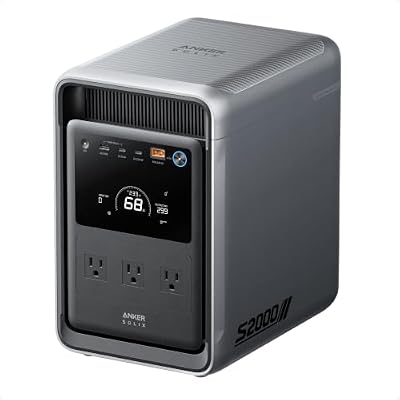
The Anker SOLIX S2000 packs 2kWh into a 35.7 lb box, which Anker calls the lightest unit of its capacity. Consumer Reports evaluated it with a 200W bifacial panel. It is built for long life rather than raw power: Anker rates the cells for 6,000 cycles to 80% capacity.
Anker SOLIX S2000 Portable Power Station, 2,010Wh, 1,500W
Included for 'Consumer Reports Best Solar Generator: Top 2026 Reviews' as a representative home product in this roundup; selection reflects the product set returned for this topic.
View on Amazon- Capacity: 2,010Wh LiFePO4 (6,000 cycles to 80%)
- AC output: 1,500W across five outlets (1,800W bypass)
- Solar input: 400W max, 11–60V
- AC recharge: 1,150W standard, 1,600W fast mode in the app
- Weight: 35.7 lb; UPS switchover 10 ms or less; 5-year warranty
Pros:
- Two kilowatt-hours at roughly the weight of many 1.5kWh units
- Low idle draw stretches overnight runtime
- Fast switchover suits routers, PCs, and CPAP machines
Cons:
- 1,500W continuous is low for microwaves and space heaters
- 400W solar ceiling means a full day of sun to refill; not expandable; no 12V car port
Skip it if… you plan to run 1,500W+ kitchen appliances or want to recharge fully from solar in a few hours.
BLUETTI Elite 300 + 350W Panel — Best Compact 3kWh Kit
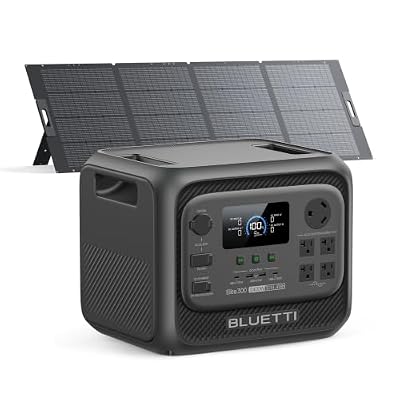
The BLUETTI Elite 300 squeezes 3kWh into a box about the size of many 2kWh units, and Consumer Reports covered it in the 350W panel kit. It is the step up for a household that wants a refrigerator, freezer, and electronics covered through a full day without expansion batteries.
BLUETTI Solar Generator Elite 300 with 350W Solar Panel Included, 3014.4Wh
Included for 'Consumer Reports Best Solar Generator: Top 2026 Reviews' as a representative home product in this roundup; selection reflects the product set returned for this topic.
View on Amazon- Capacity: 3,014.4Wh LiFePO4 (not expandable)
- AC output: 2,400W continuous; up to 4,800W lifting mode for resistive loads such as kettles
- Solar input: 1,200W max, 12–60V
- AC input: 1,800W (US version)
- Weight: about 58 lb; TT-30 RV port, 12V/30A DC, UPS under 10 ms
Pros:
- Three kilowatt-hours in a compact footprint
- 1,200W solar input can refill it in about half a sunny day
- TT-30 outlet plugs straight into a travel trailer
Cons:
- No expansion path and no 240V output
- At 58 lb with no wheels, it is a two-hand carry
Skip it if… you need 240V for a well pump or plan to grow storage later; the Anker SOLIX F3800 or EcoFlow DELTA Pro 3 fit that role.
EcoFlow DELTA 3 Classic + 220W Panel — Best Budget Solar Kit
The EcoFlow DELTA 3 Classic is EcoFlow’s simplified 1kWh model, and the 220W panel kit is the version Consumer Reports evaluated. It keeps the fast wall charging and 1,800W inverter of the DELTA 3 line but drops expansion, which keeps the kit in the under-$1,000 band.

EF ECOFLOW Solar Generator Delta 3 Classic with 220W Solar Panel, 1024Wh
Included for 'Consumer Reports Best Solar Generator: Top 2026 Reviews' as a representative home product in this roundup; selection reflects the product set returned for this topic.
View on Amazon- Capacity: 1,024Wh LFP
- AC output: 1,800W continuous, 3,600W surge, up to 2,600W with X-Boost for resistive loads
- Solar input: 500W max (about 5.8 hours with the 220W panel, per EcoFlow)
- AC recharge: 0–80% in about 45 minutes
- Weight: about 26.7 lb; 10 ms switchover; 5-year warranty
Pros:
- Complete kit at an entry-level price
- Very fast wall charging when a storm is forecast
- Strong 1,800W output for a 1kWh unit
Cons:
- Not expandable, unlike the EcoFlow DELTA 3 Plus
- A single 220W panel cannot fully refill it on a short winter day
Skip it if… you expect to add a battery later; the EcoFlow DELTA 3 Plus in our main list takes expansion packs.
EcoFlow DELTA Pro — Consumer Reports’ Top-Rated Power Station
The original EcoFlow DELTA Pro is the model at the top of Consumer Reports’ power station ratings. It is a large, wheeled 3.6kWh battery that can grow into a home backup system, and it remains on sale alongside the newer EcoFlow DELTA Pro 3 in our main list.

EF ECOFLOW Portable Power Station 3600Wh DELTA Pro, 120V 3600W AC Output
Included for 'Consumer Reports Best Solar Generator: Top 2026 Reviews' as a representative home product in this roundup; selection reflects the product set returned for this topic.
View on Amazon- Capacity: 3,600Wh LFP, expandable with DELTA Pro extra batteries
- AC output: 3,600W continuous at 120V; 240V by linking two units through EcoFlow’s Double Voltage Hub
- Solar input: up to 1,600W
- AC input: up to 1,800W from a standard outlet
- Weight: about 99 lb, with wheels and a telescoping handle
Pros:
- Top score in Consumer Reports’ power station ratings
- Big capacity and output for refrigerators, sump pumps, and power tools
- Expansion path into whole-home backup
Cons:
- Older design than the EcoFlow DELTA Pro 3, with lower solar input
- Very heavy; costs more than a comparable gas inverter generator
Skip it if… you want native 240V from one box; the EcoFlow DELTA Pro 3 or Anker SOLIX F3800 do that without a second unit.
Anker SOLIX F3000 — Best Large-Capacity Unit on Wheels
The Anker SOLIX F3000 is a 3kWh home backup unit with wheels and a telescoping handle, and CNN Underscored named it its large-capacity pick in 2026. It sits between the BLUETTI Elite 300 and the larger Anker SOLIX F3800 in both size and price.

Anker SOLIX F3000 Portable Power Station, 3,072Wh, 6,000W, Solar Generators
Included for 'Consumer Reports Best Solar Generator: Top 2026 Reviews' as a representative home product in this roundup; selection reflects the product set returned for this topic.
View on Amazon- Capacity: 3,072Wh LiFePO4, expandable to 12,288Wh with three expansion batteries
- AC output: 3,600W (TT-30 outlet up to 3,600W); 240V with Anker’s Double Voltage Hub
- Solar input: up to 2,400W across two inputs
- AC input: 1,800W; 20 ms UPS switchover
- Weight: 91.5 lb; 5-year warranty
Pros:
- 2,400W solar input is among the highest in its class
- Expandable well past 10kWh
- Wheels and handle make the weight manageable on flat ground
Cons:
- 240V requires an extra hub accessory
- Too heavy to lift into a vehicle alone
Skip it if… you only need overnight essentials; a 2kWh unit costs far less and carries more easily.
| Model | Capacity | AC continuous | Max solar input | Weight | Expandable | Price tier |
|---|---|---|---|---|---|---|
| EcoFlow DELTA 3 Classic | 1,024Wh | 1,800W | 500W | 26.7 lb | No | Budget |
| Jackery Explorer 1500 Ultra | 1,536Wh | 1,800W | 800W | 38.6 lb | No | Mid-range |
| Anker SOLIX S2000 | 2,010Wh | 1,500W | 400W | 35.7 lb | No | Mid-range |
| BLUETTI Elite 300 | 3,014.4Wh | 2,400W | 1,200W | 58 lb | No | Upper-mid |
| Anker SOLIX F3000 | 3,072Wh | 3,600W | 2,400W | 91.5 lb | Yes | Premium |
| EcoFlow DELTA Pro | 3,600Wh | 3,600W | 1,600W | 99 lb | Yes | Premium |
Comparison of Top Solar Generator Models
| Product Model | Battery Capacity | AC Output Watts | Battery Type | Max Solar Input | Ideal Application |
|---|---|---|---|---|---|
| Jackery Explorer 1000 v2 | 1,070Wh | 1,500W | LiFePO4 | 400W | Camping & Essential Backup |
| EcoFlow DELTA 3 Plus | 1,024Wh | 1,800W | LiFePO4 | 500W | Rapid Charging & Mobile Use |
| Bluetti Elite 200 V2 | 2,073.6Wh | 2,600W | LFP Automotive | 1,000W | High-Capacity Quiet Power |
| Anker SOLIX C1000 | 1,056Wh | 1,800W | InfiniPower LFP | 600W | Rugged Home Readiness |
| Jackery 2000 Plus | 2,042.8Wh | 3,000W | LiFePO4 | 1,200W | RV Living & Heavy Appliances |
| EcoFlow DELTA Pro 3 | 4,096Wh | 4,000W (120V/240V) | LiFePO4 | 2,600W | Whole-Home Emergency Grid |
Additional Picks: Spec Snapshot
| Product Model | Battery Capacity | AC Output Watts | Battery Type | Solar Panel Included | Ideal Application |
|---|---|---|---|---|---|
| Anker SOLIX F3800 | 3,840Wh | 6,000W (120V/240V) | LiFePO4 | No (base unit) | Whole-Home Backup |
| BLUETTI AC180 Kit | 1,152Wh | 1,800W | LiFePO4 | Yes, 200W | First Solar Kit & Essentials |
| Goal Zero Yeti 1500 + Nomad 200 | ~1.5kWh class | Check listing | LiFePO4 | Yes, 200W folding | Cabin, Overlanding & Home Essentials |
| DJI Power 2000 | 2,048Wh | Check listing | LFP | No (combos available) | Value Home Backup & Creators |
| OUPES Mega 1 | 1,024Wh | 2,000W (4,500W surge) | Confirm on listing | No | Budget Backup & Job Sites |
Best Solar Generators for Homes by Use Case
Consumer Reports’ ratings reward big capacity and fast recharging, but the right unit for your home depends on what must stay on during an outage. Pick the row that matches your must-run list, then choose a model from that tier.
Best for CPAP, Wi-Fi, and Apartment Backup (1kWh class)
- Jackery Explorer 1000 v2: 1,070Wh · 1,500W AC · 23.8 lb · LFP
- EcoFlow DELTA 3 Classic: 1,024Wh · 1,800W AC · 500W solar · 26.7 lb
- Anker SOLIX C1000: 1,056Wh · 1,800W AC · 5-year warranty
What to expect at this tier:
- One to two nights of CPAP use without a humidifier, or about a day of router, modem, and phone charging
- Enough output for a coffee maker or small microwave in short bursts
- A single 200W panel needs most of a sunny day to refill the battery
- Light enough for one person to carry up stairs
Best for Refrigerator Backup (2kWh class)
- BLUETTI Elite 200 V2: 2,073.6Wh · 2,600W AC · LFP
- Anker SOLIX S2000: 2,010Wh · 1,500W AC · 35.7 lb
- DJI Power 2000: 2,048Wh · LFP · expansion battery available
What to expect at this tier:
- A full-size refrigerator for roughly a day, longer with solar top-ups
- Room for a fridge plus lights, Wi-Fi, and a TV at the same time
- Weight of 35–55 lb, so plan a fixed spot near the fridge
- Pair with 400W+ of panels to keep up during a multi-day outage
Best for Whole-Home and 240V Circuits (3kWh and up)
- Anker SOLIX F3800: 3,840Wh · 6,000W · native 120V/240V
- EcoFlow DELTA Pro 3: 4,096Wh · 4,000W · 120V/240V
- EcoFlow DELTA Pro: 3,600Wh · 3,600W · expandable
- Anker SOLIX F3000: 3,072Wh · 3,600W · 2,400W solar
What to expect at this tier:
- Sump pumps, well pumps (240V models), and several kitchen circuits through a transfer switch
- Expansion batteries push storage past 10kWh
- Weights of 90–115 lb; wheels are mandatory
- Panel hookup needs a licensed electrician and extra hardware
Best for Camping, RV, and Outdoor Work
- Jackery Explorer 1500 Ultra: 1,536Wh · 1,800W AC · IP65 · 38.6 lb
- BLUETTI Elite 300: 3,014.4Wh · 2,400W AC · TT-30 RV port
- BLUETTI AC180 kit: 1,152Wh · 1,800W AC · 200W panel included
What to expect at this tier:
- Weather and dust protection matters more than raw capacity outdoors
- A TT-30 outlet lets a travel trailer plug in directly
- Folding panels in the 200–400W range are the practical carry limit
In short: if you want the model at the top of Consumer Reports’ ratings, buy the EcoFlow DELTA Pro; if you want the best balance of capacity, output, and price for a typical home, buy the BLUETTI Elite 200 V2; if you only need essentials for a night, the Jackery Explorer 1000 v2 is the simplest choice.
Price Tiers: What Your Budget Buys in 2026
Solar generator prices swing with frequent promotions, so think in tiers rather than fixed numbers. The ranges below reflect typical street pricing for the categories covered in this guide.
| Budget | What You Typically Get | Realistic Use | Models in This Guide |
|---|---|---|---|
| Under $500 | 1kWh-class power station, panels usually extra | Phones, router, lights, CPAP overnight, short appliance bursts | OUPES Mega 1 |
| $500–$1,000 | 1kWh-class units with a panel, or 2kWh-class stations on promotion | Refrigerator for part of a day, small kitchen appliances, camping | Jackery Explorer 1000 v2, EcoFlow DELTA 3 Plus, Anker SOLIX C1000, BLUETTI AC180 Kit, DJI Power 2000 |
| $1,000–$2,500 | 2kWh-class systems with high solar input, or premium kits | Multi-day essentials, RV living, power tools | Bluetti Elite 200 V2, Jackery Solar Generator 2000 Plus, Goal Zero Yeti 1500 + Nomad 200, Anker SOLIX F3800 |
| $2,500 and up | Whole-home systems with 240V output and expansion batteries | Panel-connected backup, well pumps, extended outages | EcoFlow DELTA Pro 3, expanded Anker SOLIX F3800 setups |
When comparing prices, divide the cost by the usable watt-hours to get a cost-per-watt-hour figure, then factor in what is included. A slightly more expensive kit that already contains a matched solar panel can be the better deal once you price a compatible panel separately.
Maintenance and Storage Tips for a Longer Battery Life
A solar generator that sits in a closet for months still needs a little attention. These habits help protect your investment and make sure the unit is ready when the power goes out:
- Top it up on a schedule. Follow the manufacturer’s storage guidance and check the charge level every few months. Most brands recommend periodic recharging during long-term storage so the battery never sits fully depleted.
- Store it in a moderate climate. Extreme heat accelerates battery aging, and LiFePO4 cells should not be charged below freezing unless the unit has built-in battery heating. A climate-controlled closet beats an unheated garage or a hot attic.
- Run a real load test. Once or twice a year, run a refrigerator or a few lamps from the unit for an hour. It confirms the inverter, outlets, and app all work before you depend on them.
- Keep firmware current. App-connected models receive updates that can improve charging behavior, efficiency, and safety protections.
- Clean the panels. Dust, pollen, and bird droppings reduce solar output. Wipe panels with a soft cloth and plain water before deployment, and store folding panels flat and dry.
- Keep vents clear. Leave several inches of space around cooling fans during use, especially under heavy loads.
- Organize your cables. Store the AC charger, solar extension cables, and any MC4 adapters with the unit so nothing goes missing when you need it most.
How We Chose These Solar Generators
This roundup is research-based, not a lab evaluation. We started from the models Consumer Reports and CNN Underscored rated in 2026, then compared each unit’s manufacturer spec sheet on five points that mirror Consumer Reports’ criteria: recharge speed from the wall and from solar, continuous and surge output, inverter quality and UPS switchover time, weight and carrying design, and ease of use (outlet mix, USB-C wattage, app control). We kept only LiFePO4 models from established brands with at least a multi-year warranty, cross-checked specs against retailer listings and independent reviews, and left out any figure we could not confirm. Where sources disagreed, such as surge ratings, we used the maker’s published number or omitted it.
Frequently Asked Questions
What makes a solar generator reliable according to testing standards?
Reliability depends on stable voltage output, thermal management, inverter efficiency, and long cycle life under continuous electrical load. A high-quality portable power station maintains rated wattage without overheating or dropping voltage during extended operation. Modern units with pure sine wave inverters protect sensitive micro-electronics safely.
How many solar panels do I need to recharge my generator efficiently?
Panel requirements depend on battery capacity, sun hours, and panel wattage ratings. Achieving fast recharge requires matching panel wattage to your generator input limits without exceeding maximum voltage thresholds. Combining panels efficiently ensures reliable off-grid backup power during prolonged utility outages.
Can a solar generator power an entire house during a blackout?
Large-capacity units featuring dual voltage capability and high continuous output can power essential residential circuits easily. Installing units with long-lasting LiFePO4 battery storage alongside an automatic transfer switch allows seamless power delivery to refrigerators, lights, and medical devices during unexpected blackouts.
How long do solar generators last?
Lifespan depends mostly on battery chemistry. LiFePO4 units are commonly rated for roughly 3,000 to 6,000 charge cycles before falling to about 80 percent of original capacity, which translates to many years of regular use and even longer for units used mainly as emergency backup. Older NMC lithium-ion models are usually rated for far fewer cycles. Proper storage, moderate temperatures, and avoiding long periods at zero charge all help extend service life.
Are solar generators safe to use indoors?
Yes. Battery-based solar generators produce no exhaust or carbon monoxide, so they can be used inside a home, tent, or RV, unlike gas generators, which must always run outdoors away from windows and doors. Give the unit some open space around its cooling vents, keep it away from water, and use appropriately rated extension cords for higher loads.
How big a solar generator do I need for a refrigerator?
A typical full-size refrigerator uses roughly 1 to 2kWh per day and needs an inverter that can handle the compressor’s start-up surge. A unit with at least 1,000Wh of capacity and 1,500W or more of continuous output can usually run one for part of a day. For a full day or longer, especially with other loads attached, a 2kWh-class generator with solar recharging is a more comfortable fit.
How long does it take to recharge a solar generator with panels?
Divide the battery capacity by roughly 75 percent of your total panel wattage to estimate the hours of strong sunlight required. A 1kWh battery with 400W of panels needs about three to four hours of good sun, while the same battery with a single 100W panel could take well over a day. Weather, panel angle, shading, and temperature all affect the result.
Do I have to use the same brand of solar panels?
No, but it is easier. Brand-matched panels use the correct connectors and stay within the generator’s voltage and current limits. Third-party panels work as long as their open-circuit voltage and current fall within the input specifications and you use the right adapter cable. Always check the combined voltage before wiring panels in series.
Can a solar generator run while it is charging?
Most current models support pass-through charging, meaning they can power devices while charging from the wall or from solar panels. Some also offer a UPS-style mode that switches to battery power within milliseconds when the grid fails, which is useful for computers, networking gear, and medical devices. Check each model’s switchover time and the manufacturer’s guidance on extended pass-through use.
Is a solar generator worth it compared with a gas generator?
It depends on how you will use it. A solar generator is worth it if you value silent, fume-free power that can run indoors, need backup for electronics and medical devices, or want to avoid storing fuel. A gas or inverter generator remains the cheaper way to run heavy loads for days on end. Many households combine both: a solar generator for indoor essentials and a fuel generator outdoors for heavy, occasional demands.
According to Consumer Reports, what is the best solar generator to buy right now?
The EcoFlow DELTA Pro is the top model in Consumer Reports’ portable power station ratings as of its September 2026 update. It earns that spot with 3,600Wh of capacity, 3,600W of output, and fast recharging, which Consumer Reports weights heavily. It is also expensive and weighs about 99 lb, so many households are better served by a 2kWh unit.
Does Consumer Reports publish solar generator ratings?
Yes, but under portable power stations rather than a separate solar generator category. Consumer Reports rates each unit on recharge speed, power delivery, power quality, portability, and ease of use, and it has evaluated full kits that include a panel, such as the Jackery Explorer 1500 Ultra with a 200W panel and the EcoFlow DELTA 3 Classic with a 220W panel. Full scores may require a subscription.
Which solar generators does Consumer Reports cover for home backup?
Its 2026 coverage includes the EcoFlow DELTA Pro, Goal Zero Yeti 1500 with Nomad 200, Anker SOLIX S2000, Jackery Explorer 1500 Ultra, BLUETTI Elite 300, and EcoFlow DELTA 3 Classic. For home backup, the 3kWh-plus models handle a refrigerator and sump pump; the 1–2kWh models suit essentials only.
Is this guide affiliated with Consumer Reports?
No. This is an independent, research-based guide that summarizes publicly available Consumer Reports findings alongside manufacturer specs and other reviews. For Consumer Reports’ own scores and lab notes, visit consumerreports.org directly.
Conclusion
Choosing the Consumer Reports Best Solar Generator ensures your family stays protected with clean, quiet power whenever the electrical grid fails. Modern units equipped with LFP chemistry deliver long cycle lives, rapid recharge times, and reliable output for sensitive household appliances. Investing in a dependable solar generator for home backup provides absolute peace of mind during storm seasons and outdoor adventures alike.
Write Your Review
No reviews yet. Be the first to share your experience!