
🛒 Best Price Today on Amazon
Prime members get fast, free shipping on everything above, plus member-only deals. New members get a 30-day free trial — cancel anytime.
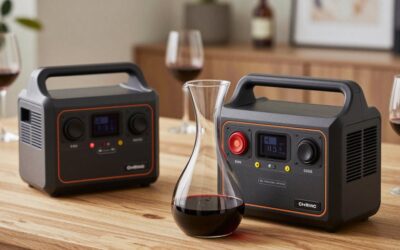
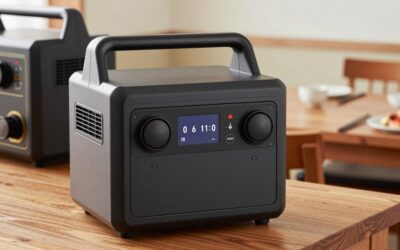
The Anker SOLIX C1000 and a chest freezer make a practical pairing for storm season. The freezer’s insulation buys time, and the C1000’s fast recharge and portable size make it easy to top up the battery or move it between appliances. This guide covers how long the C1000 runs a chest freezer, how to use a cycling schedule to stretch it across several days, and how to set it up as a permanent freezer backup.
Specifications
Anker lists the C1000 at approximately 1,056Wh of LiFePO4 capacity, 1,800W continuous output, a UPS switchover under 10 milliseconds, and fast AC recharging in roughly an hour. Confirm these on Anker’s current spec sheet. Usable AC energy is about 900 to 950Wh.
Freezer runtime
| Chest freezer | Daily energy | Continuous runtime (~920Wh) | With cycling (est.) |
|---|---|---|---|
| 3.5 cu ft | 0.45-0.6kWh | ~37-49 hours | ~3-4 days |
| 5 cu ft | 0.5-0.7kWh | ~32-44 hours | ~2.5-3.5 days |
| 7 cu ft | 0.6-0.8kWh | ~28-37 hours | ~2-3 days |
| 15 cu ft | 0.9-1.2kWh | ~18-25 hours | ~1.5-2 days |
These figures assume a room around 70°F. In a hot garage, daily energy can rise by a third or more.
How the cycling schedule works
USDA guidance says a full freezer keeps food safe for about 48 hours if unopened. Rather than letting the C1000 drain continuously, run the freezer for three to four hours, then unplug it for eight hours or more, while a thermometer keeps the interior near 0°F. The compressor catches up during the on periods, and the insulation holds the cold in between. This approach can stretch one charge well beyond its continuous runtime, especially for a full freezer.
Sample schedule for a 7 cu ft freezer
Run the freezer from 6 to 9 a.m. and again from 6 to 9 p.m., and keep the lid shut in between. That is six powered hours a day, during which the compressor will run most of the time to recover, using an estimated 300 to 450Wh daily depending on room temperature. On about 920Wh usable, the C1000 covers two to three days on that pattern, and a single one-hour wall top-up or a sunny afternoon with a 200W-class panel extends it further.
Recharging between cycles
The C1000’s roughly one-hour AC recharge makes it practical to top up during a daytime trip to work or a friend’s home. Its solar input of several hundred watts can refill most of the battery on a clear day. If a gas generator is used for recharging, run it outdoors at least 20 feet from doors and windows, never in the garage or on a porch, because carbon monoxide from an attached garage can easily reach living spaces.
Permanent freezer backup
Many owners leave a garage or basement freezer plugged into the C1000, with the C1000 plugged into the wall. The station’s UPS switchover takes over instantly in an outage. Before setting it up this way:
- Check the manual for UPS-mode settings and recommended charge limits to protect battery longevity.
- Place the C1000 where it will not overheat. A station sitting beside a freezer’s condenser in a hot garage ages faster.
- Make sure the C1000 does not sit where it could freeze if the garage gets very cold; LiFePO4 cells should not be charged below about 32°F.
Keep the freezer efficient
- Keep it full, adding jugs of water to fill gaps.
- Clean condenser coils and keep vents clear.
- Check the lid gasket; replace it if it no longer seals tightly.
Wiring and safety
Never plug the C1000 into a wall outlet to power a garage or basement circuit; that backfeeds the grid and can electrocute utility workers. If you want circuit-level backup, a licensed electrician must install a transfer switch or suitable inlet. Keep CO alarms in the home if any fuel-burning equipment is used during outages.
FAQ
Will the C1000 start an older chest freezer?
Very likely. Its 1,800W continuous output handles most freezer compressor start spikes. Older freezers simply use more energy per day, which shortens runtime.
Can the C1000 handle a freezer and a fridge?
Yes, output-wise. Combined daily energy of 1.7kWh or more would drain it in about 12 to 14 hours, so rotate the station between them or use cycling schedules.
Bottom line
The Anker SOLIX C1000 can run a typical chest freezer for about one to two days continuously, and two to four days with a cycling schedule. Its fast recharge and UPS function make it a strong, portable freezer backup. Confirm the latest spec sheet and keep a thermometer in the freezer.
Write Your Review
No reviews yet. Be the first to share your experience!