
🛒 Best Price Today on Amazon
Prime members get fast, free shipping on everything above, plus member-only deals. New members get a 30-day free trial — cancel anytime.
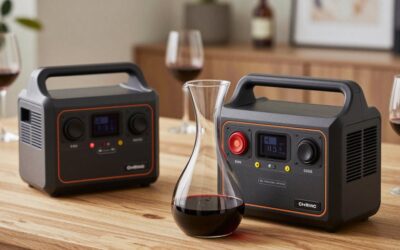
When a winter storm cuts power, a space heater is often the first thing people try to plug into a power station. It is also one of the worst matches for a battery. The EcoFlow Delta 3 Plus can technically run a typical 1,500 watt space heater, since its inverter is rated around 1,800 watts continuous, but the battery drains in well under an hour. Understanding why, and what to do instead, can keep your household much warmer for much longer on the same charge. This guide covers the math, the settings that help a little, and the heating strategies that get far more warmth per watt-hour. Confirm current ratings on EcoFlow’s spec sheet.
The basic math
Resistive space heaters turn electricity into heat at nearly 100 percent efficiency, but they use a lot of it. The Delta 3 Plus holds roughly 1 kWh, with about 870 to 920 Wh usable through the inverter.
| Heater setting | Typical draw | Est. runtime on ~900 Wh usable | Heat delivered |
|---|---|---|---|
| High (most 120 V heaters) | ~1,500 W | ~35–40 minutes | ~5,100 BTU/h |
| Low | ~750–900 W | ~60–70 minutes | ~2,600–3,100 BTU/h |
| Thermostat cycling on low (about 50% on-time) | ~400–450 W average | ~2–2.25 hours | Maintains a small, closed room |
| Small personal heater | ~200–400 W | ~2.25–4.5 hours | Warms one person, not a room |
For comparison, a typical home furnace delivers tens of thousands of BTU per hour. A 1,500 watt heater cannot heat a house; at best it can take the edge off one small, closed room.
Why it is a poor use of battery energy
Energy that would run a refrigerator for most of a day disappears in about 40 minutes of space heating. In a multi-day winter outage, that trade-off can cost you food, communications and medical device power. The heater also runs near the upper end of the station’s continuous rating, which makes the inverter and fans work hard.
Better ways to use the same energy for warmth
Heat people, not rooms
An electric blanket or heated mattress pad typically uses about 50 to 100 watts. On the Delta 3 Plus, that could run all night, roughly 8 to 12 hours or more, keeping a person warm in bed while the room is cold. Heated vests and seat cushions draw even less.
Power the gas furnace blower instead
If you have a gas or propane furnace, it usually cannot run during an outage only because its blower and controls need electricity, often around 300 to 800 watts while running. A furnace delivers far more heat per watt of electricity than a space heater. Connecting a furnace safely requires a proper transfer switch, a furnace-specific transfer switch, or a manufacturer-approved power station home backup setup installed by a licensed electrician. Never backfeed through an outlet.
Hold heat in
Choose one interior room, close the door, hang blankets over windows and doorways, and gather the household there. Body heat from several people adds up surprisingly fast in a small room.
If you do run a space heater on the station
- Use the low setting and the thermostat so it cycles instead of running constantly.
- Plug it directly into the station’s AC outlet, never through a power strip or thin extension cord.
- Choose a heater with tip-over and overheat shutoff, and keep it at least 3 feet from bedding, curtains and furniture.
- Keep the station on a hard surface with its fans unobstructed.
- Never leave a space heater running unattended or while sleeping.
Dangerous alternatives to avoid
Every winter, people die from carbon monoxide after bringing fuel-burning heat indoors. Never use a charcoal grill, camp stove, gas oven or outdoor propane heater to heat a home. Never run a generator in a garage, basement, porch or near windows; keep it at least 20 feet from the house with exhaust pointed away. Indoor-rated propane heaters exist but still require ventilation and a CO alarm, and they must be used exactly as the manufacturer directs.
Recharging in winter
Solar output in winter is limited by short days and low sun angle. A few hundred watts of panels may add only a fraction of a kWh on a cloudy December day. Remember that lithium batteries should not be charged below freezing unless the unit supports low-temperature charging; keep the station indoors.
FAQ
Will boost mode let the Delta 3 Plus run a bigger heater?
Boost mode lets some resistive loads above the continuous rating run at reduced voltage and therefore reduced heat output. It does not add energy to the battery, so runtime is still short.
Is a ceramic heater more efficient than an oil-filled heater on battery?
All resistive electric heaters convert electricity to heat at nearly the same efficiency. Oil-filled heaters release heat more slowly after cycling off, which some people find more comfortable, but they do not create extra heat per watt.
Bottom line
The Delta 3 Plus can run a 1,500 watt space heater, but only for about 35 to 40 minutes on high. You will stay warmer much longer using the same energy for an electric blanket, a properly connected gas furnace blower, and a single closed-off warm room. Never use fuel-burning heat indoors, and keep a CO alarm working through every winter outage.
Write Your Review
No reviews yet. Be the first to share your experience!