
🛒 Best Price Today on Amazon
Prime members get fast, free shipping on everything above, plus member-only deals. New members get a 30-day free trial — cancel anytime.
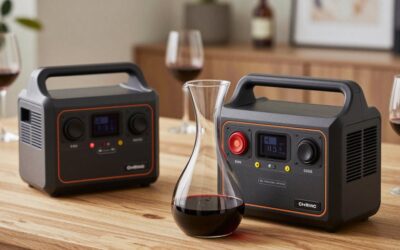
A heat wave with no power is a genuine health emergency for older adults, young children, pregnant people and anyone with heart, lung or kidney conditions. A 5000Wh power station can run a common 8,000 BTU window air conditioner for roughly nine to eleven hours overnight, enough to keep one bedroom safe through a hot night, and a small 5,000 or 6,000 BTU unit for considerably longer. This guide focuses on using a 5kWh-class battery for overnight cooling and compares it with running a fuel generator in the same situation.
Runtime by unit size
Assume roughly 4,250Wh usable from a 5,000Wh station. Compressor duty cycle, meaning the fraction of time the compressor is actually running, makes a big difference. At night with the room pre-cooled, 50 to 70 percent is typical; on a scorching afternoon it can approach 100 percent.
| Window AC | Running watts | Overnight runtime at ~60% duty | Afternoon runtime at ~90% duty |
|---|---|---|---|
| 5,000 to 6,000 BTU | about 450 to 550W | about 13 to 15.5 hours | about 8.5 to 10.5 hours |
| 8,000 BTU | about 650 to 750W | about 9.5 to 11 hours | about 6.3 to 7.3 hours |
| 8,000 BTU inverter-type | about 300 to 600W average | about 10 to 14 hours | about 7 to 9 hours |
| 12,000 BTU | about 1,050 to 1,250W | about 5.7 to 6.7 hours | about 3.8 to 4.5 hours |
These are estimates. Real draw depends on the model’s efficiency rating, outdoor temperature and room insulation, so check the unit’s label and, if possible, measure it.
Why a battery beats a generator at night
Carbon monoxide
Running a fuel generator all night while people sleep is the riskiest possible way to cool a room. A window AC unit can draw outdoor air, and a generator placed within 20 feet of the house can push exhaust toward open windows. If you use a generator at all, keep it outdoors at least 20 feet away, exhaust aimed away from the home, never in a garage, carport or on a porch, and install CO alarms on every level. A battery produces no fumes, so the overnight hours are when it shines.
Noise and neighbors
A battery is near-silent apart from cooling fans. Many neighborhoods have quiet hours, and a generator running at 2 a.m. is a quick way to create friction during an already stressful outage.
Fuel logistics
During regional outages, fuel stations may also be without power. A battery recharged by solar during the day sidesteps that problem.
A heat-wave plan built around 5kWh
- Afternoon: Let solar run the AC directly if you have panels, and keep the battery as full as possible. Close blinds on sun-facing windows.
- Early evening: Pre-cool the bedroom to around 74 to 76°F while panels still produce.
- Night: Raise the setpoint to around 78 to 80°F and run a fan. Most people sleep acceptably at these temperatures with moving air.
- Morning: Recharge. A 5kWh-class station accepting 1,500W or more of solar can often refill substantially on a clear day.
Voltage, surge and connection
Most window units are 115 to 120V, which every 5kWh-class station supports. Larger 230V window units need a station with 240V output, which many units in this class offer; check the current spec sheet. Surge is rarely a problem here; inverters in this class commonly deliver several thousand watts continuous with higher peaks. If you want the station to run a central air handler or mini-split, that is hardwired equipment and needs a licensed electrician to connect it through a transfer switch or backup panel.
Keeping the station itself healthy
Place the station in the cooled room, not in a hot garage or in direct sun. Lithium cells age faster in heat and many stations reduce charging speed or output when they get too warm. Leave a few inches of clearance around the vents.
FAQ
Can a 5000Wh station run a window AC and a fridge at the same time?
Yes, the inverter can handle both, but together they may use 6 to 9kWh over 24 hours in hot weather, so you will need solar or a recharge each day.
Would a portable floor AC do the same job?
Portable ACs usually cool less per watt than window units, so a window unit gives more comfort for the same battery.
Bottom line
A 5000Wh-class station typically runs an 8,000 BTU window AC for about 9 to 11 hours overnight and a small 5,000 to 6,000 BTU unit for well over 12 hours. For vulnerable people during a heat wave, that battery-powered night of cooling is safer than running a generator while you sleep. Confirm usable capacity, output voltage and solar input on the station’s current spec sheet.

Write Your Review
No reviews yet. Be the first to share your experience!