
🛒 Best Price Today on Amazon
Prime members get fast, free shipping on everything above, plus member-only deals. New members get a 30-day free trial — cancel anytime.
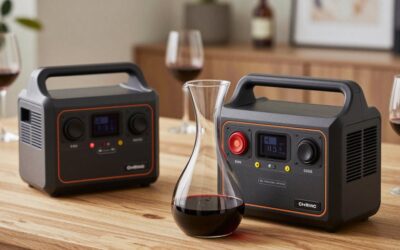
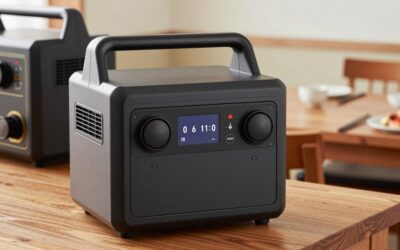
Shoppers eyeing the EcoFlow River 2 Pro for summer outages often hope it can keep a window air conditioner running. For most window units, the honest answer is no, or only barely. An inverter in the roughly 800 watt class and a battery in the high-700 Wh range leave very little room for compressor surge or meaningful runtime. That does not make the River 2 Pro useless in a heat wave, though. This article explains exactly where the limits are, which very small AC units might work briefly, and how to use the same battery for cooling strategies that actually last through a hot night. Check current specs on EcoFlow’s product page before relying on these estimates.
Why most window units are out of reach
Running watts
Even the smallest 5,000 BTU window units typically draw around 400 to 500 watts while running. An 8,000 BTU unit commonly draws 650 to 800 watts, right at or above the River 2 Pro’s continuous rating.
Startup surge
Fixed-speed compressors can pull two to three times their running watts at start. For a 5,000 BTU unit, that may mean 900 to 1,500 watts for a moment. That is often enough to trigger overload protection on an 800 watt-class inverter.
Boost mode is not a workaround
EcoFlow’s boost feature runs higher-wattage resistive devices by lowering the voltage. Air conditioner compressors need full voltage to start and run properly; low voltage can make them stall or overheat. Do not rely on boost for an AC.
What might work, and for how long
| Cooling device | Typical running draw | Likely to start on ~800 W inverter? | Est. runtime on ~670 Wh usable |
|---|---|---|---|
| 5,000 BTU fixed-speed window AC | ~400–500 W | Maybe; test first | ~1.3–1.7 hours (if it starts) |
| Small inverter-type window AC at low output | ~200–450 W | More likely (soft start) | ~1.5–3 hours |
| 8,000 BTU fixed-speed window AC | ~650–800 W | Unlikely | Under 1 hour if it runs at all |
| 20-inch box fan | ~50–100 W | Yes | ~7–13 hours |
| 12 V DC fan (via car port) | ~10–30 W | Yes | ~22–60+ hours |
| Small evaporative cooler (dry climates) | ~40–120 W | Yes | ~5.5–16 hours |
If you want to test a small window AC, charge the station fully, disconnect other loads, and wait several minutes after the AC was last running before plugging it in. If the station reports overload, stop trying; repeated surges are hard on the inverter.
A better heat-wave plan with the River 2 Pro
Move air, all night
A box fan running 8 hours uses roughly 0.4 to 0.8 kWh. Two DC fans aimed across the bed use far less. Moving air across skin makes a room feel several degrees cooler.
Cool the body, not the room
Damp cloths, cool showers and a small fan are remarkably effective. Freeze water bottles ahead of the outage if you still have power, or keep them in a cooler.
Ventilate at night
Once outdoor temperatures drop below indoor temperatures, open windows on opposite sides of the house and use a box fan in one window blowing out to pull cooler air through. This costs a fraction of what an AC would use.
Protect the priorities
In a heat wave, the refrigerator, phone charging and medical devices may matter more than a single hour of AC. The River 2 Pro can keep all of those going far longer than it could keep a compressor running.
When you truly need air conditioning
If someone in the household is elderly, very young, pregnant, or has a heart or respiratory condition, heat can be dangerous. Plan for a larger power source: a power station with at least 1,800 watts of output and 2 kWh or more of storage, or an inverter generator in the 2,500 to 3,500 watt class for a small window unit. Generators must run outdoors, at least 20 feet from the home, exhaust pointed away from windows and doors, never in a garage or on a porch. Also identify local cooling centers before summer.
Recharging in summer
A 220 watt panel in strong sun can add roughly 0.6 to 0.9 kWh per day to the River 2 Pro, which is plenty to run fans through the night and keep phones charged, but nowhere near enough for sustained air conditioning. Keep the station itself out of direct sun and in the coolest room; batteries and inverters lose efficiency and may throttle when hot.
FAQ
Can the River 2 Pro run a portable air conditioner?
Unlikely. Portable ACs usually draw 800 to 1,400 watts, above its continuous rating, with high startup surge.
Would a soft-start device help?
Soft-start kits reduce compressor inrush and are popular with RV owners. They may help a small window unit start on a limited inverter, but installation often means opening the AC and may affect warranty. Running watts and short runtime remain the bigger limitation.
Bottom line
The River 2 Pro is not a realistic air conditioning source. At best it may start a very small or inverter-type window unit for an hour or two. Use it instead to run fans all night, keep the fridge and medical devices powered, and charge phones. For true AC backup, step up to a larger station or an outdoor inverter generator.

Write Your Review
No reviews yet. Be the first to share your experience!