
🛒 Best Price Today on Amazon
Prime members get fast, free shipping on everything above, plus member-only deals. New members get a 30-day free trial — cancel anytime.
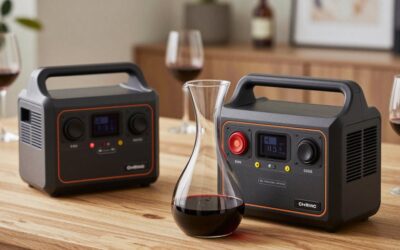
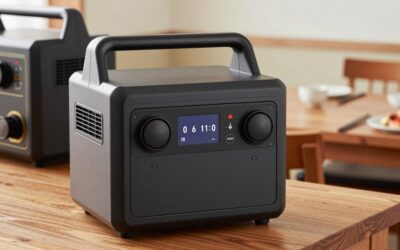
Winter storm outages are harder on batteries than summer ones. Ice and snow can knock out power for days, the sun is low and often hidden, and the biggest need, heat, is the one thing a portable power station struggles to supply directly. The EcoFlow Delta 3 Plus can still earn its place in a winter kit, mainly by keeping a gas furnace blower, a fridge and communications running. This guide looks at how it fits into a winter plan and which limits to respect.
What you are working with
Check EcoFlow’s current spec sheet, but the Delta 3 Plus is listed at around 1,024Wh of LiFePO4 storage, 1,800W continuous output with a higher X-Boost mode for resistive loads, fast AC charging near 1,500W, dual solar inputs and expansion to roughly 5kWh with compatible extra batteries. It also integrates with EcoFlow’s Smart Generator for automatic recharging.
Heat: the furnace blower strategy
A space heater would drain the Delta 3 Plus in about 35 minutes on high. A gas or propane furnace is a far better use of the battery because fuel supplies the heat and the battery only runs the blower, igniter and controls, typically 300 to 800W while running.
| Furnace blower draw | Duty cycle on a 20°F night | Average draw | Delta 3 Plus alone (~870Wh usable) | With one ~1kWh extra battery |
|---|---|---|---|---|
| 350W (ECM blower) | ~40% | ~140W | ~6 hours | ~12 hours |
| 500W | ~45% | ~225W | ~3.9 hours | ~7.7 hours |
| 750W (older PSC blower) | ~50% | ~375W | ~2.3 hours | ~4.6 hours |
Many furnaces are hardwired, so connecting a power station requires a licensed electrician to install a furnace inlet, transfer switch or interlock. Never backfeed through a wall outlet; it can energize downed lines and endanger utility crews working in the storm.
Other heat-saving steps
- Drop the thermostat to around 60 to 62°F and close off unused rooms.
- Use heated blankets (50 to 100W) for sleeping instead of heating the whole house overnight.
- Cover windows after dark and block drafts under doors.
Charging in winter
Winter solar yields are often a quarter to a half of summer levels, and snow-covered panels produce almost nothing. Plan on grid pre-charging, vehicle charging and generator windows. A 30 to 60 minute generator run at the Delta 3 Plus’s fast AC charging rate can refill most of the battery, saving fuel compared with running the generator all night.
Any gas generator must run outdoors at least 20 feet from the house, never in a garage, shed doorway or porch, with exhaust directed away from doors, windows and vents. Clear snow so the generator’s exhaust is not blocked and keep it from drifting toward the house. Winter storms bring a spike in carbon monoxide poisonings; keep battery-backed CO alarms on every level and outside bedrooms.
Battery care in the cold
LiFePO4 batteries should not be charged below freezing and deliver less capacity when cold. Keep the Delta 3 Plus inside the heated part of the house. If it has been in a cold garage or car, let it warm to room temperature before charging. Keep it off cold concrete floors.
Essentials beyond heat
- Refrigerator: in winter, you can move some perishables to a cooler outside if temperatures stay safely below 40°F, reducing fridge run time.
- Sump pump: if snowmelt or rain threatens a basement, a 1/3 HP sump pump (roughly 800 to 1,000W running, higher on startup) is within the Delta 3 Plus’s output range; confirm surge compatibility in advance.
- Communications: phones, a router and a radio use very little energy and should always be covered.
Prioritizing when the battery runs low
When the display shows 30% on a cold night, switch to a triage order: first, anything medical such as a CPAP; second, the furnace blower in short cycles; third, communications; last, the fridge, which can coast for hours in a cold house. This sequence protects health and safety first.
FAQ
Can the Delta 3 Plus run an electric heat pump?
No. Heat pumps and electric furnaces typically require 240V and several kilowatts. Consider a larger 240V-capable system for those homes.
Should I use the Smart Generator integration?
It can automate recharging when the battery drops below a set level, which is handy during long winter outages, but the generator must still be placed outdoors with the same CO precautions.
Bottom line
The EcoFlow Delta 3 Plus is a solid winter storm companion when you use it to run a gas furnace blower, fridge and communications rather than electric heat. Expect a few hours to half a night of furnace operation per charge, more with an extra battery, and plan on generator or vehicle recharging because winter sun is unreliable.
Write Your Review
No reviews yet. Be the first to share your experience!