
🛒 Best Price Today on Amazon
Prime members get fast, free shipping on everything above, plus member-only deals. New members get a 30-day free trial — cancel anytime.
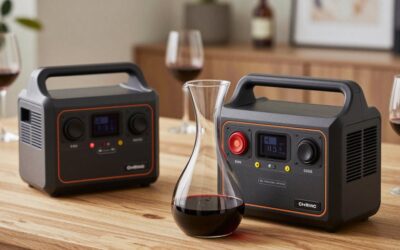
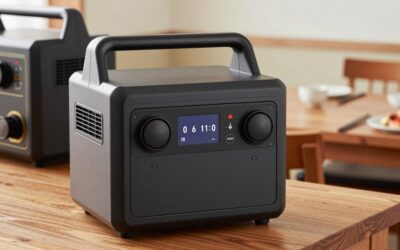
Here is a case where a portable power station finally has the muscle to run a real space heater at full power. The Explorer 5000 Plus has enough inverter capacity to run a 1,500W heater on high, even alongside other appliances, and enough battery to keep it going for a few hours. Whether that is a good use of 5kWh is another matter. This guide covers runtime, the true cost of electric heat on battery, and smarter ways to use this station during a winter outage.
What the station can deliver
Jackery specifies the 5000 Plus at approximately 5,040Wh and 7,200W of continuous output. The standard 120V household outlets carry a per-outlet limit, typically sized for common 1,500W appliances; check the current manual for exact outlet ratings before plugging in multiple heaters. Usable energy after inverter losses is roughly 4,300 to 4,500Wh.
Heater runtime table
| Heater and setting | Draw | Runtime on ~4,400Wh |
|---|---|---|
| 1,500W ceramic heater, high, continuous | 1,500W | ~2.9 hours |
| 1,500W heater, thermostat cycling ~50% | ~750W average | ~5.8 hours |
| 750W setting, continuous | 750W | ~5.8 hours |
| 600W oil-filled radiator, cycling | ~350-450W average | ~10-12 hours |
| Two 1,500W heaters, high | 3,000W | ~1.5 hours |
Thermostat cycling depends on how well the room holds heat. A small, closed, carpeted bedroom may let the heater cycle down to 40 to 50 percent; a drafty living room keeps it on almost constantly.
Why electric resistance heat burns through batteries
A space heater converts electricity to heat at close to 100 percent efficiency, which sounds great until you remember how much heat a house loses. A 1,500W heater produces about 5,100 BTU per hour. Your furnace is typically rated at 40,000 to 100,000 BTU per hour. The space heater cannot heat a whole house, and the battery can only sustain it for a few hours.
A far better winter strategy
If your home has a gas furnace, its blower and controls usually need only 300 to 800W. Powering the furnace through a transfer switch lets the 5000 Plus keep the whole house warm for many hours using the heat energy from gas, not the battery. Have a licensed electrician install the transfer switch and verify the furnace works on inverter power; some furnace control boards are sensitive to wiring and grounding, which is another reason the connection should be done professionally.
Room-scale heating done right
If electric heat is your only option, heat one small room. An oil-filled radiator on a low setting, set to 62 to 65°F, in a closed room with blankets over the windows can stretch the battery through a night. Add heated blankets at 50 to 100W each for sleeping.
The recharge side of the equation
Every kilowatt-hour a heater pulls out has to go back in. After three hours of a 1,500W heater, the 5000 Plus needs roughly 4.5 to 5kWh of input to refill once charging losses are counted. If the grid is down and the sky is grey, that energy may not come back for days, which leaves nothing for the fridge or medical devices. Decide in advance how much of the battery you are willing to spend on comfort heat, and stop there.
Winter safety
- Keep every heater at least three feet from bedding, curtains, furniture, and the power station.
- Plug heaters directly into station outlets; never use power strips or light-duty extension cords.
- LiFePO4 batteries should not be charged below about 32°F unless the model includes self-heating. Keep the station indoors.
- Recharging from a gas generator means the generator stays outdoors at least 20 feet from doors, windows, and vents, never in a garage or on a porch. Winter CO poisonings spike during outages; keep alarms working.
- Never backfeed the house through a wall outlet. Use a transfer switch installed by a licensed electrician.
FAQ
Can solar keep a space heater running on the 5000 Plus?
In winter, rarely. Short days and low sun may yield only 2 to 4kWh from a 1,500W-class array on a clear day, barely enough for two or three hours of a heater at full power.
Could the 5000 Plus power a 240V baseboard heater?
Output-wise, some small baseboards are within range, but hardwired 240V heaters must be connected through a properly installed transfer switch. Consult a licensed electrician rather than improvising.
Bottom line
The Explorer 5000 Plus can run a 1,500W space heater for about three hours at full power, or five to twelve hours with thermostat cycling or a smaller radiator. It works, but the better use of its capacity is powering a gas furnace’s blower through a professionally installed transfer switch, plus heated blankets. Check current outlet ratings on the spec sheet before plugging in heavy heaters.
Write Your Review
No reviews yet. Be the first to share your experience!