
🛒 Best Price Today on Amazon
Prime members get fast, free shipping on everything above, plus member-only deals. New members get a 30-day free trial — cancel anytime.
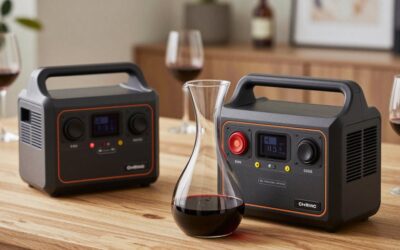
The EcoFlow Delta Pro 3 belongs to the heavyweight tier of portable power stations, the roughly 4kWh, expandable, high-output units that blur the line between a battery and a home backup system. This review focuses on the decisions that actually matter at this level: output voltage, expansion, and whether a portable of this size can realistically replace a standby generator for your situation.
The case for a 4kWh expandable station
Once you cross into the 3600-4000Wh range with a 3000W+ inverter, you are no longer talking about camping. You are talking about running several circuits during a multi-day outage. The Delta Pro 3 class is built to chain extra batteries, sometimes reaching 12kWh or more, and to feed a subpanel through a compatible transfer device. That is the reason people cross-shop it against a small standby generator.

EF ECOFLOW DELTA Pro 3 Portable Power Station, 4096Wh, 4000W AC Output
Included for 'EcoFlow Delta Pro 3 Review: Whole-Home Backup Without a Transfer Switch?' because the listing specifies 4096Wh and 4000W AC Output, details this guide uses to compare options.
View on Amazon
EF ECOFLOW DELTA Pro 3 Solar Generator 4096Wh with 2X400W Solar Panels
Included for 'EcoFlow Delta Pro 3 Review: Whole-Home Backup Without a Transfer Switch?' as a relevant option in this category; details come from the product listing.
View on Amazon
EF ECOFLOW DELTA Pro 3 4096Wh Extra Battery, Expansion Lifepo4 Battery
Included for 'EcoFlow Delta Pro 3 Review: Whole-Home Backup Without a Transfer Switch?' because the listing specifies Expansion Lifepo4 Battery, details this guide uses to compare options.
View on Amazon
EF ECOFLOW Power Station 4096Wh DELTA Pro 3 with 400W Portable Solar Panel
Included for 'EcoFlow Delta Pro 3 Review: Whole-Home Backup Without a Transfer Switch?' as a relevant option in this category; details come from the product listing.
View on AmazonWhy 240V output changes the math
Many large loads in North American homes, well pumps, some water heaters, and dryers, need 240V. Units in this class can often pair two together or provide a native 240V mode, which lets them start and run a deep well pump that a single 120V station cannot. If you have a well, this capability is the single biggest reason to choose this tier.
| Load scenario | Approx. energy per day | Coverage from 4kWh |
|---|---|---|
| Fridge + freezer + lights + internet | 2.5-3.5 kWh | Just over one day |
| Above + intermittent well pump | 4-5 kWh | Under one day; add battery |
| Fridge only (conservative) | 1-1.5 kWh | 2.5-4 days |
| Space heater 1500W continuous | 36 kWh | Not practical on battery alone |
What to evaluate before buying
Continuous inverter and surge
A 3000-3600W continuous inverter with a higher surge handles most household motor loads, but resistive heat (space heaters, electric ranges) will drain any battery fast because there is no cycling, the load is constant. Reserve battery power for refrigeration, medical devices, networking, and lights, and use fuel for heat.
Expansion and recharge strategy
The real value of this tier is modularity. Confirm how many expansion batteries the unit accepts and the total ceiling. Then plan recharge: high AC input for fast wall top-ups, and 1000W+ of solar so the bank refills during daylight in a prolonged outage. A battery that cannot refill is just a big UPS.
Transfer switch and subpanel integration
Plugging in extension cords works, but the clean solution is a manual transfer switch or a smart panel that lets you back-feed selected circuits safely. Never back-feed through a dryer outlet, that is dangerous and illegal in most places.
Portable battery versus standby generator
A standby generator runs indefinitely on natural gas or a large propane tank and handles heat and AC. A 4kWh+ battery is silent, emission-free, needs no fuel, and installs in minutes, but its runtime is capped by stored energy plus solar. For silent overnight medical and refrigeration backup, the battery wins. For days of full-house power including climate control, fuel still wins. Many people end up with both.
FAQ
Can the Delta Pro 3 run a well pump?
If configured for 240V output, this class can start and run many 1/2 to 1 HP well pumps, provided the surge rating covers the pump inrush. Verify your pump horsepower and locked-rotor amps before relying on it.
How long will it back up a fridge and freezer?
Refrigeration typically averages 100-200W combined for a fridge and chest freezer, drawing 2.5-4.5kWh per day. A 4kWh station covers roughly a day; add one expansion battery or solar to reach multi-day coverage.
Building a phased backup system
One reason the 4kWh expandable tier appeals is that you do not have to buy everything at once. A sensible path is to start with the base unit and a manual transfer switch feeding your most critical circuits, refrigeration, furnace blower, well pump, and a few outlets, then add an expansion battery and solar as budget allows. Each stage delivers real capability, and the platform grows with you instead of forcing a single large purchase.
Sizing solar to actually keep up
A common mistake is buying a huge battery and skimping on panels. In a multi-day outage, the battery is only as good as your ability to refill it. For a 4kWh system carrying refrigeration and essentials, 1000-1600W of solar can replace most of a day’s energy in good sun, turning a fixed battery into effectively unlimited daytime power. Match panel voltage to the unit’s MPPT window so you actually hit those input numbers.
Where 240V pairing pays off
If you have a well or a 240V appliance you cannot live without, verify how the unit achieves 240V, native mode or pairing two units, before buying, and confirm the combined surge covers your pump’s locked-rotor draw. A soft-start device on some loads reduces inrush and frees capacity for other circuits, which can be the difference between a system that trips and one that runs smoothly.
Maintenance for a decade of service
LFP packs reward gentle habits: avoid sitting at 100% for months, keep the unit cool, and cycle it occasionally rather than letting it languish. Done right, this tier delivers a decade or more of silent backup, which is what justifies its premium over a cheaper, shorter-lived alternative.
Bottom line
The Delta Pro 3 class is for households that want silent, expandable, potentially 240V-capable backup and are willing to manage energy budgets. Size it by daily kWh, insist on enough inverter surge and solar input, and pair it with a proper transfer device. As a battery it excels, just do not expect it to run electric heat or central AC for days without a fuel-burning partner.

Write Your Review
No reviews yet. Be the first to share your experience!