
🛒 Best Price Today on Amazon
Prime members get fast, free shipping on everything above, plus member-only deals. New members get a 30-day free trial — cancel anytime.
Small power stations live or die on one question: does this box do something a large USB power bank cannot? The River 3 is aimed at people who want AC outlets, a fast wall recharge, and uninterruptible-power behavior at a size you can toss on a desk or a car seat. It sits in the roughly 250Wh class, with an AC output around 300W and a boost mode for simple resistive loads. That is modest, and it is priced accordingly. This review treats it as a purchase decision for three specific jobs: desk UPS, CPAP backup, and light travel, and shows where a buyer gets real value and where they are paying for a label.
The job it is designed for
A 250Wh-class station is a sprint device. It keeps small electronics alive for hours, not days. The River 3 line has leaned into low-latency switchover, meaning it can sit plugged into the wall with a router or small computer attached and take over within milliseconds when the grid drops. That makes it a cheap alternative to a traditional desktop UPS, with the bonus of being portable afterward.
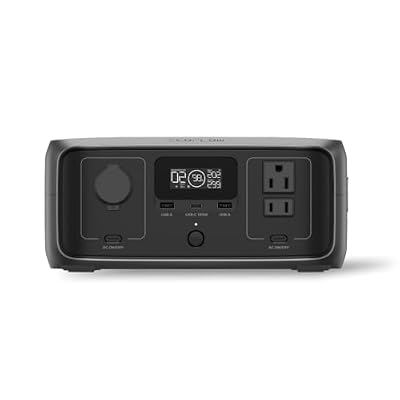
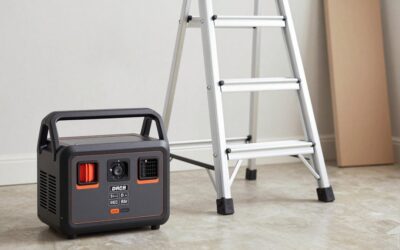
EF ECOFLOW Portable Power Station RIVER 3 230,230 Wh,550W Up to 600W
Included for 'EcoFlow River 3 Review: Is It Worth Buying in 2026?' because the listing specifies 230 Wh and 550W Up to 600W, details this guide uses to compare options.
View on Amazon
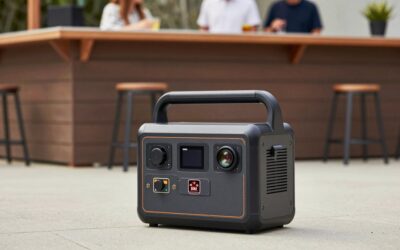
EF ECOFLOW Portable Power Station River 3 Max, 572Wh 990W
Included for 'EcoFlow River 3 Review: Is It Worth Buying in 2026?' because the listing specifies 572Wh 990W, details this guide uses to compare options.
View on Amazon
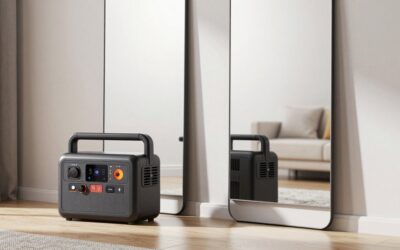
EF ECOFLOW Portable Power Station River 3 Plus, 286Wh 760W
Included for 'EcoFlow River 3 Review: Is It Worth Buying in 2026?' because the listing specifies 286Wh 760W, details this guide uses to compare options.
View on Amazon
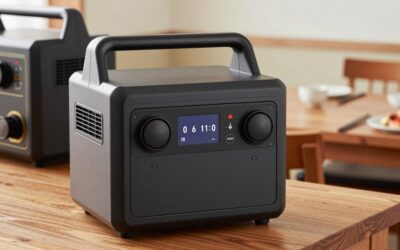
EF ECOFLOW Portable Power Station RIVER 2 Pro, 768Wh 800W
Included for 'EcoFlow River 3 Review: Is It Worth Buying in 2026?' because the listing specifies 768Wh 800W, details this guide uses to compare options.
View on AmazonUsable energy, honestly
After inverter losses, plan on roughly 200 to 215Wh from the AC outlets. USB-C and 12V outputs skip the inverter and waste less, so charging a laptop by USB-C directly stretches the battery further than plugging its brick into the AC socket.
| Device | Typical draw or battery | What 210Wh usable gets you |
|---|---|---|
| Smartphone | ~12-15Wh per charge | 13-16 full charges |
| Laptop via USB-C | ~55Wh battery | 3-4 full charges |
| Router + ONT | 18W | ~11 hours |
| CPAP without humidifier | 35W | ~6 hours (one short night) |
| Mirrorless camera battery | ~16Wh | 12-13 charges |
| 12V cooler (cycling) | 25W average | ~8 hours |
Is it worth it as a desk UPS?
A conventional 600VA line-interactive UPS often costs $80 to $150 and gives a desktop 5 to 15 minutes to shut down. The River 3 costs more, but a router and a laptop dock can run for hours rather than minutes, and it doubles as camping gear. For remote workers whose biggest risk is losing internet during a 2-hour outage, it is genuinely better value than a lead-acid UPS whose battery needs replacing every 3 to 5 years.
Where it falls short at the desk
A gaming desktop pulling 300 to 500W under load will exceed or nearly exceed the inverter. Pair the River 3 with a laptop or mini PC, not a high-wattage tower.
CPAP backup: good with conditions
A CPAP without a heated humidifier or heated hose typically averages 30 to 60W. The River 3 covers one night at the lower end of that range. Turn on the humidifier and draw can jump to 80 to 100W, cutting runtime to around 2 to 3 hours. Users who depend on the humidifier should budget for a 500Wh-plus unit or a DC cable that bypasses the inverter entirely.
Travel and vehicle use
At around 8 pounds, this class travels easily. A 12V car socket delivers roughly 100 to 120W, which refills 250Wh in about 2.5 to 3 hours of driving. A single 100W portable panel produces about 350 to 400Wh on a 5 peak-sun-hour day before losses, enough to fully refill it with margin, which makes it a tidy small solar kit for weekend camping.
What it will not do
It will not run a hair dryer, coffee maker, or space heater for any useful length of time, even with boost mode. Boost lowers voltage to keep resistive loads from tripping the inverter, which means a kettle heats slowly and drains the battery in minutes.
FAQ
Is the River 3 enough for a power outage?
For phones, a router, a fan, and lights over one evening, yes. For a refrigerator, freezer, or anything with a motor that runs for hours, no; that job needs at least 700Wh to 1kWh.
Should I buy the River 3 or a big power bank?
Buy the River 3 if you need AC outlets or UPS switchover. If everything you own charges over USB-C, a 25,000 to 27,000mAh bank at around 90 to 100Wh is lighter and much cheaper.
Bottom line
The River 3 is worth buying as a portable UPS for a home office, a light CPAP backup without humidification, or a small solar camping kit. It is not worth buying as your only outage plan for a household. Think of it as a smart accessory that makes short outages painless, then add a larger station later if fridge coverage becomes the goal.



Write Your Review
No reviews yet. Be the first to share your experience!