
🛒 Best Price Today on Amazon
Prime members get fast, free shipping on everything above, plus member-only deals. New members get a 30-day free trial — cancel anytime.
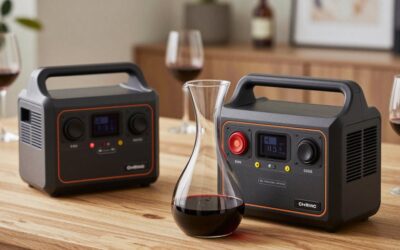
A 3000Wh power station is far more battery than one CPAP needs, and that is exactly why people buy it. The extra capacity lets a household keep therapy running for a week-long outage, support two sleepers on CPAP, or keep a CPAP going while the same battery also runs a refrigerator, oxygen concentrator charging or a fan. On CPAP alone, a 3kWh-class station typically covers about 5 to 10 nights with the humidifier on and well beyond two weeks without it. The useful questions are how to share the battery and how to plan for a long event.
Nightly energy for common setups
A CPAP’s blower is modest; the heated humidifier and heated tube are the big draws. Typical averages over an 8-hour night are shown below against roughly 2,550Wh of usable AC energy from a 3,000Wh unit.
| Household setup | Energy per night | Nights on ~2,550Wh |
|---|---|---|
| One CPAP, no humidifier | about 120 to 240Wh | about 10 to 21 nights |
| One CPAP, humidifier on | about 300 to 700Wh | about 3.5 to 8.5 nights |
| Two CPAPs, humidifiers on | about 600 to 1,400Wh | about 2 to 4 nights |
| One CPAP plus a full-size fridge | about 1.6 to 2.2kWh per day | about 1.2 to 1.6 days |
Use these as planning ranges. A test night at home is the only way to know your real number.
Planning for a multi-day outage
Rank your loads
Write down every device you might run and give each a priority. Therapy comes first. Phones and a radio for information come next. Food storage is valuable but can be managed with coolers and ice if needed. That ranking tells you what to unplug when the battery drops below, say, 40 percent.
Set a nightly reserve
A simple rule: never let the station fall below enough charge for one more full night of CPAP. If a night with the humidifier costs you 20 percent, keep at least 20 to 25 percent in reserve during the day. Daytime loads get whatever remains.
Recharge on a schedule
With solar, recharge during the middle of the day when harvest peaks. A 3kWh-class unit often accepts 1,000W or more of solar input, and even a few hundred watts of panels can replace a CPAP’s nightly use on a decent day. With a fuel generator, run it for a few hours in daylight to top up the station, then shut it off before bed.
Generator safety matters more for sleepers
People who are asleep cannot react to early carbon monoxide symptoms such as headache or dizziness. If you use a gas or propane generator to recharge the station, run it only outdoors, at least 20 feet from the house, with the exhaust pointed away from bedroom windows, doors and vents. Never run it in a garage, basement, crawl space, shed or on a porch. Install battery-backed CO alarms outside every sleeping area and on each level. Switching the generator off before bedtime and letting the silent battery carry the night is a genuinely safer routine.
Getting more nights from the same battery
- Use an approved DC cord. Running the CPAP from the station’s 12V port through the manufacturer’s DC cable avoids the double conversion of AC power and adapter, often adding 20 to 40 percent runtime.
- Warm the bedroom slightly or use a lower humidity setting. In a cold room the humidifier works much harder. Only lower humidity if your clinician agrees it is appropriate.
- Turn off the inverter when it is not needed. Large stations draw noticeable standby power with the AC output switched on, even with nothing plugged in.
- Disable auto-shutoff on the port you use so a low-draw CPAP does not get cut off mid-night.
Paperwork worth doing now
Ask your CPAP supplier whether your model has an approved DC cord or battery accessory. Some utilities keep a medical-needs or life-support registry that can bring advance outage notices or other help; check your utility’s website. Keep a printed copy of your prescription settings with the station in case you need a replacement machine.
FAQ
Is 3000Wh overkill for CPAP?
For CPAP alone, yes; a 1kWh unit covers a few nights. A 3kWh-class unit makes sense when you want a week of therapy, two users, or CPAP plus a fridge and other essentials from one battery.
Can I use UPS or pass-through mode for CPAP?
Many stations switch over in roughly 10 to 30 milliseconds, which most CPAPs handle without interruption. Check both the station’s current spec sheet and your CPAP manual.
Bottom line
A 3000Wh-class station typically runs one CPAP with the humidifier for about 5 to 8 nights, far longer on the blower alone, and it can keep therapy going for a whole household through a multi-day outage. Set a nightly reserve, use an approved DC cord, recharge in daylight, keep any generator 20 feet from the house, and confirm the station’s usable capacity on its current spec sheet.
Write Your Review
No reviews yet. Be the first to share your experience!