
🛒 Best Price Today on Amazon
Prime members get fast, free shipping on everything above, plus member-only deals. New members get a 30-day free trial — cancel anytime.
You already own the generator, and it is louder than you would like. Maybe the neighbors complained during the last outage, maybe you use it for a food truck, an outdoor event or a backyard workshop, or maybe you simply cannot sleep with it droning outside. You cannot turn a contractor generator into a whisper-quiet inverter, but you can often cut perceived noise significantly with placement, barriers and a few inexpensive tweaks. This guide covers the techniques that actually work, roughly how much each one helps, and the dangerous shortcuts to avoid, especially anything that traps exhaust or heat.
Start with the physics
Two principles drive nearly all noise reduction. First, distance: each time you double the distance from a generator, sound level falls by roughly 6 dB in open air. Second, line of sight: a solid barrier between the generator and the listener blocks direct sound and can cut several decibels, more for high frequencies than low rumble. Everything else is secondary.
Techniques ranked by typical impact
| Technique | Typical reduction at the listener | Approx. cost | Caveats |
|---|---|---|---|
| Double the distance (e.g., 20 ft to 40 ft) | ~6 dB | Longer, heavier cord: ~$50–150 | Needs thicker cord to limit voltage drop |
| Point exhaust and engine side away from listeners | ~3–6 dB | Free | Exhaust must still aim away from any building openings |
| Solid barrier breaking line of sight | ~5–10 dB | Plywood + insulation: ~$50–200 | Must leave open airflow; never enclose |
| Rubber anti-vibration pads or soft ground | ~1–3 dB, less rattle | ~$15–40 | Keep the unit level and stable |
| Run in eco mode or at lower load (inverters) | ~3–8 dB | Free | Only helps inverter models |
| Manufacturer-approved quiet muffler or spark arrestor muffler | ~2–5 dB | ~$30–150 | Only use parts rated for your engine |
| Commercial ventilated generator enclosure | ~5–15 dB | ~$300–1,500+ | Buy only designs made for running generators |
Reductions do not add up perfectly; combining distance, orientation and a barrier often yields a noticeable improvement.
Placement: the free wins
Move it farther away
The minimum is 20 feet from your house, but you can go farther from neighbors’ bedrooms. Moving from 25 to 50 feet can make a generator sound roughly two-thirds as loud. Longer runs require heavier cords to keep voltage up.
Turn it around
The exhaust and engine sides are louder than the control panel side. Face the quieter side toward neighbors, and point the exhaust toward open space, never toward your own or anyone else’s doors, windows or vents.
Avoid hard reflecting surfaces
A generator set against a fence, wall or between two houses bounces sound back toward listeners. Open ground or grass reduces reflections.
Building a sound barrier the safe way
A barrier is a wall, not a box. A simple design is two or three panels of plywood or cement board, lined with mineral wool on the generator side, arranged as a partial wall between the generator and the listener. Leave the top and at least one side fully open. Keep the barrier at least 3 to 4 feet from the generator so air circulates freely and hot exhaust does not scorch the panels. Taller and wider barriers work better; a barrier that just barely hides the generator does less than one that extends well past it.
What not to do
- Never fully enclose a generator in a homemade box. Overheating can damage the engine and create a fire hazard, and carbon monoxide can build up.
- Never move the generator into a garage, shed, porch or crawl space to quiet it. Carbon monoxide can reach deadly levels quickly, even with doors open.
- Do not attach hoses or pipes to the exhaust to route it farther away unless the product is designed and approved for your generator.
- Do not modify or remove the muffler or spark arrestor; it can increase noise, fire risk and may be illegal on public land.
Reduce load, reduce noise
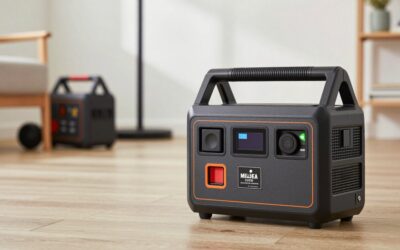
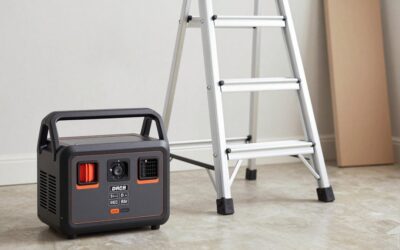
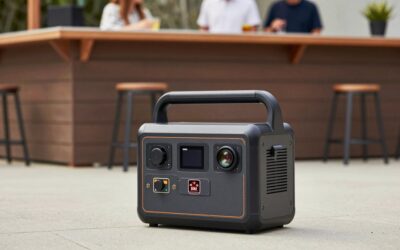
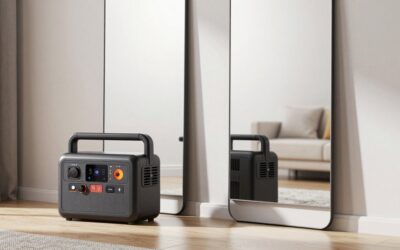
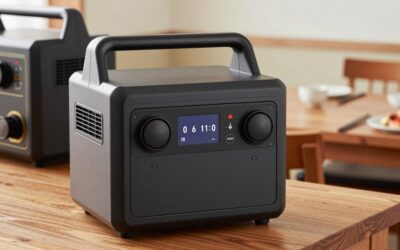
Generators get louder as load increases. Staggering high-draw appliances, turning off unnecessary loads, and cycling the generator to cover refrigeration can lower average noise and fuel use together. Inverter generators in eco mode throttle down dramatically at light load. A battery power station can cover overnight loads so the engine is off during quiet hours.
Be a good neighbor
Tell neighbors when you expect to run the generator and for how long. Offer to charge their phones. Respect local noise ordinances and HOA rules, many of which set quiet hours overnight. People tolerate noise far better when they know it has a purpose and an end.
FAQ
Do generator quiet boxes really work?
Commercial enclosures designed for running generators, with engineered ventilation and exhaust paths, can reduce noise substantially. Homemade sealed boxes are dangerous because they trap heat and exhaust. If you buy an enclosure, confirm it is designed for your generator’s size and airflow.
Will a car muffler make my generator quieter?
Adapting automotive mufflers can change exhaust back-pressure and heat, risk engine damage, and create fire hazards. Stick with manufacturer-approved mufflers and spark arrestors.
Bottom line
Distance and line of sight do most of the work: move the generator farther from listeners, face the quiet side toward them, and put a ventilated barrier wall between. Add vibration pads, lower loads and eco mode for a bit more. Never enclose a generator or bring it closer to a building to muffle it; carbon monoxide safety always comes before quiet.





Write Your Review
No reviews yet. Be the first to share your experience!