
🛒 Best Price Today on Amazon
Prime members get fast, free shipping on everything above, plus member-only deals. New members get a 30-day free trial — cancel anytime.
For camping, the generator-versus-power-station decision is less about raw watts and more about noise, campground rules, and the kind of trip you take. A family car camping at a developed site for a long weekend has different needs than a group spending ten days at a dispersed spot with a trailer. The good news is that the most common camping loads are small, and a mid-size power station now covers what many people used to buy a generator for. The table and scenarios below show where each option makes sense.
Typical camping loads and daily energy use
| Camping load | Watts while running | Daily energy (approx.) |
|---|---|---|
| 12V compressor fridge/cooler | 40–60W cycling | 300–700Wh |
| LED lantern or string lights | 5–20W | 30–100Wh |
| Phone and camera charging | 10–30W | 50–150Wh |
| Laptop | 45–90W | 100–300Wh |
| CPAP without humidifier | 30–60W | 250–500Wh |
| Tent fan | 10–30W | 50–250Wh |
| Electric kettle or coffee maker | 800–1,500W | 100–250Wh |
| Electric griddle | 1,200–1,500W | 300–600Wh |
A typical weekend without cooking appliances uses 500 to 1,200Wh per day. Add a CPAP and laptop and you reach 1,000 to 1,500Wh. Heating and cooking are what push you toward a generator.

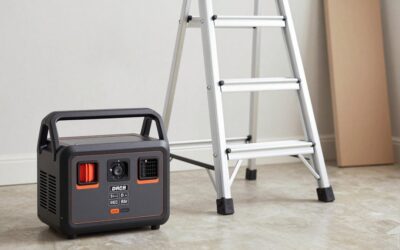
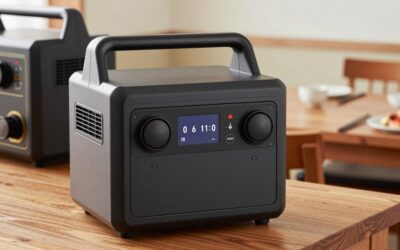
Jackery Explorer 300 Portable Power Station,292Wh
Included for 'Best Power Solution for Camping Trips: Generator or Power Station?' because the listing specifies 292Wh, details this guide uses to compare options.
View on Amazon
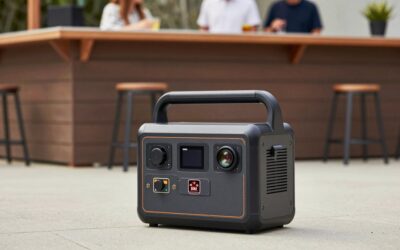
EnginStar Solar Generator, 300W Portable Power Station, 296Wh Lithium Battery Backup w/Two 110V Pure Sine Wave AC Outlet for Camping Road Trip RV, 80000mAh Sufficient Power Supply for Blackout
Included for 'Best Power Solution for Camping Trips: Generator or Power Station?' because the listing specifies 300W Portable Power Station and 80000mAh Sufficient Power Supply for Blackout, details this guide uses to compare options.
View on Amazon
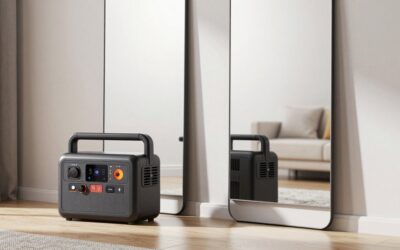
Westinghouse iGen400s 400 Watt, 183Wh Portable Power Station and Solar Generator with LED Display and DC Outlet for Camping, Home, Travel, Indoor/Outdoor Use (Solar Panel Not Included)
Included for 'Best Power Solution for Camping Trips: Generator or Power Station?' because the listing specifies Home and Travel, details this guide uses to compare options.
View on Amazon
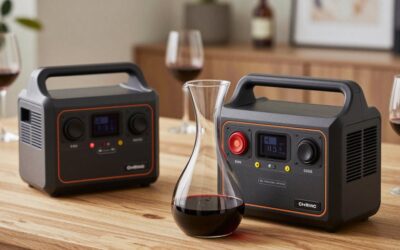
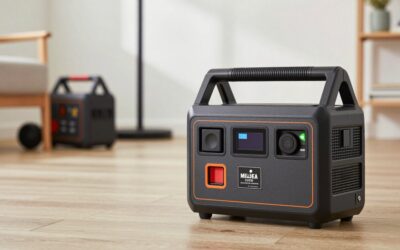
Portable Power Station 600W, 293Wh Camping Lithium Battery
Included for 'Best Power Solution for Camping Trips: Generator or Power Station?' because the listing specifies 293Wh Camping Lithium Battery, details this guide uses to compare options.
View on AmazonCampground rules shape the decision
Many developed campgrounds set generator hours, often limiting use to a morning and evening window and banning engines during quiet hours, commonly 10 p.m. to 6 or 8 a.m. Some parks also set noise limits, frequently around 60 decibels measured at 50 feet, which effectively rules out most open-frame generators. Tent-only loops and walk-in sites often prohibit generators entirely. A power station is allowed virtually everywhere because it makes no engine noise and produces no exhaust.
Where a power station wins
Quiet, tent-friendly, and simple
A 500 to 1,000Wh station runs a 12V fridge, lights, phones, and a fan for a two-to-three-day trip on a single charge. At 12 to 25 lb, it fits in the car next to the cooler. There is no fuel to carry, no oil to check, and no fumes near the tent, which matters when kids and dogs are around.
Running a CPAP overnight
A CPAP is the classic reason campers buy power, and it is exactly where stations shine: silent, indoor safe, and consistent. A 500Wh station runs most CPAPs without heated humidification for two to four nights.
Solar top-ups
A 100 to 200W folding panel returns 300 to 750Wh on a sunny day, enough to make a mid-size station effectively unlimited for light loads during a week-long trip.
Where a generator wins
Longer trips with high-draw appliances
If your camp runs a microwave, electric griddle, space heater, or trailer air conditioner, energy needs climb to 3 to 10 kWh per day. A 2,000 to 3,500W inverter generator produces that from a gallon or two of gasoline, which is far lighter and cheaper than equivalent battery capacity.
Trailers and group camps
A travel trailer with a 13,500 BTU air conditioner needs roughly 1,300 to 1,800W running and more to start; a 3,000W-class inverter, or two 2,000W units in parallel, is the usual answer.
Direct comparison for a four-day family trip
| Factor | 2,000W inverter generator | 1,000Wh power station + 200W panel |
|---|---|---|
| Noise | 50–60 dBA at 23 ft | Silent (fan hum while charging) |
| Allowed during quiet hours | No | Yes |
| Runs coffee maker or griddle | Yes | Yes, but uses 15–60% of capacity per use |
| Runs 12V fridge 4 days | Yes, with daily runs | Yes, with sun |
| Weight | 40–55 lb plus fuel | 22–30 lb plus 10–15 lb panel |
| Ongoing costs | Fuel, oil, maintenance | None |
Matching the choice to your camping style
- Tent camping at developed sites: power station, 500 to 1,000Wh.
- Car camping with CPAP or fridge for a week: 1,000 to 1,500Wh station plus 200W of solar.
- Pop-up or small trailer, mild weather: 1,500 to 2,000Wh station, solar on the roof.
- Trailer with air conditioning or group camp kitchen: 2,000 to 3,500W inverter generator, optionally with a station for night loads.
FAQ
Can a power station run a coffee maker at camp?
Yes, if its inverter rating exceeds the coffee maker’s wattage. A 900W drip coffee maker brewing for 8 to 10 minutes uses around 120 to 150Wh, so a 1,000Wh station handles it daily, but it takes a noticeable bite from the battery.
Are inverter generators quiet enough for campgrounds?
Small inverter generators often run at 50 to 58 dBA at 23 feet at light load, which is typically within campground limits during allowed hours. They still cannot run during quiet hours.
Bottom line
For most camping trips, a 500 to 1,500Wh power station plus a folding solar panel is the best choice: silent, allowed during quiet hours, and powerful enough for fridges, lights, CPAPs, and electronics. Choose a small inverter generator only if you run air conditioning, heat, or electric cooking, and treat a station as the overnight companion.
Write Your Review
No reviews yet. Be the first to share your experience!