
🛒 Best Price Today on Amazon
Prime members get fast, free shipping on everything above, plus member-only deals. New members get a 30-day free trial — cancel anytime.
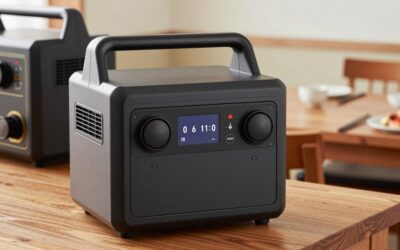
Boondocking means camping without hookups, relying on batteries, solar and whatever you can carry. The EcoFlow Delta 3 Plus is not built into an RV, but many van owners, truck campers and small-trailer owners use a portable station like it as their house battery. Its roughly 1kWh capacity, fast charging from multiple sources and expansion options make it a flexible fit for weekend and week-long trips. This guide explains what it can run off-grid, how to recharge on the road and where a built-in system is still better.
Relevant specs
Confirm against EcoFlow’s current spec sheet: about 1,024Wh LiFePO4, 1,800W continuous output with an X-Boost mode for resistive loads, dual solar inputs totaling around 1,000W, fast AC charging, an 800W Alternator Charger option and expansion to around 5kWh with compatible extra batteries. EcoFlow advertises near-silent operation at light loads.
Daily energy use for a boondocking rig
| Load | Typical use | Daily energy |
|---|---|---|
| 12V compressor fridge (50-60L) | 24 hours, cycling | ~300-500Wh |
| LED lights | 5 hours | ~50Wh |
| Roof vent fan | 8 hours at medium | ~100-150Wh |
| Laptop and phones | remote work day | ~200-300Wh |
| Water pump | short bursts | ~20Wh |
| Induction cooktop or microwave | 20 minutes | ~400-500Wh |
A frugal setup without electric cooking uses 700 to 1,000Wh per day, roughly a full Delta 3 Plus. Cooking with electricity pushes that higher, so many boondockers cook with propane.
Recharging off-grid
Solar
With dual inputs, the Delta 3 Plus can accept roughly 1,000W of solar in total, far more than most roof arrays. A 200 to 400W portable or roof setup typically yields 0.8 to 2kWh on a clear day, enough to replace daily use in good weather.
Alternator charging
EcoFlow’s 800W Alternator Charger can refill the battery during a few hours of driving, which is useful when camping in shaded forests. It requires proper installation; follow the vehicle and charger instructions or use a qualified installer.
Generator
If you carry a small inverter generator, run it well away from your rig and other campers, never under an awning or inside a toy hauler, and keep a working CO alarm in the RV. Check campground and land-management rules for generator hours.
What it will not do well
- RV roof air conditioner: a 13,500 BTU roof unit draws roughly 1,200 to 1,600W running and surges much higher; the Delta 3 Plus may not start it, and would run it for under an hour if it did.
- Integration: it does not replace a wired RV battery bank without a proper setup. Plugging your RV’s shore cord into the power station can work for 120V loads using the correct adapter, but it won’t charge the RV’s own 12V battery unless the converter does so. Consult an RV technician for permanent wiring.
- Cold camping: LiFePO4 should not be charged below freezing; keep the unit inside the heated cabin.
Storage and securing
At a little under 30 pounds (check the current spec sheet), the Delta 3 Plus is portable but should be strapped down while driving. Keep it out of direct sun behind a windshield; interior temperatures in a parked van can exceed 130°F. For storage between trips, many owners keep it at a partial charge and top it up before departure.
A sample four-day desert trip
Consider a van with a 50L 12V fridge, roof fan, lights and a laptop for light work, totaling about 900Wh per day. With the Delta 3 Plus alone and a 400W solar array, clear desert days produce 1.8 to 2.2kWh, so the battery climbs back to full by mid-afternoon each day. Adding an extra battery would provide a buffer for a dusty or overcast day. Without solar, the same setup would run out by the second morning, which is why solar input is the feature that matters most here. Park so panels face south, clean dust from panels each morning and track daily solar yield in the app.
FAQ
How many days can I boondock on one charge?
With a 12V fridge, lights, fans and phones, about one day without recharging. With 200 to 400W of solar in good sun, indefinitely.
Is an extra battery worth it?
If you work remotely or camp in cloudy areas, yes. Doubling storage gives you a two-day buffer before you need sun or driving.
Bottom line
The EcoFlow Delta 3 Plus is a good boondocking battery for vans, truck campers and small trailers with modest loads. It handles a 12V fridge, fans, lights and laptops comfortably, recharges fast from solar or an alternator charger, and expands when trips get longer, but it isn’t a solution for running RV roof air.





Write Your Review
No reviews yet. Be the first to share your experience!