
🛒 Best Price Today on Amazon
Prime members get fast, free shipping on everything above, plus member-only deals. New members get a 30-day free trial — cancel anytime.
Most portable power stations stop at 120V, which leaves the loads that make a hurricane outage truly miserable, like well pumps and central air, out of reach. The Anker SOLIX F3800 Plus is one of the portable units built to cross that line, with split-phase 120/240V output and a battery that can grow well past a full day of household use. For coastal homeowners, that changes the conversation from “what can we live without” to “what size system do we want.”
What the F3800 Plus is
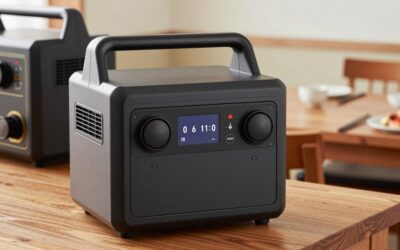
Anker lists about 3,840 Wh of LFP capacity in the base unit, roughly 6,000 W of continuous output with a higher peak, a 120/240V NEMA L14-30 outlet and standard 120V outlets, dual high-voltage solar inputs totaling up to about 3,200 W, and expansion to roughly 26.9 kWh with add-on batteries. It weighs about 137 pounds and rides on wheels. Always confirm the current spec sheet before designing a home connection.
Why 240V matters after a hurricane
Many coastal and rural homes rely on a well pump for water, and those are often 240V. Without water, you have no flushing, washing or drinking supply from the tap. The F3800 Plus can feed a 240V circuit through an electrician-installed transfer switch or inlet, so water can keep flowing. Central air is also technically 240V, but start-up surge and energy use are the constraints there, as the table shows.
| Load | Typical running watts | Daily energy in hot weather | Base unit share (about 3.3 kWh usable) |
|---|---|---|---|
| Refrigerator + chest freezer | 150–300 avg combined | 2.5–4 kWh | 75–120% |
| 1 HP well pump (240V), 1 hr total run | 1,000–1,500 | 1–1.5 kWh | 30–45% |
| Window AC 10,000 BTU, 8 hrs | 800–1,000 | 6.5–8 kWh | 200%+ |
| 3-ton central AC, 6 hrs | 3,000–3,800 | 18–23 kWh | not realistic on base unit |
The table shows why this is a platform, not a single product. The base unit covers refrigeration and water for about a day. Two or three expansion batteries plus solar make one cooled bedroom realistic. Central AC requires the full expansion stack plus strong solar, and even then you will run it in limited blocks.
Solar recovery after the storm
The high-voltage solar inputs let you connect large arrays. With 2,000 W of panels in clear coastal sun, figure roughly 8 to 10 kWh per day. That is enough to sustain refrigeration, water and a cooled bedroom indefinitely once skies clear. Panels must be stored or secured before the storm; set them up only after winds drop.
Weight and flood planning
At roughly 137 pounds, this is not something you carry upstairs in a hurry. If your home is in a flood zone, plan its permanent spot above expected water levels from the start, and discuss placement with your electrician when installing the transfer switch.
Safety essentials
- A licensed electrician should install the transfer switch or interlock and inlet. Never backfeed through an outlet; it can energize downed lines and kill utility crews.
- The F3800 Plus itself produces no fumes. If you also use a gas generator to charge it, keep that generator at least 20 feet from the house, never in a garage, carport or porch, exhaust aimed away from openings.
- Install battery CO alarms on every level. Post-hurricane generator CO deaths are tragically common.
- Keep the unit in a cool, dry space; heat and humidity are hard on electronics.
Budgeting the full system
The unit itself is only part of the cost. A realistic hurricane-ready setup includes the base unit, one or two expansion batteries, a transfer switch or interlock with inlet installed by an electrician and a solar array with mounting or ground stands. Get a quote for the electrical work early in the year; electricians in coastal areas are booked solid once a storm appears in the forecast. Spreading purchases across the off-season also lets you catch the discounts these units often see outside peak demand.
FAQ
How many expansion batteries do I need for hurricane season?
For refrigeration and water only, the base unit plus one expansion battery gives roughly two days without sun. Add a second if you want a cooled bedroom. Measure your own loads to fine-tune.
Can I charge it from my existing gas generator?
Anker says the F3800 Plus can accept input from a 240V generator. That lets a generator run briefly while the battery handles quiet hours, cutting fuel use substantially.
Bottom line
The Anker SOLIX F3800 Plus is a strong hurricane-season choice for homeowners who need 240V loads, particularly well pumps, and want a system that scales with expansion batteries and large solar arrays. It is heavy and expensive, and it needs professional installation to integrate with the house. For renters or people who only need a fridge and phones, a smaller 120V station makes more sense.

Write Your Review
No reviews yet. Be the first to share your experience!