
🛒 Best Price Today on Amazon
Prime members get fast, free shipping on everything above, plus member-only deals. New members get a 30-day free trial — cancel anytime.
Hurricane outages are different from the typical two-hour blackout. After a strong storm, power can be out for days to weeks, fuel stations may be closed or have long lines, and heat and humidity make refrigeration and cooling a health issue. Choosing backup power for hurricane season means planning for multi-day runtime, fuel logistics, and the heat, not just the wattage. This guide breaks down which types of power stations and generators fit which households, with sizing math you can apply to your own home.
What a hurricane outage really demands
- Duration: Plan for at least 3 to 7 days; coastal areas hit hard may see longer.
- Refrigeration: Food safety is a priority; a fridge kept closed holds safe temperatures for roughly 4 hours after power loss, a full freezer about 48 hours.
- Heat relief: Fans at minimum; a window AC or mini-split for one room if possible.
- Communications: Phones, radios, and internet where service exists.
- Medical devices: CPAP, oxygen concentrators, insulin refrigeration.
Match power type to household
| Household situation | Recommended setup | Typical capacity range | Price range (broad) |
|---|---|---|---|
| Apartment/condo, no outdoor space | Power station + solar panels | 1-3 kWh, 1,500-2,400 W | ~$600-$2,000 |
| Small home, essentials only | Inverter generator 2,000-3,500 W + mid-size station | Gen + 1-2 kWh | ~$1,000-$2,500 |
| Family home, fridge + fans + window AC | Dual-fuel generator 5,000-8,000 W with transfer switch | Running 4,000-7,000 W | ~$800-$1,800 + install |
| Whole-home backup, well pump, central AC | Large home battery or standby generator | 10+ kWh battery or 14 kW+ standby | Several thousand dollars+ |
Prices change often; check current listings and spec sheets.

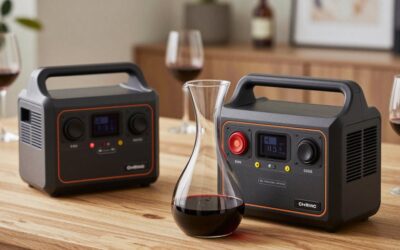
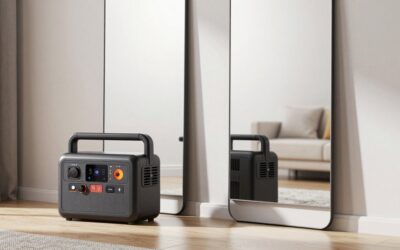
Jackery Explorer 300 Portable Power Station,292Wh
Included for 'Hurricane Season 2026: Best Power Stations and Generators for Storm Prep' because the listing specifies 292Wh, details this guide uses to compare options.
View on Amazon
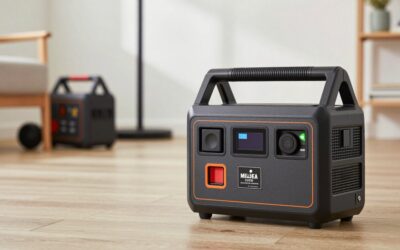
Jackery Explorer 1000 v2 Portable Power Station,1070Wh,1500W
Included for 'Hurricane Season 2026: Best Power Stations and Generators for Storm Prep' because the listing specifies 1070Wh and 1500W, details this guide uses to compare options.
View on Amazon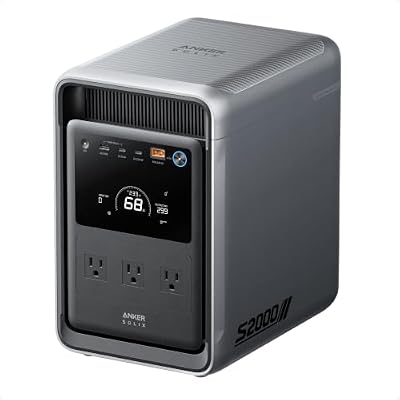
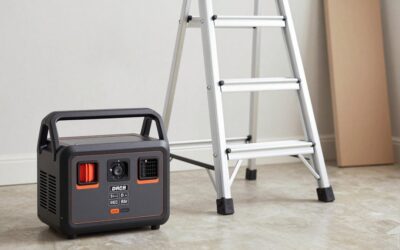
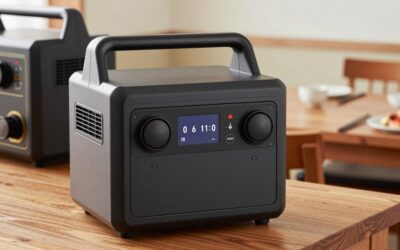
Anker SOLIX S2000 Portable Power Station, 2,010Wh, 1,500W
Included for 'Hurricane Season 2026: Best Power Stations and Generators for Storm Prep' because the listing specifies 010Wh and 500W, details this guide uses to compare options.
View on Amazon
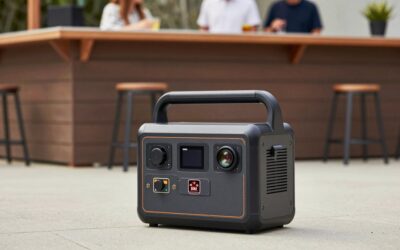
BLUETTI Portable Power Station AC180, 1152Wh LiFePO4 Battery Backup w/ 2 1800W (2700W peak) AC Outlets, 0-80% in 45Min, Solar Generator for Camping, Off-grid, Power Outage
Included for 'Hurricane Season 2026: Best Power Stations and Generators for Storm Prep' because the listing specifies 0-80% in 45Min and Solar Generator for Camping, details this guide uses to compare options.
View on AmazonWhy dual-fuel matters for hurricanes
Gasoline disappears quickly before and after a storm, and stored gas goes stale. Propane stores indefinitely in cylinders, which you can fill weeks ahead. A dual-fuel generator gives flexibility, though output on propane is typically 5 to 15 percent lower. A 20-pound cylinder holds roughly 4.7 gallons and runs a mid-size generator at half load for several hours, often about 5 to 10 depending on the model, so plan for multiple cylinders.
Why a power station still belongs in the plan
Power stations run silently indoors, handle overnight loads without a running engine, and bridge the gaps while the generator is shut down to refuel or cool. A common strategy: run the generator 4 to 6 hours in the daytime to cool the fridge, pump water, and recharge the station; then run the fridge and fans from the station overnight. This can cut fuel use by a third or more compared with running the generator 24 hours.
Sizing example for a typical family
| Load | Running W | Daily Wh (estimate) |
|---|---|---|
| Refrigerator | 150-250 | 1,200-2,000 |
| Chest freezer | 80-150 | 500-900 |
| Two box fans | 100-150 | 1,200-1,800 (12 hrs) |
| Window AC, one room (8 hrs) | 600-900 | 4,800-7,200 |
| Lights, phones, router | 50-100 | 400-800 |
Without the AC, a family needs roughly 3 to 5 kWh per day. With a room AC, 8 to 12 kWh per day, which realistically requires a generator.
Safety: the leading cause of post-storm deaths is preventable
Carbon monoxide poisoning from generators kills people after nearly every major hurricane. Never run a generator indoors, in a garage, on a porch, or on a balcony, even with doors open. Keep it at least 20 feet from the home with exhaust pointed away from windows and doors, and install battery-backed CO alarms. Use a transfer switch or interlock; never backfeed through a dryer outlet. Do not operate generators in standing water.
Before the storm
- Test-run the generator and charge the station fully.
- Stock stabilized gasoline and fill propane cylinders.
- Stage outdoor-rated cords and a generator cover rated for operation in rain.
- Freeze water jugs to help the fridge hold temperature.
FAQ
Is a power station alone enough for a hurricane?
For essentials in an apartment, a 2 to 3 kWh station with 400 to 800 watts of solar can keep a fridge and phones going if sun returns after the storm. For AC or well pumps, you need a generator or a large home battery.
How much fuel should I store?
For a mid-size generator running 8 to 12 hours a day, plan roughly 3 to 6 gallons of gasoline per day or two to three 20-pound propane cylinders per day, stored safely outdoors or in a detached shed.
Bottom line
Plan for a week, not a night. Pair a dual-fuel generator with a power station to cut fuel use and run quietly overnight, size to your daily kWh, and treat CO safety as nonnegotiable.

Write Your Review
No reviews yet. Be the first to share your experience!