
🛒 Best Price Today on Amazon
Prime members get fast, free shipping on everything above, plus member-only deals. New members get a 30-day free trial — cancel anytime.
Plenty of boondockers do not need a house-sized battery. They need a quiet, portable power source that runs a fan, charges devices and maybe powers a 12V fridge for a long weekend at a trailhead or a desert pull-off. The Jackery Explorer 1000 v2 sits squarely in that lane. The question is whether 1 kWh is enough for your rig and your habits.
What you are working with
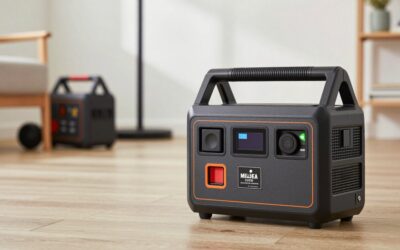
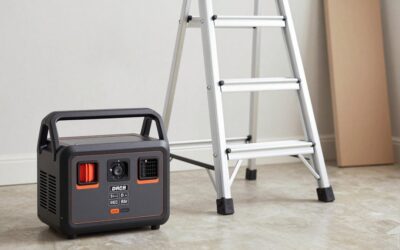
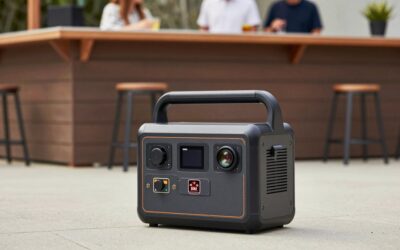
Jackery lists the Explorer 1000 v2 at about 1,070 Wh of LiFePO4 storage, around 1,500 W of continuous output with a 3,000 W surge, a weight near 24 pounds and up to roughly 400 W of solar input via two DC ports. It has three AC outlets, USB-C and USB-A ports and a 12V car socket. It is not expandable. Verify current specs before you buy.
Who it suits
Think about your rig in terms of daily watt-hours, not rig size:
| Setup | Typical daily draw | Days on one charge | With 200 W solar (summer) |
|---|---|---|---|
| Teardrop or rooftop tent: lights, phone, fan | 150–300 Wh | 3–6 | indefinite |
| Van or truck camper with 12V compressor fridge | 500–800 Wh | 1–2 | indefinite in good sun |
| Small travel trailer, propane fridge, water pump, TV | 600–1,000 Wh | about 1 | close to break-even |
| Laptop worker plus satellite internet | 1,200–2,000 Wh | under 1 | deficit; needs 400 W+ solar |
If you are in the first two rows, the Explorer 1000 v2 is a very good fit. In the third, it works for weekends. In the fourth, it is undersized.
What it will and will not run
Yes
- 12V compressor fridge via the car socket (usually more efficient than using AC).
- Induction hot plate or kettle for short bursts; 1,200 to 1,500 W loads are within the rating, but ten minutes costs about 250 Wh.
- Laptops, cameras, e-bike chargers, drone batteries.
No
- A rooftop air conditioner for any useful length of time.
- An absorption RV fridge on its electric element for more than a few hours.
- A 30A RV panel as primary power; you could use an adapter for light loads, but the RV’s converter overhead wastes much of the small battery.
Solar planning
With the full 400 W of panels in summer sun, expect roughly 1,400 to 1,800 Wh per day, more than enough to refill the station daily. A single 200 W folding panel returns about 700 to 1,000 Wh on a clear day. Point panels at the sun and move them twice a day; portable panels’ big advantage over roof panels is that you can park in shade and still collect sunlight.
Weight advantage
At about 24 pounds, it moves easily between the tow vehicle, the campsite table and the tent. You can run it at camp, then bring it home and use it for power outages. That dual use is where the 1 kWh class earns its value.
Living with it in camp
- Keep it shaded; heat above the mid-90s shortens battery life.
- In cold camps, bring it into the sleeping area overnight, as LiFePO4 generally won’t charge below freezing.
- Secure it before driving so it does not become a projectile.
If you camp near people using gas generators, remember that exhaust drifts. Even with a silent battery setup, keep a CO alarm in your van or trailer, and ask neighbors to keep generators at least 20 feet away from your rig.
Stretching one kilowatt-hour further
Small habits add up on a 1 kWh battery. Run the 12V fridge from the car socket instead of an AC adapter, set it a few degrees warmer and keep it out of direct sun. Charge laptops over USB-C rather than through their AC bricks, which avoids a double conversion. Turn off the AC inverter whenever nothing needs it; even a few watts of idle draw adds up over 24 hours. Together, these tweaks can add half a day of runtime on a typical trip.
FAQ
Can I charge it while driving?
Yes, from the vehicle’s 12V socket, but it is slow, often around 100 W. A long drive helps; a short one barely registers. A DC-DC charger is faster if your vehicle supports it.
Is it enough for a week off-grid?
For light users with a 200 to 400 W panel and good sun, yes. Without solar, most people will get one to three days.
Bottom line
The Jackery Explorer 1000 v2 is good for RV boondocking if your rig is small and your needs are modest: vans, truck campers, teardrops and tent campers who want quiet power for a fridge, lights, fans and devices. Add a 200 to 400 W solar panel and it can keep up indefinitely in summer. Larger trailers and remote workers should look at 2 kWh-plus stations.




Write Your Review
No reviews yet. Be the first to share your experience!