
🛒 Best Price Today on Amazon
Prime members get fast, free shipping on everything above, plus member-only deals. New members get a 30-day free trial — cancel anytime.
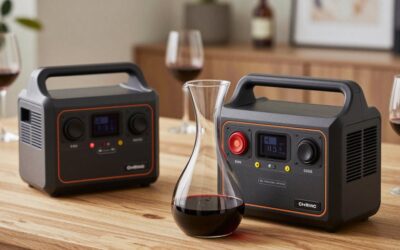
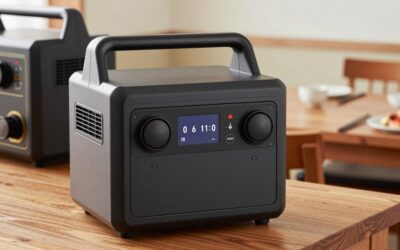
There is a gap in the power station market between the light 1 kWh units that run phones and fans and the heavy 3 to 5 kWh home-backup systems that need wheels and an electrician. The Bluetti Elite 200 V2 lands in that gap with about 2 kWh of storage and 2,600 W of output. For hurricane season, that combination is interesting because it can run a full-size refrigerator through a day and still start a small window air conditioner, without the price or weight of a whole-home system.
Spec class
Bluetti rates the Elite 200 V2 at about 2,073 Wh of LFP capacity with roughly 2,600 W of continuous 120V output and a higher Power Lifting figure for resistive loads. It accepts up to around 1,000 W of solar at 12 to 60 V, charges from AC at up to about 1,800 W and can combine AC and solar input. It weighs about 53 pounds, has no wheels and is not expandable. Verify these figures on the current spec sheet before you plan.
What 2 kWh and 2,600 W buy you after a storm
| Scenario | Main loads | Approx. energy per day | Days per charge (about 1.8 kWh usable) |
|---|---|---|---|
| Keep food safe | Full-size fridge + phones + lights | 1,700–2,300 Wh | about 0.8–1 |
| Sleep safely | CPAP + two fans + router | 700–1,000 Wh | about 2 |
| Cool one room | 6,000 BTU window AC, 4 hours + fans | 2,200–2,600 Wh | under 1 |
| Cook | Induction burner 30 min + microwave 10 min | about 1,000 Wh | subtract half a day |
This is not a unit that does everything at once for days. It is a unit that can do any one of those jobs well, and switch between them as priorities change. On day one you might keep the fridge cold; on day three, when food is gone or the fridge is empty, you might cool a bedroom for the elderly relative staying with you.
Output headroom matters
With about 2,600 W available, you can run a coffee maker and the fridge together, or a microwave and a fan, without tripping overload protection. Smaller stations force you to run one thing at a time. That flexibility reduces frustration during a stressful week.
Recharging: the 1,000 W solar advantage
Around 1,000 W of solar input is high for a 2 kWh station. With four 200 W panels in clear post-storm sun, you can harvest roughly 3,000 to 4,000 Wh per day, enough to refill the battery and run the fridge directly during daylight. That is what turns a one-day battery into a sustainable system for the week after landfall. Keep panels secured indoors during the storm and set them up only after the wind drops.
If you use a gas generator, remember that fast AC charging means you only need to run it briefly. Keep it at least 20 feet from the house, never in a garage, carport, porch or under a raised home, with the exhaust aimed away from openings. Install battery CO alarms on every level.
Practical limitations
- Weight without wheels: about 53 pounds, carried by handles. Manageable for most adults over short distances, awkward on stairs.
- No expansion: capacity is fixed, so solar is your only way to extend runtime without buying a second unit.
- Not weatherproof: keep it dry and off floors that could flood.
- 120V only: no well pumps or central AC.
Home circuit connection
For most owners, plugging appliances directly into the station is simplest. If you want to power hardwired circuits, a licensed electrician can install a transfer switch sized for its output. Never backfeed through an outlet with a double-male cord; it can energize power lines and kill utility workers.
Storm-season routine
- Test the fridge on battery power for 24 hours in June and record the percentage used.
- Store at 60 to 80% charge, top off when a storm approaches.
- Use UPS mode for routers or medical devices as the storm approaches.
- After the storm, set panels up as early as safely possible each day.
FAQ
Can the Elite 200 V2 run a full-size refrigerator for a whole day?
In most kitchens, roughly one day, depending on the fridge’s age and the room temperature. With solar supplementing during the day, it can keep a fridge running for many days.
Will it run a window air conditioner?
Yes, most 5,000 to 10,000 BTU units are within its output. Runtime is the limit: roughly three to four hours for a small unit on a full battery.
Bottom line
The Bluetti Elite 200 V2 is good for hurricane season as a mid-size, high-output battery that can keep food safe, run medical devices and cool a room in bursts. Its strong solar input makes it sustainable after the storm passes. Households needing 240V loads or multi-day battery-only runtime should consider larger, expandable systems.
Write Your Review
No reviews yet. Be the first to share your experience!