
🛒 Best Price Today on Amazon
Prime members get fast, free shipping on everything above, plus member-only deals. New members get a 30-day free trial — cancel anytime.
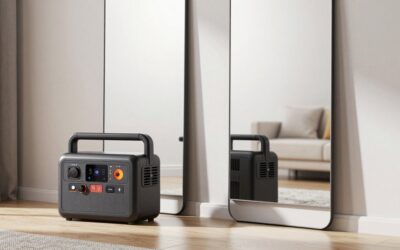
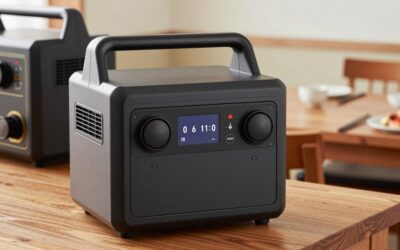
Portable power stations have become common travel companions for campers, photographers and remote workers, and many people assume they can toss one into a carry-on like a phone power bank. In most cases, they cannot. Airline rules on lithium batteries are built around watt-hours, and nearly every power station on the market is far above the passenger limit. This guide explains the actual thresholds used by the FAA and most international carriers, how to read your device’s rating, what you can bring instead, and how to get power at your destination without breaking rules or losing your gear at security.
The watt-hour thresholds
Airline lithium battery rules generally sort batteries into three tiers based on watt-hours (Wh). These tiers come from international dangerous goods regulations and are applied by the FAA in the United States and by most carriers worldwide, though individual airlines can be stricter.
| Battery size | Carry-on | Checked bag | Airline approval | Typical example |
|---|---|---|---|---|
| Up to 100 Wh | Allowed | Not allowed as spare battery | Not required | Phone and laptop power banks up to ~27,000 mAh at 3.7 V |
| 101–160 Wh | Allowed, usually limit of two spares | Not allowed as spare battery | Required | Large camera batteries, some small power banks |
| Over 160 Wh | Not allowed | Not allowed | Not permitted on passenger aircraft | Virtually all portable power stations |
Most portable power stations start around 200 to 300 Wh and go up to several thousand. Even the smallest “mini” stations frequently land above 160 Wh. That puts them in the forbidden tier for both carry-on and checked baggage.
How to find your device’s watt-hours
Look on the label on the bottom or back of the unit, or in the spec sheet. Power stations are usually rated directly in Wh. If only milliamp-hours and voltage are listed, calculate: Wh = mAh × V ÷ 1,000. A 20,000 mAh battery at 3.7 V is 74 Wh. Be careful: some marketing materials list capacity at the cell voltage and others at the pack voltage. If the label does not show a clear Wh number, security staff may refuse it regardless of what you calculate.
Why the rules are strict
Lithium batteries can enter thermal runaway, a self-sustaining fire that is extremely hard to extinguish in an aircraft hold. Carry-on batteries are allowed because crew can respond to a cabin fire. Large batteries hold enough energy to overwhelm on-board firefighting, so they are banned on passenger aircraft entirely.
What you can bring instead
Power banks under 100 Wh
A high-capacity USB-C power bank in the 70 to 99 Wh range can charge a laptop once or twice and a phone many times. Keep it in your carry-on and protect its ports from short circuits.
Two power banks in the 101 to 160 Wh range
With airline approval, you can often bring up to two spare batteries in this range. Contact the airline in advance; approval processes vary and some carriers do not allow them at all.
Ship the power station separately
Large lithium batteries can sometimes be shipped by ground as hazardous materials, but consumer shipping rules are complex and carriers may refuse them. Check with the carrier and the manufacturer first; some brands provide guidance on shipping their units.
Rent or buy at your destination
Outfitters in popular camping and overland destinations sometimes rent power stations. For longer trips, buying locally and reselling or shipping home by ground may be more practical than trying to fly with one.
Checked bag rules for devices with built-in batteries
Spare lithium batteries, including power banks, must never go in checked baggage regardless of size. Devices with installed batteries, like laptops, are generally allowed in checked bags if switched completely off and protected, though carriers encourage carrying them on. A power station is not treated as a “device with an installed battery” in the sense of a laptop; its battery is its primary purpose, and its size alone puts it above the limit.
Traveling by car, RV or ferry
Road trips are where power stations shine. Secure the unit so it cannot slide or tip, keep it out of direct sun on the dashboard or in a closed trunk in summer heat, and avoid charging it from the vehicle while unattended for long periods. Ferry and rail operators may have their own rules for large lithium batteries; check before you go. Trains generally allow them but may restrict charging on board.
FAQ
Can I bring a 256 Wh power station if I remove it from the box?
No. The packaging does not matter; the battery’s capacity does. At 256 Wh it exceeds the 160 Wh limit for passenger aircraft and is not permitted in carry-on or checked baggage.
Are there any power stations designed to be flight-legal?
Some compact units and power banks are sized just under 100 Wh or under 160 Wh specifically for travel. They are closer to large power banks than true power stations, with limited AC output. Check the Wh rating on the label before relying on marketing claims.
Bottom line
Airlines allow lithium batteries up to 100 Wh in carry-on without approval, 101 to 160 Wh with airline approval, and nothing over 160 Wh on passenger aircraft. Nearly every portable power station exceeds that limit. Fly with a power bank under 100 Wh, and plan to drive, ship by ground where allowed, or rent at your destination for anything bigger.




Write Your Review
No reviews yet. Be the first to share your experience!