
🛒 Best Price Today on Amazon
Prime members get fast, free shipping on everything above, plus member-only deals. New members get a 30-day free trial — cancel anytime.
A chest freezer full of meat and frozen meals is worth protecting during power outages, and fortunately it is one of the easiest appliances to back up. Its running wattage is low, but its compressor still needs a brief starting surge, and you will probably want to run it alongside a refrigerator and other essentials. This guide explains what size generator you need for a chest freezer, how to run it efficiently, and how to combine it with other loads.
Generator size recommendations
| Setup | Running load | Peak (starting) demand | Recommended generator |
|---|---|---|---|
| Small chest freezer only (5–7 cu ft) | ~80–120W | ~500–900W | 1,000W inverter |
| Large chest freezer only (15–20 cu ft) | ~120–220W | ~800–1,500W | 1,500–2,000W inverter |
| Chest freezer + refrigerator | ~300–500W | ~1,800–2,500W | 2,000–2,500W inverter |
| Freezer + fridge + lights + router + phones | ~500–800W | ~2,000–2,800W | 2,500–3,500W |
| Freezer + fridge + sump pump + furnace blower | ~2,000–2,800W | ~4,000–5,000W | 5,000–6,500W |
Sizing method
- Find the freezer’s running watts (label or watt meter) and estimate starting watts at 4–6×.
- Add other running loads you plan to operate at the same time.
- Add the largest single starting surge among your appliances — only one compressor usually starts at a time.
- Add 20% headroom.
Worked example
Chest freezer 130W running (~800W start), refrigerator 200W running (~1,200W start), lights and router 150W. Running total = 480W. Worst case: fridge starts while freezer runs: 1,200 + 130 + 150 = 1,480W; if both compressors start together: ~2,150W. With headroom, a 2,200–2,500W inverter handles it comfortably.
Why a small inverter generator is ideal
Freezers and refrigerators spend most of their time at low loads, which is where inverter generators excel. Eco-throttle keeps the engine at low RPM, burning very little fuel and making little noise. A 2,000W-class inverter running a freezer and fridge often uses about 0.1 gallons per hour, stretching a gallon to 8–10 hours.
| Generator | Average load (freezer + fridge) | Runtime per gallon | Fuel for 24 hours continuous |
|---|---|---|---|
| 2,200W inverter | ~300W | ~9–11 hours | ~2.2–2.7 gallons |
| 3,500W inverter | ~300W | ~6–8 hours | ~3–4 gallons |
| 5,000W conventional | ~300W | ~3–4 hours | ~6–8 gallons |
Using an oversized conventional generator for a freezer can burn two to three times more fuel than a small inverter for the same job.
Intermittent running strategy
Chest freezers keep food frozen for roughly 24–48 hours without power when kept closed. That means you can run the generator for about 3–4 hours, then shut it down for 6–8 hours, and repeat. This saves fuel and reduces noise overnight. Place a freezer thermometer inside and keep it at or below 0°F; food that stays at or below 40°F can generally be refrozen, but check food-safety guidance for specifics.
| Schedule | Generator hours per day | Fuel per day (2,200W inverter) |
|---|---|---|
| Continuous | 24 | ~2.2–2.7 gal |
| 4 hours on / 8 off (×2) | 8 | ~0.8–1 gal |
| 3 hours on / 5 off (×3) | 9 | ~0.9–1.1 gal |
Power station alternative
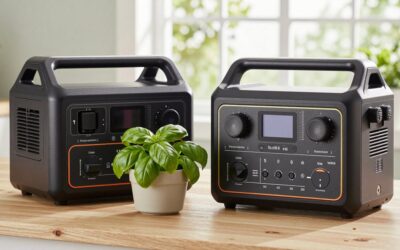
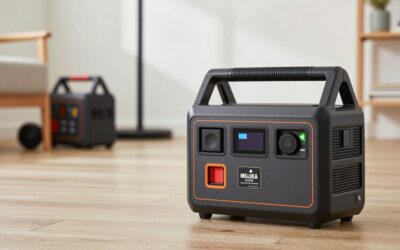
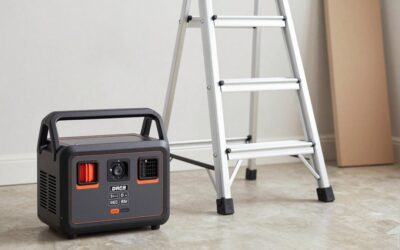
A power station with at least 1,000–1,500W surge capacity and 1,000–2,000Wh of storage can run a chest freezer for about one to two days. Pair it with a 200–400W solar panel to extend runtime indefinitely in sunny weather. This is a quiet, fume-free option for apartments or anyone who wants to avoid overnight generator operation.
Connection and safety tips
- Use a 14- or 12-gauge outdoor extension cord rated for the load.
- Place the generator at least 20 feet from the house with exhaust directed away.
- Avoid plugging freezers into GFCI-protected generator outlets if nuisance tripping occurs; consult the manual for guidance.
- Plug the freezer in before starting other loads so its compressor starts first.
Garage freezers in extreme temperatures
Freezers in hot garages run longer and draw more energy, increasing generator runtime. In very cold garages, a standard freezer may stop cycling if the ambient temperature falls below its operating range. Garage-ready models avoid this issue.
FAQ
Can a 1,000W generator run a chest freezer?
Yes for most chest freezers on their own. A 1,000W inverter can handle the starting surge of typical small and mid-size models, but it may struggle if you add a refrigerator.
How long should I run a generator for my chest freezer?
Running it for about 3–4 hours every 8–12 hours usually keeps a full, closed freezer at a safe temperature. Monitor with a freezer thermometer.
Bottom line
A 1,000–2,000W inverter generator is enough for a chest freezer on its own, and a 2,000–2,500W inverter handles a freezer plus refrigerator with room to spare. Run it intermittently to save fuel, and use a small inverter rather than a large conventional generator for the best efficiency.
Write Your Review
No reviews yet. Be the first to share your experience!