
🛒 Best Price Today on Amazon
Prime members get fast, free shipping on everything above, plus member-only deals. New members get a 30-day free trial — cancel anytime.
Pairing an electric pressure washer with a generator sounds odd at first, since gas pressure washers exist precisely so you do not need power. But there are good reasons: you may already own a quiet electric washer, you might need to clean a remote barn, dock or rental property with no exterior outlet, or you may be a small detailing or exterior-cleaning business that prefers electric pumps. Sizing is straightforward once you account for the trigger-pull surge and the continuous nature of the load.
Electric washer plus generator versus a gas washer
Before sizing a generator, compare the whole system. A gas pressure washer turns engine power directly into pump pressure; a generator plus electric washer converts engine power to electricity and back to motion, losing roughly 25 to 40 percent along the way. For regular heavy cleaning, a gas washer is usually more efficient and delivers more flow. The generator route makes sense if you already own both machines, need the generator for other tools on the same job, or want an electric washer’s lower maintenance at home and occasional remote use.
| Electric washer | Running watts | Starting watts | Minimum generator (running) | Comfortable generator |
|---|---|---|---|---|
| 1,500 – 1,800 PSI, universal motor | 1,300 – 1,600 W | 1,800 – 2,600 W | 2,000 W | 3,000 W inverter |
| 1,900 – 2,300 PSI, universal motor | 1,600 – 1,800 W | 2,200 – 3,000 W | 2,500 W | 3,500 W |
| 1,700 – 2,000 PSI, induction motor | 1,500 – 1,800 W | 3,000 – 4,500 W | 3,000 W | 4,500 – 5,500 W |
| 2,500 – 3,000 PSI, 240 V induction | 3,500 – 5,500 W | 8,000 – 12,000 W | 7,500 W at 240 V | 10,000 – 12,000 W at 240 V |
Planning ranges only; check the current spec sheet for your washer’s amp rating and the generator’s rated output at the voltage you will use.
The trigger-pull problem
Most electric pressure washers use total stop systems: the motor shuts off when you release the trigger and restarts when you squeeze. That means dozens or hundreds of motor starts per job. Each start draws a surge, and each pause lets an inverter generator in eco mode throttle down. The combination creates a pattern where the washer stutters or stalls every time you squeeze. Turn eco mode off for pressure washing so the engine stays at speed, and choose a generator whose running rating exceeds the washer’s by at least 25 percent.
Water supply first
An electric pressure washer needs a steady inlet supply, often at least 1.5 to 2 GPM at 20 PSI or more. At a remote site that might mean a gravity-fed tank, which some electric washers cannot draw from without a booster pump, which is another electrical load. Check the washer manual for suction capability before assuming a tank will work.
Cords, GFCI and wet conditions
Keep the generator dry, level and at least 20 feet from where you are spraying, with exhaust pointing away. Overspray and runoff flowing toward the generator are a real hazard. Use the generator’s GFCI-protected outlet and the washer’s own GFCI plug. Keep extension cord runs short and heavy, 12 gauge for 25 to 50 feet, and add hose length instead of cord length. Elevate connections off wet ground or use a weatherproof connection cover.
Fuel planning for a cleaning job
A 3,000 to 3,500 watt generator running a 1,700-watt washer at about half to two-thirds load typically burns roughly 0.3 to 0.45 gallons of gasoline per hour. Cleaning a two-story house exterior may take three to four hours of intermittent spraying, so plan for about 1.5 gallons. For comparison, a gas pressure washer of similar output might use a similar or slightly lower amount of fuel for the same job, which is why the generator setup rarely wins on fuel.
Power stations are rarely a fit
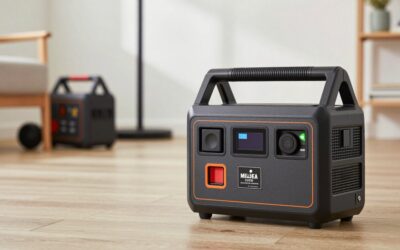
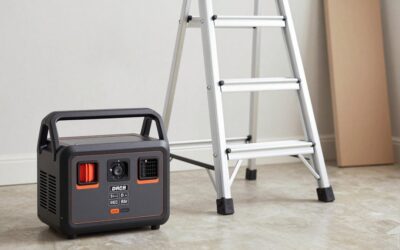
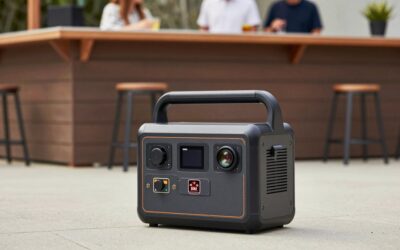
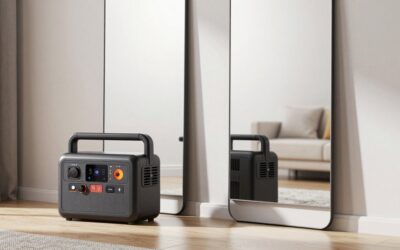
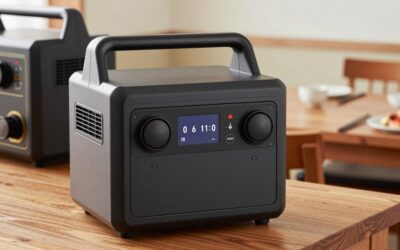
A power station with 2,000 watts of continuous output and 2 kWh capacity could run a small electric washer for about an hour, but the repeated motor starts and heavy continuous load drain it quickly. It can work for a quick car rinse where silence matters; it is not practical for decks or siding.
FAQ
Can a 2,200-watt inverter generator run an electric pressure washer?
Light-duty 1,500 to 1,800 PSI universal-motor washers often run on a 2,200-watt inverter with eco mode off, but it will be near its limit. Induction-motor washers usually need 3,000 watts or more.
Why does my pressure washer trip the generator’s breaker when I squeeze the trigger?
The motor surge at trigger-pull is exceeding the generator’s surge capacity, or eco mode left the engine idling. Turn eco off and remove other loads; if it continues, the generator is undersized.
Bottom line
For a typical 120-volt electric pressure washer, a 3,000 to 3,500 watt generator is the comfortable choice, with 4,500 watts or more for induction-motor models and 10,000 watts or more at 240 volts for heavy-duty electric units. If you are buying equipment specifically for remote cleaning, a gas pressure washer is usually the simpler and more efficient answer.

Write Your Review
No reviews yet. Be the first to share your experience!