
🛒 Best Price Today on Amazon
Prime members get fast, free shipping on everything above, plus member-only deals. New members get a 30-day free trial — cancel anytime.
When a storm knocks out power, the sump pump is often the most critical load in the house. A generator that is too small may stall when the pump starts, and one that is poorly placed can put your family at risk. This guide explains exactly what size generator you need for a sump pump, how to combine it with other essentials, and practical steps to keep the basement dry through a long outage.
Generator size by sump pump
| Sump pump | Pump only (minimum) | Pump + fridge + lights | Pump + fridge + furnace + freezer |
|---|---|---|---|
| 1/3 HP | 1,500–2,000W | 3,000W | 4,500–5,500W |
| 1/2 HP | 2,200–2,500W | 3,500W | 5,000–6,000W |
| 3/4 HP | 3,000W | 4,000–4,500W | 6,000–7,000W |
| 1 HP | 4,000W | 5,000–5,500W | 7,000–8,000W |
| Two 1/2 HP pumps (primary + backup) | 4,000–4,500W | 5,000–5,500W | 7,000–8,000W |
These figures reflect starting capacity with realistic other loads. Running watts are much lower, but the generator must survive frequent surges.
How to calculate your requirement
- Find the pump’s running watts (amps × volts) and estimate starting watts at about 2–3× running.
- Add the running watts of everything else you plan to run.
- Starting requirement = pump starting watts + other running watts.
- If other motors (fridge, furnace blower) might start at the same moment, add their surge too.
- Add about 20% headroom.
Worked example
1/2 HP sump pump (900W running, ~2,000W starting), refrigerator (200W running, ~1,200W starting), lights and router (300W). Worst case, the sump and fridge start together: 2,000 + 1,200 + 300 = 3,500W. With 20% headroom, target roughly 4,200 starting watts. A 3,500–4,500W inverter or a 4,000–5,000W conventional generator works well.
Connection options
- Extension cord: simplest — a heavy-duty 12-gauge cord from the generator to the pump. Keep the connection off the floor and away from water.
- Transfer switch or interlock: powers the pump’s own circuit along with other essentials without running cords through windows.
- Standby generator: automatic protection even when you are away, important for vacation homes and frequent storms.
Fuel and runtime planning
A sump pump alone draws little average power, so a small inverter generator can run many hours on a gallon. The challenge is that storms can last days.
| Generator | Typical avg load (pump + fridge + lights) | Runtime per gallon | Fuel for 48 hours |
|---|---|---|---|
| 2,200W inverter (1/3 HP pump) | ~500W | ~8–10 hours | ~5–6 gallons |
| 3,500W inverter | ~700W | ~5–7 hours | ~7–10 gallons |
| 5,000W conventional | ~900W | ~2.5–3.5 hours | ~14–19 gallons |
For sump-only duty, a smaller inverter can be far more economical than a large conventional unit because of eco-throttle operation at light loads.
Battery backup as a complement
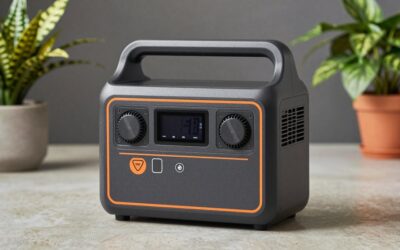
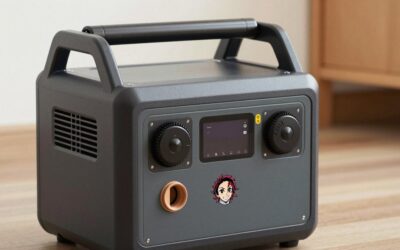
A DC battery backup pump or a power station adds protection while you are asleep or away, and during the time it takes to set up the generator. Many homeowners pair a generator with a battery backup system so the basement is protected continuously.
Safety essentials
- Run the generator outdoors, at least 20 feet from the house, with exhaust pointed away from windows and doors.
- Use a generator cover or canopy designed for running in rain.
- Install CO alarms on every level, including the basement.
- Keep cords and connections dry; use GFCI protection where possible.
Choosing between inverter and conventional for sump duty
For most sump-only or sump-plus-fridge setups, an inverter generator is the better fit. Its eco-throttle keeps fuel use low during the long stretches when the pump is idle, and it runs quietly enough that neighbors will not mind overnight operation. The downside is that some small inverters have limited surge duration, so a 1/2 HP pump may cause them to overload if a refrigerator starts at the same moment. A conventional 4,000–5,000W generator handles simultaneous starts easily and costs less, but it burns more fuel at light load and is louder. If your sump runs constantly during storms, the conventional unit’s extra surge may be worth the fuel cost.
FAQ
Can a 2,000W generator run a sump pump?
Yes for most 1/3 HP pumps and many 1/2 HP pumps, as long as few other loads run at the same time. Check your pump’s starting watts first.
How long can a generator run a sump pump?
As long as it has fuel. A small inverter may run 8–10 hours per gallon at light load, so a few gallons can protect a basement through a long night.
Bottom line
Most sump pumps can be powered by a 2,000–3,500W generator on their own; add a refrigerator and other essentials and a 4,000–6,000W unit is the sweet spot. Size for starting surges, plan fuel for multi-day storms, and pair with battery backup for continuous protection.


Write Your Review
No reviews yet. Be the first to share your experience!