
🛒 Best Price Today on Amazon
Prime members get fast, free shipping on everything above, plus member-only deals. New members get a 30-day free trial — cancel anytime.
Quick answer: Our top pick in 2026 is the Heavy-duty extension cords from the generator to individual appliances — our #1 rated choice. See the full ranked comparison, alternatives and buying advice below.
The Short Answer
Yes, a transfer switch is worth it if you own a portable generator and want to power selected home circuits safely during outages. The one condition is that you must be willing to have it installed correctly—usually by a licensed electrician—because a transfer switch is part of your home’s electrical system, not just another plug-in accessory.
A transfer switch can make generator use safer, faster, and less frustrating. It prevents dangerous backfeeding into utility lines, lets you run important circuits from a dedicated inlet, and avoids dragging extension cords through windows or doors. But it is not automatically a good purchase for every homeowner. If outages are rare, your generator is small, or you only need to run a refrigerator and a few lamps, a less expensive setup may be enough.
As an Amazon Associate we earn from qualifying purchases at no extra cost to you. Product prices and availability are accurate as of the date shown and are subject to change.
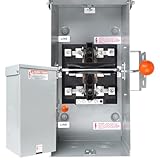

The right decision depends on your generator’s output, the circuits you want to operate, and how much convenience you want when the power fails.
What You Actually Get
A manual transfer switch creates a controlled connection between your electrical panel and a generator. During normal operation, selected circuits receive utility power. When the power goes out, you start the generator, connect it through an outdoor inlet, and move the transfer switch to generator power. When utility service returns, you reverse the process.
That process matters because a standard portable generator must never be connected to a household outlet with a homemade “suicide cord” or similar improvised cable. Doing so can send electricity backward through the utility lines, potentially injuring or killing line workers and damaging equipment. A properly installed transfer switch mechanically separates utility and generator power so both sources cannot energize the same circuits at once.
What you can run depends on the switch and generator. A 10-circuit, 50-amp kit may let you select circuits such as a refrigerator, freezer, furnace blower, sump pump, internet equipment, kitchen outlets, or a few lighting circuits. It does not mean you can run all of them at full load simultaneously. A 12,500-watt-rated kit, for example, still depends on the generator’s continuous output, starting surge, wiring, breaker size, and the total load connected at one time.
A simpler double-throw switch may be designed for a larger service or a particular generator arrangement. The MUJURUR 100A model is listed at 24,000 watts and 120/240 volts, with an outdoor NEMA 3R enclosure and a listed price of $75.99. The VEVOR manual kit is listed as a 50-amp, 10-circuit system for generators up to 12,500 watts and includes a CS6375 inlet box and mechanical watt meter; its listed price is $199.90. Those prices illustrate an important point: the switch itself may cost less than the installation, inlet, cable, breakers, and permit requirements.
Pros
- Safer generator connection. A transfer switch helps prevent backfeeding when installed and operated properly.
- Fewer extension cords. Power reaches selected circuits through the home’s wiring instead of cords running across floors, through windows, or outside in wet conditions.
- Faster outage setup. Once installed, the process is usually start the generator, connect the cable, and move the switch. That is much simpler than deciding which appliances to unplug and where to place multiple cords.
- Better access to essential systems. You can prioritize a furnace, sump pump, refrigerator, freezer, lights, modem, or medical-support equipment, subject to the generator’s capacity.
- Clearer load management. A circuit-based setup makes it easier to see what is powered and shut off high-demand appliances before starting another load.
- More weather-conscious installation. An exterior inlet and a weather-resistant enclosure can keep the generator connection outside and more protected from rain and snow.
- Potential home-value and usability benefit. A professionally installed backup-power connection is more convenient than a collection of temporary cords, especially in regions with frequent storms or winter outages.
Cons
- Installation can cost more than the switch. An electrician may need to add breakers, reroute circuits, install an inlet box, verify panel compatibility, and meet local code. Labor and materials can easily outweigh a $75 to $200 product price.
- It does not create more power. A transfer switch cannot make a 5,000-watt generator run a 10,000-watt load. Motors, pumps, refrigerators, and heating equipment may also require extra starting watts.
- Manual models require attention. You must start and refuel the generator, connect the cable, move the switch, monitor the load, and reverse the procedure when utility power returns.
- Only selected circuits may be covered. Many kits do not power the entire panel. You may need to choose between a sump pump, electric water heater, range, air conditioner, and other large loads.
- Fuel and noise remain issues. A transfer switch does not eliminate generator maintenance, gasoline storage, exhaust concerns, or neighborhood noise restrictions.
- Compatibility is not universal. Service rating, voltage, generator receptacle, wire size, panel layout, and circuit type all matter. A 120/240-volt generator setup is not interchangeable with every 120-volt model.
- It may be unnecessary for infrequent, short outages. If you rarely lose power and only need phone charging and a lamp, the expense may not provide enough value.
Who Should Buy It
A transfer switch is a strong choice for homeowners who already own—or plan to buy—a portable generator in roughly the 5,000- to 12,500-watt class and want dependable access to several household circuits. It is especially useful if your home has a sump pump, gas furnace with an electric blower, freezer full of food, well pump, medical equipment, or unreliable utility service.
It also makes sense for anyone who expects to use a generator more than once or twice. The more often you prepare for outages, the more valuable a permanent inlet and clearly labeled circuits become. Homeowners who want to run 240-volt equipment or higher-demand loads should have an electrician confirm that the generator, transfer switch, panel, and wiring are all appropriately rated.
Before buying, list the appliances you consider essential and find their running and starting wattage. Add the loads you might use at the same time, then compare that total with the generator’s continuous output—not merely its advertised peak number.
Who Should Skip It
Skip a transfer switch for now if you do not own a compatible generator, rent your home, or expect to move soon. Ask your landlord about approved backup-power options instead. It may also be excessive if your emergency plan only involves charging phones, operating a small lamp, and keeping a few devices running from a portable battery station.
It is also the wrong solution if you want automatic backup power. A manual transfer switch will not detect an outage or start the generator by itself. For that experience, you would need an automatic transfer switch and a compatible standby generator, which is a substantially more expensive system.
Cheaper Alternatives
| Option | Cost | Trade-off |
|---|---|---|
| Heavy-duty extension cords from the generator to individual appliances | About $50–$250 | Lowest upfront cost, but inconvenient, limited to cord-compatible appliances, and vulnerable to poor placement or weather exposure. Never connect the generator to a wall outlet. |
| Portable power station | About $300–$2,000+ | Quiet and simple for electronics, lights, and smaller loads, but output and battery runtime may not support pumps, furnaces, or large appliances. |
| Small inlet and interlock kit, where approved | About $150–$500 before labor | Can cost less than a multi-circuit transfer switch, but panel compatibility is critical and the system may require more careful breaker management. |
| Manual transfer switch kit | About $75–$300 for the hardware | Provides safer, cleaner circuit selection, but installation, cable, inlet, permits, and electrician fees can substantially increase the total. |
Among the listed examples, the MUJURUR 100A switch has the lower product price at $75.99 and a 24,000-watt rating, while the VEVOR 50-amp, 10-circuit kit costs $199.90 and includes a power inlet box and watt meter. Do not choose based on price alone. The correct product is the one that matches your generator output, service configuration, circuit needs, and local electrical requirements.
FAQ
Can I install a transfer switch myself?
Some experienced homeowners may understand the work, but this is not a casual do-it-yourself project. The switch connects to the service panel and can expose you to lethal voltage even when certain breakers are off. Local rules may require a licensed electrician, permit, inspection, or specific equipment. Have the installation reviewed by a qualified professional.
Does a transfer switch power my whole house?
Usually not. Many manual transfer switches serve a selected group of circuits. Whole-house operation requires a properly sized switch, service equipment, generator, and wiring. Even when the switch is rated for a large wattage, your generator may not have enough continuous output to run every appliance at once.
What size transfer switch do I need?
Match the switch to the generator’s voltage, amperage, receptacle, and intended circuits, while also considering the home’s service rating and wire size. A generator’s peak wattage is not the same as its running wattage. Include motor starting surges from pumps, refrigerators, furnaces, and compressors before selecting equipment.
Is a transfer switch worth it in 2026?
For a homeowner who relies on a portable generator during recurring outages, yes. The safety, convenience, and cleaner installation justify the cost. For occasional minor outages, a battery station or carefully used extension cords may be more economical. The deciding factor is not the switch’s sticker price; it is how much you value safe, repeatable access to essential circuits.
Ready to decide? Our #1 pick for 2026 is the Heavy-duty extension cords from the generator to individual appliances.
Live price & availability on Amazon.



Write Your Review
No reviews yet. Be the first to share your experience!