
🛒 Best Price Today on Amazon
Prime members get fast, free shipping on everything above, plus member-only deals. New members get a 30-day free trial — cancel anytime.
- Top Pick: BLUETTI FridgePower Portable Power Station, 2016Wh 1800W LFP Battery Backup
- Best Value: Oxseryn 4400-Watts Inverter Generator, Open Frame Generator Gas Powered, Emergency Home Backup, RV Ready 30A Outlet, EPA Compliment
- Premium Choice: BLUETTI FridgePower Backup System, 2016Wh Expandable to 4032Wh LFP Battery
Buying a generator for refrigerator backup is less about finding the biggest number on the box and more about matching power, runtime, noise, and storage to your actual outage plan. A common mistake is choosing a unit based only on peak watts. Another is assuming a refrigerator runs at its listed wattage continuously, or buying a battery station without checking whether it can handle the compressor’s startup surge. Fuel storage, outdoor placement, transfer equipment, and extension-cord limits are equally important.
This generator buying guide for refrigerator backup focuses on what matters during a real outage: keeping food cold, protecting sensitive electronics, and restoring power without creating a safety problem. Prices and specifications can change, so verify the current label and manual before purchasing.
As an Amazon Associate we earn from qualifying purchases at no extra cost to you.


Decide These 3 Things First
- How much power does your refrigerator need? A typical full-size refrigerator may use roughly 100 to 400 running watts, but its compressor can briefly demand 800 to 1,500 watts or more when starting. Check the appliance label, owner’s manual, or a plug-in watt meter.
- How long must it run? A six-hour outage requires a different solution from a two-day outage. Battery stations are convenient for short interruptions; gasoline or dual-fuel generators are generally easier to refuel during extended outages.
- Where will it operate? Gasoline generators must run outdoors, far from doors, windows, and vents. A battery power station can operate indoors, but it still needs ventilation and a dry, temperature-controlled location. Never run a fuel-burning generator in a garage, shed, basement, or enclosed porch.
Size and Electrical Capacity
For refrigerator-only backup, start with the refrigerator’s running and starting requirements rather than its advertised capacity. A generator rated at 1,500 to 2,000 running watts is usually a practical minimum for one modern refrigerator plus small loads such as a router, phone charger, or a few LED lights. A 3,000- to 4,500-watt inverter generator gives more headroom for a freezer, sump pump, or microwave, but it consumes more fuel and is heavier.
Look for two separate ratings: running watts, sometimes called rated watts, and starting or surge watts. The surge rating should exceed the refrigerator’s startup demand. For example, a unit listed at 1,800 running watts and 2,700 peak watts has more useful capacity than one with 2,000 peak watts but only 1,200 running watts.
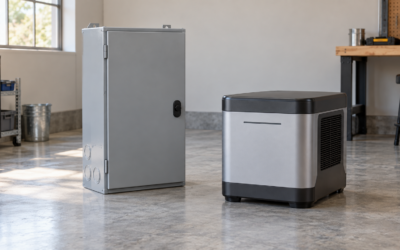
Battery stations use watt-hours instead of fuel-tank size. A 1,152Wh station, such as the BLUETTI AC180 example, will not deliver its full nameplate energy to the refrigerator because the inverter and battery-management system consume some power. At an average 100-watt load, a realistic planning estimate may be about eight to nine hours, depending on temperature, cycling, and conversion losses. A 2,016Wh station provides roughly twice that reserve and is better suited to overnight backup.
Battery Material, Fuel, and Storage
For battery units, lithium iron phosphate, or LiFePO4, is the preferred chemistry for many home backup buyers because it is known for strong cycle life and improved thermal stability compared with older lithium chemistries. It is also relatively heavy. A 1,000Wh-class station may weigh about 25 to 35 pounds, while a 2,000Wh unit can weigh 45 to 60 pounds.
Gasoline generators offer virtually unlimited runtime as long as fuel is available, but gasoline degrades in storage and requires safe handling. Keep only the amount permitted by local regulations in approved containers, and rotate stored fuel. A fuel stabilizer can help, but it does not eliminate the need to inspect and replace old gasoline.
Dual-fuel models can run on gasoline or propane. Propane stores longer and is often easier to keep ready, but output may be lower on propane and cold-weather performance can vary. Read the wattage chart for each fuel rather than assuming the headline rating applies to both.
Construction, Weather Protection, and Portability
A refrigerator backup generator does not need luxury styling, but it does need a durable frame, protected outlets, stable feet, and a clear control panel. Open-frame inverter generators are often less expensive and easier to service, but they are louder and expose more components to rain and debris. Enclosed inverter models generally provide cleaner power and lower noise, though they cost more.
No portable fuel generator should be operated in rain unless the manufacturer specifically permits it with an approved weather cover. A cover must not restrict exhaust or cooling airflow. For battery stations, check the operating and storage temperature ranges; many are intended for operation around 32 to 104 degrees Fahrenheit, while charging may be restricted outside that range.
Weight matters more than shoppers expect. A 30-pound station can be moved by one person, while a 50-pound battery or 100-pound open-frame generator may need wheels or two-person lifting. If the generator will be stored in a basement or shed, measure the path, door openings, and shelf space before ordering.
Comfort, Noise, and Power Performance
Noise is a decisive factor when the generator will run near a home, apartment, or sleeping area. Inverter generators often advertise sound levels in decibels measured at a specific distance and load. A rating around 50 to 60 decibels at a light load is generally more comfortable than an open-frame unit rated around 65 to 75 decibels. These figures are not directly comparable unless the testing distance and operating load match.
Inverter technology also matters for electronics. It produces regulated power that is generally better suited to refrigerators, routers, televisions, and chargers than the rougher output of some conventional generators. A battery station uses an inverter as well, but confirm that the AC output is a true sine wave and that the continuous wattage is high enough for the refrigerator’s startup.
Useful features include an economy mode, low-fuel shutdown, overload protection, a fuel gauge, a battery percentage display, USB ports, and a 30-amp outlet when larger loads are planned. Do not connect a generator to a household wall outlet with a homemade “backfeed” cord. Use a properly installed transfer switch or connect appliances directly with correctly rated outdoor cords.
Price Tiers and Total Cost
Budget: $250 to $600. This range includes small conventional or inverter generators and entry-level battery stations. An example like the under-$300 Oxseryn 4,400-watt open-frame generator offers a large headline output at a low price, but buyers should confirm its running-watt rating, noise level, inverter status, emissions certification, and warranty before relying on it. Budget battery stations around $400 to $600 may cover a refrigerator for several hours, but capacity is limited.
Midrange: $600 to $1,200. This is often the sweet spot for one refrigerator, basic electronics, and quieter operation. A 1,500- to 2,000-watt inverter generator or a roughly 1,500- to 2,000Wh LiFePO4 station can provide useful overnight coverage, depending on the refrigerator’s duty cycle. A BLUETTI FridgePower example priced around $949 fits this general battery-backup category.
Premium: $1,200 to $2,500 or more. Premium systems may add expandable batteries, solar charging, remote monitoring, stronger surge capability, and better enclosure design. An expandable 2,016Wh system listed around $1,899 can grow toward roughly 4,032Wh, which is useful for longer outages but adds weight and charging time. Include the cost of solar panels, a cover, fuel, heavy-duty cords, maintenance, and a transfer switch.
Warranty, Service, and Certification
Compare the warranty on the complete system, not just the battery. Battery stations may carry separate coverage for the battery, inverter, and accessories. Look for at least two years on a budget product and three to five years on a premium system, while checking whether coverage changes for residential versus commercial use.
For fuel generators, verify that the model is certified for sale and use in your location. EPA compliance is not the same as a promise of quiet operation or excellent build quality. A clear manual, accessible replacement parts, a listed service network, and an explicit return policy are valuable when the product may sit unused for months.
Delivery, Assembly, and Setup
Battery stations usually arrive ready to charge, but allow several hours for a first full charge and install any required firmware updates before an emergency. Test the refrigerator with the station at home: record startup behavior, check the watt display, and estimate how many hours the battery lasts.
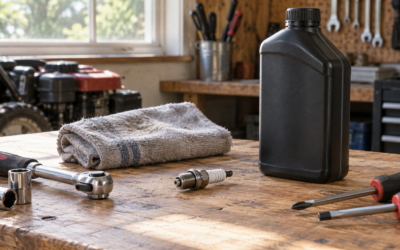
Gas generators require more preparation. You may need to add engine oil, install a battery or wheel kit, and perform a break-in procedure. Run the unit outdoors before an outage so you know how to start it and can identify unusual vibration or fuel leaks. Use a heavy-duty outdoor extension cord sized for the distance and load; long, undersized cords can cause voltage drop and heating.
Spec Checklist
| Spec | Budget | Mid | Premium |
|---|---|---|---|
| Typical price | $250–$600 | $600–$1,200 | $1,200–$2,500+ |
| Generator running output | 1,000–2,000W | 1,500–3,000W | 3,000–5,000W |
| Battery capacity | 500–1,200Wh | 1,200–2,016Wh | 2,000–4,032Wh+ |
| Recommended refrigerator plan | Refrigerator only, short outage | Refrigerator plus lights and router | Long outage, freezer, or multiple appliances |
| Approximate weight | 20–50 lb | 30–80 lb | 50–150 lb or more |
| Key features | Surge protection, basic display | Inverter output, economy mode, LiFePO4 | Expansion, solar input, remote monitoring, transfer compatibility |
Red Flags
- A product advertises only peak watts and omits running watts.
- The listing does not state battery watt-hours, inverter continuous output, or surge output.
- “Solar generator” is used without specifying whether solar panels are included.
- There is no clear emissions certification, manual, parts information, or warranty contact.
- The claimed runtime is presented without stating the load or usable battery capacity.
- A fuel generator has no low-oil shutdown, overload protection, or grounded outdoor-use instructions.
- The seller recommends plugging the generator into a household outlet without a transfer switch.
- The unit is too heavy for the planned storage location or lacks wheels and handles.
FAQ
What size generator do I need for a refrigerator?
For one typical refrigerator, target at least 1,500 running watts and enough surge capacity for the compressor. A 2,000- to 3,000-watt inverter generator adds practical headroom for lights, a router, or a freezer. Confirm the appliance’s actual startup demand whenever possible.
How long will a 2,000Wh battery run a refrigerator?
It depends on cycling and efficiency. If the refrigerator averages 100 watts while cycling, 2,000Wh may provide approximately 16 to 18 hours after normal conversion losses. A higher average load, frequent door opening, warm room, or additional devices will shorten runtime.
Is a portable power station safer than a gasoline generator?
It avoids exhaust and carbon monoxide, so it can be used indoors when the manufacturer allows it. It is not risk-free: keep it dry, avoid damaged cords, leave ventilation around the unit, and use only approved chargers. A gasoline generator must remain outdoors and away from openings.
Should I buy a generator or a battery backup?
Choose a battery station for quiet, low-maintenance backup lasting several hours to roughly a day, especially in a home or apartment. Choose a fuel generator for repeated or multi-day outages when refueling is practical. For maximum resilience, some households use a battery station for overnight operation and a generator for longer interruptions.
Top picks from this guide
 OxserynOxseryn 4400-Watts Inverter Generator, Open Frame Generator Gas Powered, Emergency…$255 \xc2\xb7 99/100
 BLUETTIBLUETTI Portable Power Station AC180, 1152Wh LiFePO4 Battery Backup w/…$449 \xc2\xb7 96/100
 BLUETTIBLUETTI FridgePower Portable Power Station, 2016Wh 1800W LFP Battery Backup$949 \xc2\xb7 96/100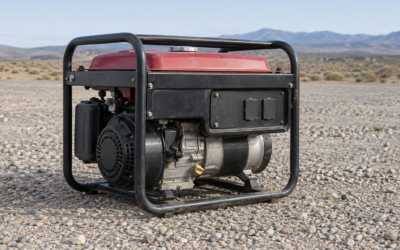
Write Your Review
No reviews yet. Be the first to share your experience!