
🛒 Best Price Today on Amazon
Prime members get fast, free shipping on everything above, plus member-only deals. New members get a 30-day free trial — cancel anytime.
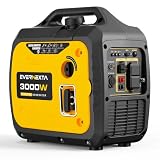
- Top Pick: Oxseryn 5000-Watts Portable Inverter Generator, Gas Generator for Home Backup, 30A Outlet, RV Ready, ECO Mode, 60Lbs, EPA Compliment
- Best Value: Portable Solar Generator 300W Portable Power Station with 60W Solar Panel
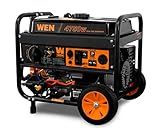
- Premium Choice: Westinghouse 4650 Peak Watt Dual Fuel Portable Generator, RV Ready 30A Outlet, Gas & Propane Powered, CO Sensor
Buying a generator for an RV is less about choosing the biggest wattage on the box and more about matching power, fuel, noise, weight, and connection type to the way you camp. Many shoppers make the same mistakes: they confuse peak watts with running watts, assume an “RV-ready” label means every appliance will work, or buy a small solar power station expecting it to run an air conditioner. Others overlook CO protection, lifting weight, fuel storage, and whether the generator will fit safely in a truck bed or motorhome compartment.
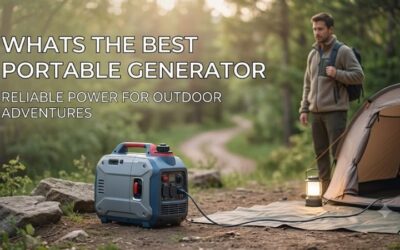
This portable generator buying guide for RV owners focuses on the specifications that matter in real use. Prices and product categories can shift, but the decision process remains useful for shopping in 2026. Before comparing models, identify your electrical load, campsite restrictions, and tolerance for maintenance.
As an Amazon Associate we earn from qualifying purchases at no extra cost to you. Product prices and availability are accurate as of the date shown and are subject to change.


Decide These 3 Things First
- What must run at the same time? An RV air conditioner may need 1,300 to 1,800 running watts and considerably more starting power. A refrigerator typically uses about 100 to 400 watts while operating, while a microwave may draw 1,000 to 1,500 watts. Add battery charging, lights, a television, or a coffee maker before selecting a generator.
- Do you have a 30-amp or 50-amp RV connection? A 30-amp, 120-volt service can deliver up to 3,600 watts. A 50-amp RV connection is designed for much more power and commonly uses two 120-volt legs. A 3,000- to 4,500-watt 120-volt generator may serve a 30-amp RV well, but it does not automatically provide the full capability of a 50-amp hookup.
- Where and how will you use it? Choose an inverter generator for quieter campgrounds and sensitive electronics, a conventional generator for lower-cost high output, or a power station for silent short-duration charging. Confirm campground rules, ventilation requirements, fuel access, and storage space before buying.
Size and Power Capacity
Start with running watts, then account for startup demand. A practical 30-amp RV setup usually needs at least 3,000 running watts if you want to operate one air conditioner, a refrigerator, and basic appliances. A 3,500- to 4,500-watt generator provides more headroom for microwave use or battery charging. If your air conditioner has a difficult-to-start compressor, a soft-start device can reduce startup demand, but it does not turn a small generator into a high-capacity model.
For occasional essentials without air conditioning, 1,500 to 2,000 running watts may be enough. A 300-watt solar power station can charge phones, lights, cameras, and small electronics, but it is not a substitute for an RV generator. Even if its battery stores around 250 to 300 watt-hours, a small power station may run a 100-watt load for only a few hours after conversion losses.
Do not select a generator solely by its “peak,” “surge,” or “starting” wattage. A unit advertised at 5,000 peak watts may provide closer to 3,500 to 4,000 running watts. Compare the continuous rating, 30-amp outlet rating, and overload behavior. Parallel-capable inverter generators can be paired with a second compatible unit, but the required parallel kit adds cost and storage space.
Material and Weather Resistance
Generator housings are commonly made from steel, molded plastic, or a combination of both. Steel frames can tolerate rough transport and provide sturdy lifting points, but they add weight and may rust if scratched. Molded plastic inverter housings resist surface corrosion and often reduce noise, though hinges, wheels, and handles still determine long-term durability.
Look for a protected control panel, covered outlets, rubber feet, and a fuel cap that seals securely. “Weather-resistant” does not mean safe to operate in rain. A portable generator must remain outdoors, away from windows, doors, vents, and low areas where exhaust can collect. Never operate one inside an RV, garage, tent, cargo compartment, or enclosed generator box unless the enclosure is specifically engineered for safe generator operation.
Construction, Portability, and Storage
Weight is one of the most important specifications. Compact 2,000- to 3,000-watt inverter generators commonly weigh about 40 to 70 pounds. A 4,000- to 5,000-watt open-frame or dual-fuel generator may weigh 75 to 110 pounds. That difference affects whether one person can unload it safely.
For units above roughly 70 pounds, prioritize never-flat wheels, a folding handle, and balanced lifting points. Check the folded and operating dimensions against your storage compartment. A generator measuring approximately 25 by 18 by 20 inches may fit in a truck bed but not in a narrow RV bay. Leave clearance around the unit during operation and keep it far enough from the RV to prevent exhaust from entering through windows, vents, or slide-out gaps.
Fuel tank size also affects portability. A 1.5- to 2.5-gallon tank keeps weight down, while a 3- to 4-gallon tank can reduce refueling stops. Runtime claims depend on load, fuel, temperature, and economy mode, so treat a stated runtime as a comparison point rather than a guarantee at full output.
Comfort and Performance
Noise matters at a campground. Inverter generators usually adjust engine speed to the load and are quieter than open-frame contractor-style units. Manufacturers commonly publish sound levels in decibels at distances such as 7 meters, so ratings are not always directly comparable. A listed 52 to 60 dB can be suitable for many camping situations, while a 68 to 75 dB open-frame model may be noticeably intrusive.
Choose an inverter generator when you need stable power for laptops, televisions, chargers, or medical equipment. Conventional generators can still power an RV, but their electrical output may be less refined. Confirm that any model has the outlet configuration you need: a 120-volt, 30-amp TT-30-style RV outlet is more convenient than relying on a household outlet and adapter.
Electric start is convenient but requires a charged battery. Recoil start is simpler and can be dependable when maintained. Useful features include low-oil shutdown, overload protection, an hour meter, fuel gauge, economy mode, and a carbon-monoxide sensor that shuts the engine down when dangerous levels are detected. A CO sensor is an important backup, not permission to operate closer to the RV.
Price Tiers
Budget: $180 to $320. This range includes small 300-watt solar power stations and basic 2,000- to 3,000-watt gas inverter generators. Expect fewer convenience features, smaller fuel tanks, and limited ability to run an RV air conditioner. A 300-watt power station priced around $190 is best for electronics and lights, not compressor appliances.
Midrange: $300 to $450. This is the useful sweet spot for many 30-amp RV owners. Examples include 3,000-watt inverter generators and 4,000- to 4,500-watt dual-fuel models. A generator around $320 to $400 may offer an RV outlet, economy mode, CO detection, and enough capacity for one air conditioner, depending on startup demand.
Premium: $450 and above. Higher prices may buy quieter operation, stronger wheels and handles, electric start, larger engines, cleaner controls, longer support, or parallel capability. Pay for features that solve your problem rather than for a peak-wattage number you will rarely use.
Warranty and Service
Compare warranty length, coverage, and service availability before focusing on price. A two- or three-year limited warranty is common in this category, but some coverage may apply only to residential use. Ask whether RV use counts as residential use, whether the battery and starter are covered, and who handles repairs.
Maintenance support matters because oil changes, spark plugs, air filters, fuel-system cleaning, and battery replacement are normal ownership tasks. Prefer a brand that lists replacement parts, oil capacity, recommended service intervals, and authorized repair options. Keep the receipt, record operating hours, and use fuel stabilizer when gasoline will sit for more than a few weeks.
Delivery and Assembly
A portable generator may arrive with wheels, a handle, feet, or a battery requiring installation. Check the package weight and whether assembly requires tools. A 90-pound box delivered to a porch can be difficult to move, especially if the generator has no usable lift points.
Before the first trip, add the specified oil, charge the electric-start battery if included, inspect fasteners, and test the RV connection outdoors. Verify that the supplied cord or adapter matches your RV inlet. Do not use a homemade cable or backfeed an RV through an improvised connection. If the generator will ride in a truck bed, secure it against shifting and protect it from theft without restricting ventilation during operation.
Spec Checklist
| Spec | Budget | Mid | Premium |
|---|---|---|---|
| Typical price | $180–$320 | $300–$450 | $450+ |
| Running output | 300–2,500 watts | 3,000–4,000 watts | 4,000–6,000+ watts |
| Best use | Electronics, lights, limited loads | Most 30-amp RVs | Heavy loads, dual fuel, parallel use |
| Typical weight | 10–65 pounds | 50–90 pounds | 70–120 pounds |
| Fuel options | Battery or gasoline | Gasoline or dual fuel | Gasoline, dual fuel, or larger systems |
| RV connection | Adapter may be required | 30-amp RV outlet preferred | 30-amp or advanced parallel setup |
Red Flags
- A product lists only peak watts and omits running watts.
- “RV ready” appears in the title, but there is no clearly identified 30-amp RV outlet.
- The claimed runtime has no stated load percentage or fuel-tank size.
- A very small solar generator claims to run an air conditioner without clear battery, inverter, and surge specifications.
- There is no CO sensor, overload protection, low-oil shutdown, or owner’s manual available.
- The warranty excludes the exact use you intend, such as commercial or frequent operation.
- The listing uses vague terms such as “EPA compliant” without explaining the applicable certification or required emissions information.
- The generator is too heavy for its handle, wheels, or storage location.
FAQ
What size generator do I need for a 30-amp RV?
A 3,000-watt running-output generator is a practical starting point for one air conditioner and basic loads. Choose 3,500 to 4,500 running watts if you want more margin for a microwave, coffee maker, or battery charging. Check each appliance’s starting watts before deciding.
Can a 2,000-watt generator run an RV air conditioner?
Sometimes, but not reliably without checking the air conditioner’s startup demand. A soft-start device may help, but a 2,000-watt unit can still overload when other appliances are running. Use the generator’s continuous rating, not its advertised peak number.
Is a dual-fuel generator better for RV camping?
It can be. Gasoline is widely available and often provides the highest output, while propane stores cleanly and does not degrade as quickly. Propane may produce less power, so compare running-watt ratings for each fuel rather than assuming they are identical.
Can I run a generator in the RV storage compartment?
No. Operate it outdoors in a well-ventilated area, positioned away from the RV and all openings. Carbon monoxide is odorless and can enter through windows, vents, and doors. Follow the generator and RV manufacturer’s safety instructions every time.
Ready to decide? Our #1 pick for 2026 is the Typical price.
Live price & availability on Amazon.


Write Your Review
No reviews yet. Be the first to share your experience!