
🛒 Best Price Today on Amazon
Prime members get fast, free shipping on everything above, plus member-only deals. New members get a 30-day free trial — cancel anytime.
A dual fuel generator can run on either gasoline or propane, while a gas-only model runs on gasoline alone. The price difference is usually modest — often $50–150 in the same size class — but the practical differences in storage, readiness, output and runtime are significant. This guide explains how dual fuel works, what you give up, and which buyers benefit most from each option.
How dual fuel works
A dual fuel generator adds a propane regulator and fuel path to a standard gasoline engine. You connect a propane cylinder through a hose, select the fuel with a switch or valve, and the engine runs on vapor instead of liquid gasoline. Many models allow switching fuels without shutting down.
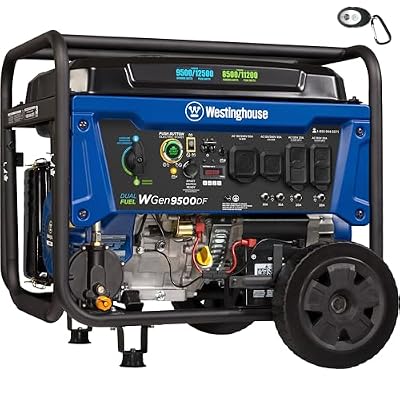
Westinghouse 12500 Watt Dual Fuel Home Backup Portable Generator, Remote Electric Start, Transfer Switch Ready, Gas and Propane Powered
Included for 'Dual Fuel Generator vs Gas-Only Generator: Which Is Right for You?' because the listing specifies Remote Electric Start and Transfer Switch Ready, details this guide uses to compare options.
View on Amazon
DuroStar DS13000MX 13,000-Watt 500cc Dual Fuel Portable Generator - Gas and Propane, Remote Electric Start, Whole Home Power Backup, Transfer Switch Ready, RV & Emergency Ready
Included for 'Dual Fuel Generator vs Gas-Only Generator: Which Is Right for You?' because the listing specifies 000-Watt 500cc Dual Fuel Portable Generator and Gas and Propane, details this guide uses to compare options.
View on Amazon
WEN Quiet and Lightweight 4800-Watt Dual Fuel RV-Ready Electric Start Portable Inverter Generator with Fuel Shut Off and CO Watchdog (DF480iX)
Included for 'Dual Fuel Generator vs Gas-Only Generator: Which Is Right for You?' as a relevant option in this category; details come from the product listing.
View on Amazon
PowerSmart 3800 Watt Dual Fuel Inverter Generator for Camping or Home Use
Included for 'Dual Fuel Generator vs Gas-Only Generator: Which Is Right for You?' as a relevant option in this category; details come from the product listing.
View on AmazonKey differences
| Factor | Dual fuel | Gas only |
|---|---|---|
| Output | Full on gas; ~8–12% less on propane | Full on gas |
| Fuel storage life | Propane indefinite; gas 3–12 months | Gas 3–12 months |
| Cold starts | Propane can be harder below ~0°F | Gas reliable with correct oil |
| Carburetor varnish risk | Low if stored on propane | Higher |
| Price premium | Typically $50–150 | Baseline |
| Refueling during outage | Cylinder swaps, gas stations | Gas stations only |
Storage: the biggest reason to go dual fuel
Most generators sit unused for months. Modern gasoline with ethanol begins to degrade within weeks; untreated fuel can gum carburetor jets in a single season. Propane does not degrade, so a dual fuel generator stored with its gasoline system run dry can start cleanly on propane after a year in the garage. For storm-prep buyers, that single advantage often outweighs everything else.
Supply during emergencies
After hurricanes and ice storms, gas stations often lose power or run out of fuel. Having several propane cylinders or a larger tank means you are not competing in fuel lines. Propane exchange cages and refill stations are another supply path.
Runtime comparison
A standard 20 lb cylinder holds about 4.7 gallons of propane, but propane contains less energy per gallon than gasoline. On a mid-size 5,000–7,000W generator at half load, a 20 lb cylinder typically lasts roughly 5–8 hours, while a gallon of gasoline lasts about 1.2–1.8 hours on the same unit.
| Fuel supply | Approx. runtime at 50% load (~7kW class) | Storage footprint |
|---|---|---|
| 5 gallons gasoline | ~7–10 hours | One 5-gal can |
| One 20 lb propane cylinder | ~5–7 hours | One standard cylinder |
| 100 lb propane cylinder | ~25–35 hours | Tall cylinder, outdoor storage |
Downsides of dual fuel
- Lower output on propane — size up if propane will be your primary fuel.
- Propane pressure drops in extreme cold, which can affect performance from small cylinders.
- Extra hoses and regulators to inspect for leaks and cracking.
- Slightly higher purchase price.
Who should buy which
Dual fuel suits homeowners buying for storm backup, anyone who uses a generator a few times a year, and RVers who already carry propane. Gas-only suits frequent users who cycle through fresh fuel regularly — contractors, weekly campers — and buyers who want every last watt for the money.
Sizing tip
Calculate your load, then make sure the propane rating (not the gasoline rating) covers your largest starting surge if propane will be your main fuel. For example, if your well pump needs 4,000 starting watts plus 2,500 running watts of other loads, choose a unit whose propane starting rating is at least 7,000W.
Real-world ownership story
Consider two neighbors who buy similar 7,000W generators in spring. One buys gas-only and fills the tank; the other buys dual fuel and stores it with the carburetor run dry and two filled propane cylinders beside it. The first storm arrives in January. The gas-only unit needs several pulls and sputters because the fuel has aged; after a carburetor cleaning it runs, but the owner loses an afternoon. The dual fuel unit starts on the second pull on propane and runs the fridge, furnace blower and sump pump immediately. This is the pattern repair shops describe every storm season: most no-start calls trace back to stale gasoline, not to engine failure. Dual fuel is less about power and more about removing that single most common failure mode for machines that sit idle most of the year.
FAQ
Does running on propane hurt the engine?
No. Propane burns cleaner than gasoline, which reduces carbon buildup and keeps oil cleaner. The trade-off is slightly lower power output.
Can I convert a gas-only generator to dual fuel?
Aftermarket conversion kits exist, but they may void the warranty and require careful installation. Buying a factory dual fuel model is usually simpler and safer.
Bottom line
For most home backup buyers, dual fuel is worth the small premium because propane storage makes the generator dependable after months of sitting. Gas-only makes sense if you run the unit often and want maximum output per dollar.


Write Your Review
No reviews yet. Be the first to share your experience!