
🛒 Best Price Today on Amazon
Prime members get fast, free shipping on everything above, plus member-only deals. New members get a 30-day free trial — cancel anytime.
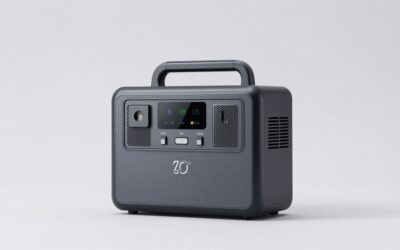
Portable power stations are sold with two headline numbers, watts and watt-hours, and mixing them up is the most common reason buyers end up with a unit that either cannot start their appliance or runs out of energy far sooner than expected. Watts describe how much power the station can deliver at once; watt-hours describe how much energy is stored in the battery. Understanding both, plus a few efficiency details, lets you predict runtime before you buy.
Watts: the output ceiling
The continuous output rating tells you the largest total load the station’s inverter can run steadily, for example 300, 1,000, 1,800 or 3,000 watts. If you plug in a 1,500-watt kettle on a 1,000-watt station, it will shut down or refuse to start. The surge rating, often 1.5 to 2 times the continuous rating, covers brief motor starts for fridges and pumps; it may last only milliseconds to a few seconds.
Power-lifting modes
Some stations offer a mode that runs resistive loads above the continuous rating by lowering the voltage. A 1,200-watt kettle might run on a 1,000-watt station this way, just more slowly. It does not work for motors or electronics.
Watt-hours: the fuel tank
Capacity in watt-hours is the energy the battery stores. A 1,000 Wh station could, in theory, deliver 1,000 watts for one hour or 100 watts for ten hours. In practice you never get the full rating out through the AC outlets.
The runtime formula
Runtime in hours equals capacity in watt-hours times efficiency, divided by the load in watts. For AC outlets, use an efficiency of about 0.80 to 0.90 to account for inverter losses. For DC outputs like 12-volt sockets and USB-C, efficiency is usually 0.90 to 0.95. Also subtract the inverter’s idle draw, often 10 to 30 watts on larger stations, which matters a lot for small loads.
| Station capacity | CPAP 40 W (DC) | Fridge avg 60 W (AC) | Laptop 45 W (USB-C) | TV 100 W (AC) | Microwave 1,200 W (AC) |
|---|---|---|---|---|---|
| 300 Wh | about 6.5 – 7 h | about 4 h | about 6 h | about 2.5 h | output too low |
| 1,000 Wh | about 22 – 23 h | about 13 – 14 h | about 20 h | about 8 h | about 40 min if output allows |
| 2,000 Wh | about 45 h | about 27 h | about 40 h | about 16 h | about 80 min |
| 3,600 Wh | about 80 h | about 48 h | about 72 h | about 29 h | about 2.4 h |
Estimates use typical efficiencies and exclude idle draw; check the current spec sheet for your station’s capacity, continuous output and AC efficiency.
Battery chemistry and lifespan
Most current power stations use lithium iron phosphate (LiFePO4) cells, commonly rated for around 3,000 to 4,000 cycles to 80 percent capacity. Older and lighter units use NMC lithium-ion, often rated 500 to 1,000 cycles. LiFePO4 is heavier per watt-hour but safer and longer-lived. If you plan to cycle the station daily with solar, chemistry matters more than a small price difference.
Usable capacity and cold weather
Many stations reserve a small buffer at top and bottom to protect the cells. Lithium batteries also deliver less energy in the cold, and most should not be charged below freezing. Winter outage plans should assume 10 to 20 percent less runtime if the station sits in a cold garage.
Recharging: wall, solar, car and generator
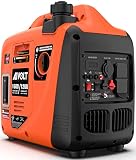
Recharge time equals capacity divided by charging watts, plus some taper near full. A 2,000 Wh station on a 1,200-watt AC charger fills in about two hours; on 400 watts of solar in good sun, expect roughly 6 to 7 hours of peak-equivalent sunlight, often more than a single day in winter. A 12-volt car outlet usually supplies only 100 to 120 watts, so it is a trickle. Charging from a generator works well and lets the generator run briefly at an efficient load, then shut off.
Pass-through and UPS features
Many stations can power devices while charging. Some offer a UPS mode that switches to battery within roughly 10 to 30 milliseconds if the wall power fails. That is fast enough for most electronics and CPAP machines but check the transfer time if you are protecting a desktop computer.
FAQ
Can I add capacity later?
Some stations accept expansion batteries that add 1 to 5 kWh each. If you think you will need more later, choose a model with that option.
Why does my station show fewer hours than the formula?
Inverter idle draw, cold temperatures and compressor surges eat into capacity. Use DC outputs where possible and turn off the AC inverter when nothing needs it.
Bottom line
Choose a power station’s watts to cover your biggest load and its surge, and its watt-hours to cover how long you need to run. Estimate runtime as capacity times 0.85 divided by load for AC, a bit better for DC, and plan for recharge by solar or generator for multi-day outages.

Write Your Review
No reviews yet. Be the first to share your experience!